A new Harris Poll has found that 53% of Americans now view billionaires as a direct threat to U.S. democracy — up 7 points from 46% just one year ago. The nationwide survey of 2,117 Americans, conducted in October 2025, reveals a seismic shift in how the country thinks about extreme wealth and political power.
The poll’s findings go far beyond the threat question. According to the data, 71% of respondents said they want the ultra-wealthy to play a smaller role in U.S. politics. An equal 71% support a national wealth tax. 64% favor mandatory philanthropic contributions for anyone worth over $1 billion. And 53% want a hard cap on personal wealth — with most respondents setting that limit at $10 billion.
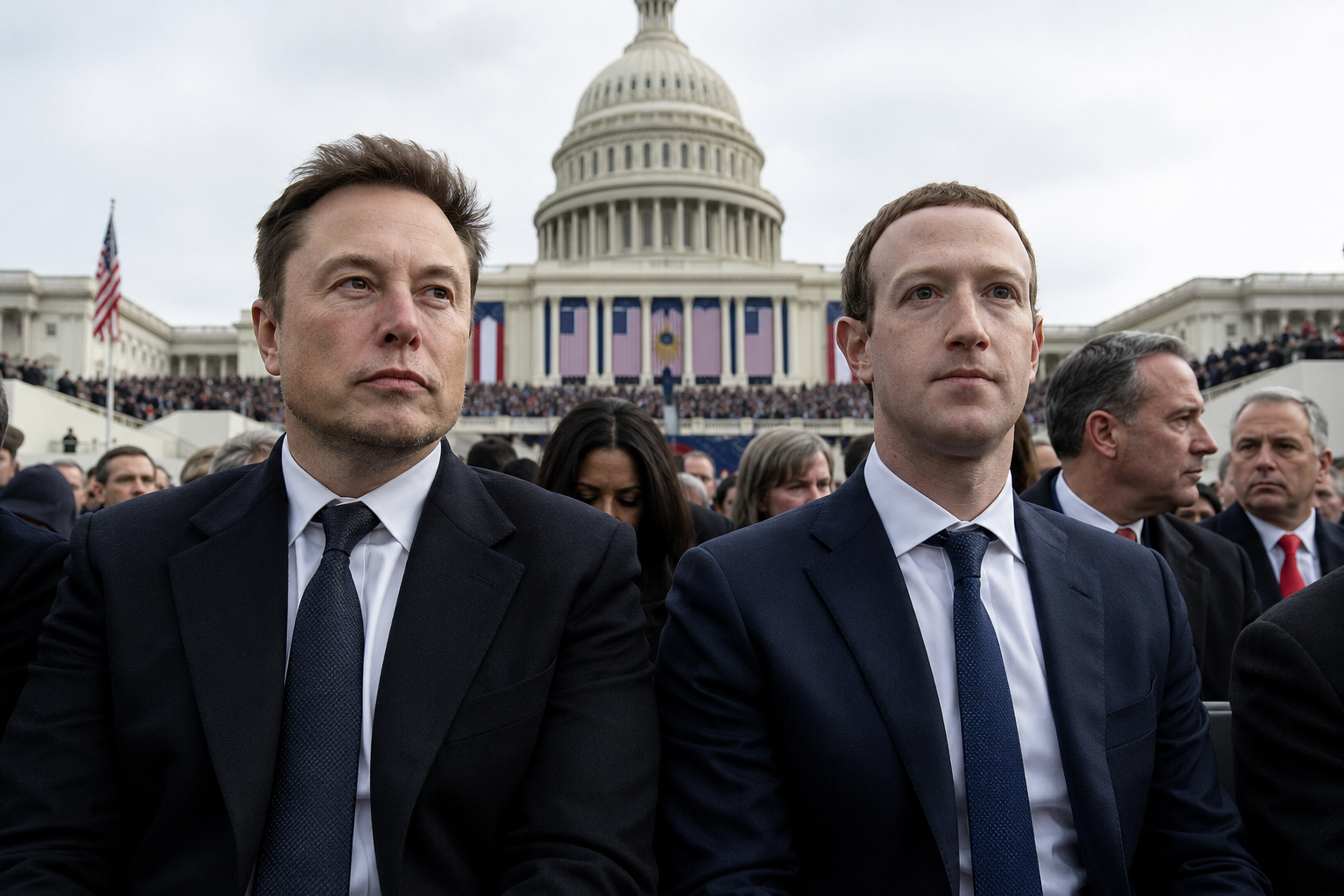
These numbers didn’t emerge from a vacuum. In January 2025, four of the world’s wealthiest men — Elon Musk, Mark Zuckerberg, Jeff Bezos, and Sundar Pichai — sat front-row at Donald Trump’s presidential inauguration. The moment went viral instantly, sparking a national conversation that hasn’t stopped since: Are America’s richest men now its most powerful political players?
For many Americans, that question has already been answered. Musk’s involvement in the Department of Government Efficiency (DOGE), his prolific presence on X (formerly Twitter), and his open endorsement of candidates across multiple countries have made him one of the most polarizing political figures in the world — despite never holding elected office. Zuckerberg’s Meta controls the information diets of more than 3 billion people globally. Together, they represent a new class of political actor: one accountable to no constituency, no election cycle, and no term limit.
Defenders of billionaire political participation push back hard. They argue that wealthy individuals have the same First Amendment rights as every other American — the right to donate, advocate, and engage in the democratic process. Restricting their participation, they say, would set a dangerous precedent that government can silence citizens based on their net worth. Many also point out that billionaires often fund research, innovation, and philanthropic causes that governments have failed to address.
But critics counter that the comparison to ordinary citizens breaks down completely at scale. When one individual can spend $100 million on a single election cycle, fund their own media platform, or have direct access to the leader of the free world on inauguration day, “equal participation” becomes a fiction. The concern isn’t that billionaires have opinions — it’s that their money transforms those opinions into policy.
The Harris Poll results suggest that a majority of Americans have landed on the critics’ side. The 7-point jump in just one year is significant — it tracks directly with the period in which Musk became the most visible unelected political figure in the country. Whether that correlation reflects his specific influence, or a broader anxiety about the concentration of power in private hands, is harder to say.
What is clear is that the debate is no longer on the fringes. Polling majorities in favor of wealth taxes, wealth caps, and reduced billionaire influence in politics would have been unthinkable just a decade ago. Today, they represent mainstream American opinion — and the question of what to do about it is becoming impossible for lawmakers to ignore.
Should billionaires be banned from politics entirely, or do they have the same rights as every other American citizen? Tell us what you think in the comments below.