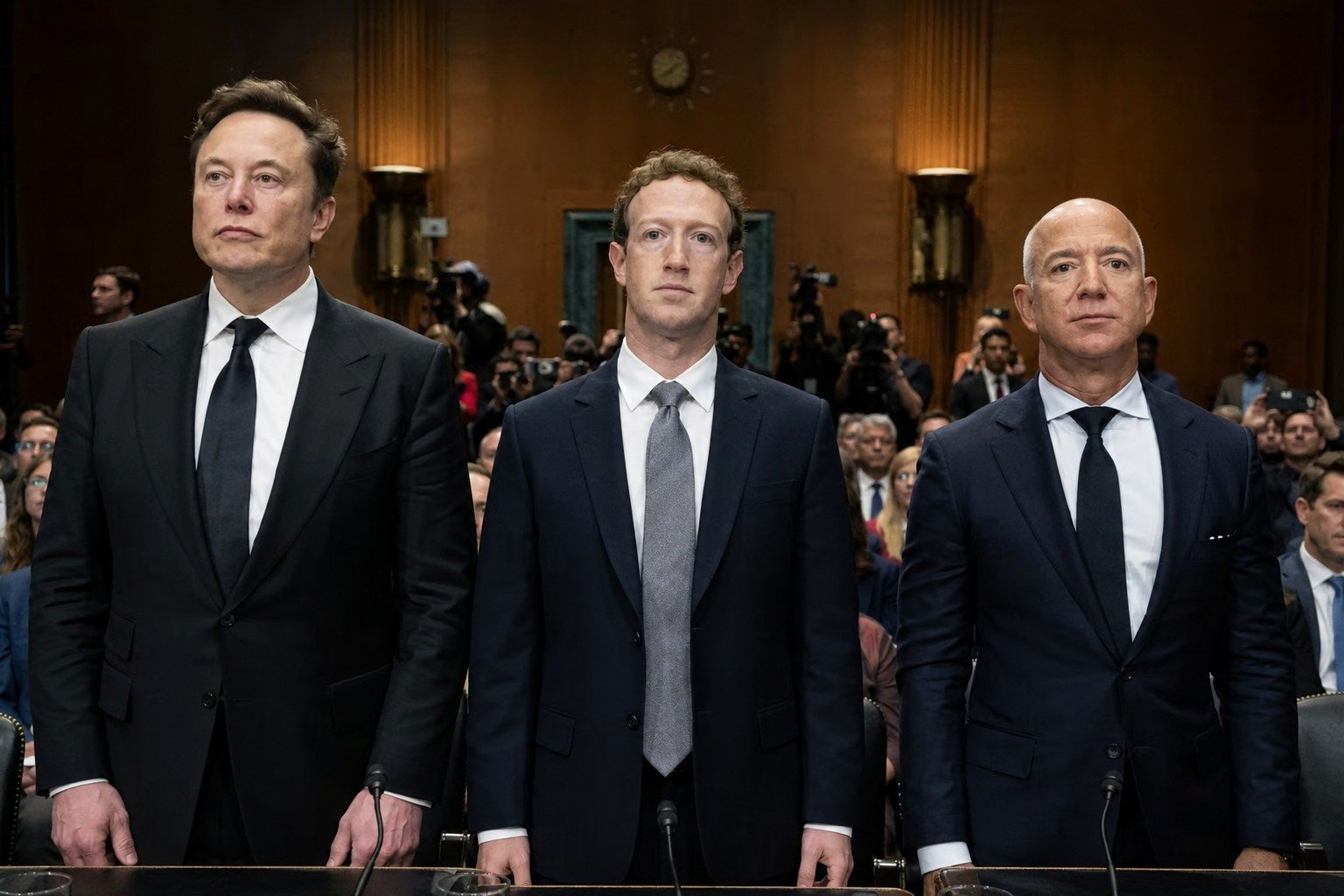
When Elon Musk spent nearly $300 million on the 2024 U.S. election cycle, it was perfectly legal under American campaign finance law. But in France, Canada, and the United Kingdom, that same spending would be flatly illegal — and the gap between the United States and the rest of the democratic world on this issue has never been wider.
One Person, One Vote — Or One Billion Dollars, One Billion Votes?
The principle behind campaign finance limits is straightforward: in a functioning democracy, every citizen gets exactly one vote. Allowing the ultra-wealthy to spend unlimited amounts of money on elections, critics argue, effectively gives them far more political power than ordinary citizens will ever have. France, Canada, the United Kingdom, Germany, Australia, and dozens of other democracies have concluded that unlimited political spending by the wealthy undermines that core principle — and have passed laws to stop it.
France caps individual campaign donations at roughly $5,000. Canada limits them to approximately $1,700 per year per political party. The United Kingdom bans foreign-influenced spending entirely and sets strict national caps on total campaign expenditures. These countries don’t treat this as a controversial position — it’s considered a basic requirement for a democracy that represents all its citizens, not just its wealthiest ones.
How the U.S. Got Here: Citizens United and Its Aftermath
America’s system looks radically different because of a single Supreme Court decision. In 2010, the Court’s Citizens United ruling held that political spending is a form of constitutionally protected free speech, and that corporations and wealthy individuals cannot be prohibited from spending unlimited amounts on elections. The decision opened the floodgates to what became known as “dark money” — billions of dollars flowing into politics from billionaires, corporations, and political action committees with minimal transparency.
Since Citizens United, the cost of U.S. elections has skyrocketed. The 2024 presidential election was the most expensive in American history, with total spending estimated to exceed $16 billion. Elon Musk’s $300 million contribution to political efforts supporting Donald Trump alone was larger than the entire national campaign budgets of most countries’ elections. Jeff Bezos and Mark Zuckerberg have also spent tens of millions on political causes, advertising, and media influence in recent election cycles.
The Debate: Free Speech vs. Democratic Equality
Supporters of the current system argue that spending limits violate the First Amendment right to free speech. They say wealthy individuals have the same right as anyone else to advocate for candidates and causes they believe in — and that the government should not be in the business of capping political expression based on how much money someone has. They also point out that political donations are publicly disclosed, giving voters the information they need to make their own judgments.
Critics counter that the comparison to free speech is a stretch — that money is not speech, and that allowing billion-dollar political spending gives the ultra-wealthy a fundamentally different and far more powerful political voice than ordinary Americans have. They argue that when a single billionaire can outspend an entire political party, something has gone badly wrong with the concept of democratic representation.
What This Means for Everyday Americans
The practical consequences of unlimited campaign spending are felt in policy. When billionaires can spend hundreds of millions on elections, elected officials become dependent on keeping those donors happy. Policies that might benefit working and middle-class Americans — higher minimum wages, drug pricing reform, stronger worker protections — face enormous financial opposition from the wealthy interests that fund campaigns. Whether or not voters support those policies, the money often wins.
Other democracies made a collective decision that this dynamic is incompatible with genuine self-governance. Whether the United States will eventually reach the same conclusion — or whether Citizens United will stand as the defining feature of American elections for generations — remains one of the most consequential political questions of our time.
Stay informed on the stories that matter most. Follow Your Daily Updates on Facebook and bookmark yourdailyupdates.news for breaking news and analysis.