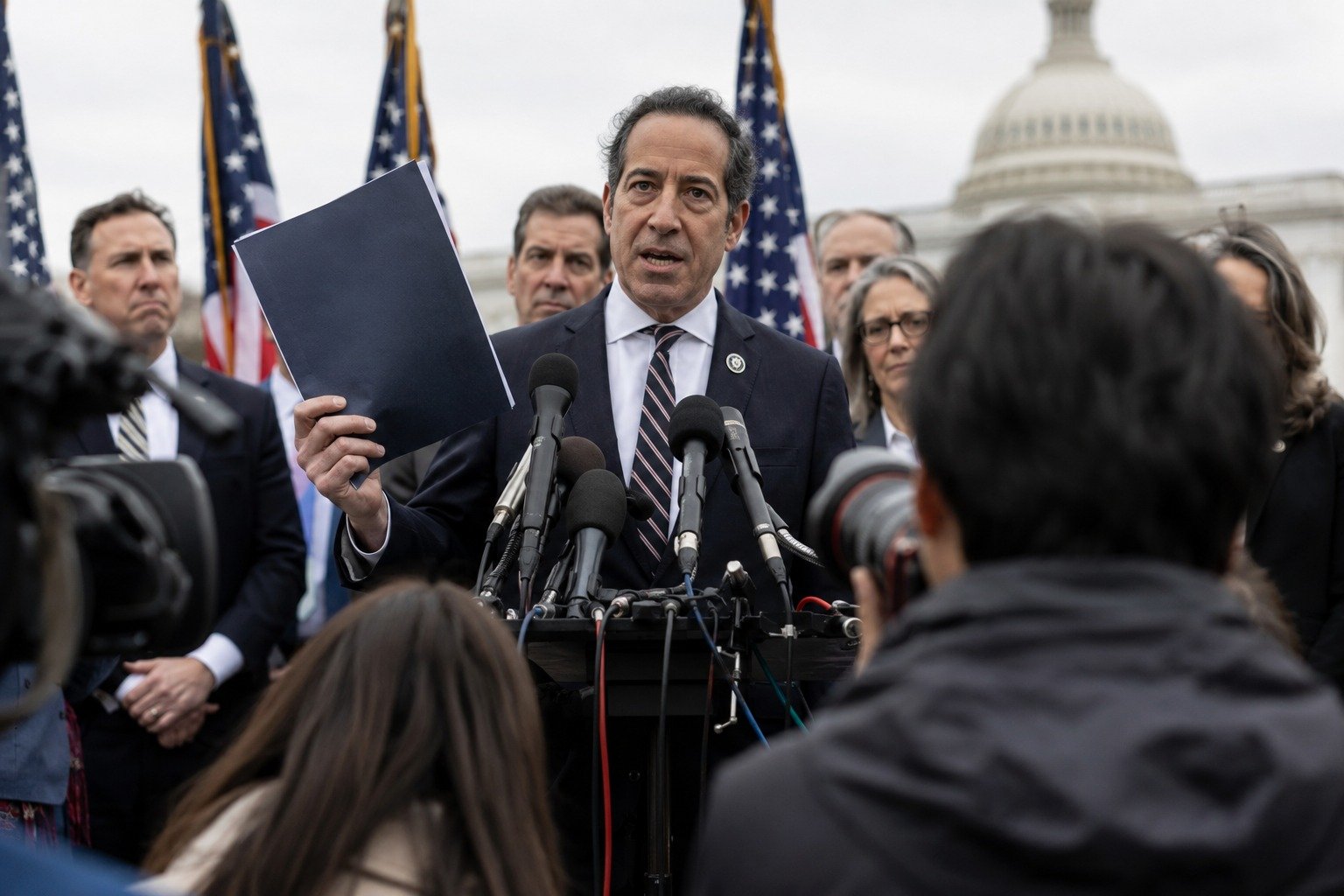
A group of House Democrats has introduced legislation that would do something many Americans assume is already the law: make it illegal for a president to take money from the people he pardons.
Rep. Jamie Raskin of Maryland, joined by Reps. Robert Garcia of California and Joe Morelle of New York, unveiled the anti-corruption bill on May 14. The measure targets one of the most absolute powers in the Constitution — the presidential pardon — and the financial gray zone that surrounds it.
What the Bill Would Do
The legislation would prohibit the President from accepting payments from pardon recipients or presidential appointees. Crucially, the ban is written to cover payments made through a business the president owns — closing the most obvious workaround, in which money flows not to the president personally but to a company bearing his name.
The bill would also require disclosure to Congress of payments received from people granted clemency. In other words, if money changes hands around a pardon, lawmakers — and by extension the public — would have a legal right to know about it.
Why It Matters
The pardon power is nearly unlimited. A president can wipe away federal convictions with a signature, and courts have almost never second-guessed that authority. What the law has never clearly addressed is what happens when the people seeking that signature also happen to be paying customers of the president’s private businesses, donors to his causes, or clients of his associates.
The bill’s authors argue that this is precisely the kind of gap that invites corruption: a transaction-shaped hole in the middle of one of the presidency’s most consequential powers. Their proposal would draw a bright statutory line — clemency decisions on one side, personal enrichment on the other — and make crossing it a violation of federal law.
Where the Bill Stands
To be clear about the state of play: this is a proposal, not a law. It was unveiled by House Democrats and has not passed the House. No vote is currently scheduled, and in a closely divided Congress its path forward is uncertain.
Supporters say that is partly the point. Even without immediate passage, the bill forces a public question that every member of Congress can be asked on the record: should a president ever be allowed to profit from the people he pardons? Opponents of such measures typically argue that existing bribery statutes already cover explicit quid pro quo arrangements — but proving an explicit exchange is notoriously difficult, which is exactly the gap disclosure and payment bans are designed to fill.
What This Means for Americans
For ordinary Americans, the stakes are about trust in the justice system itself. Pardons are supposed to be an instrument of mercy — a check on excessive punishment — not a product with a price tag. A legal wall between clemency and cash would mean that whether someone gets a second chance depends on the merits of their case, not the size of their wallet or their business relationship with the White House. Whether this bill moves or stalls, it puts the question squarely in front of Congress.
Stay informed on the stories that matter most. Follow Your Daily Updates on Facebook and bookmark yourdailyupdates.news for breaking news and analysis.