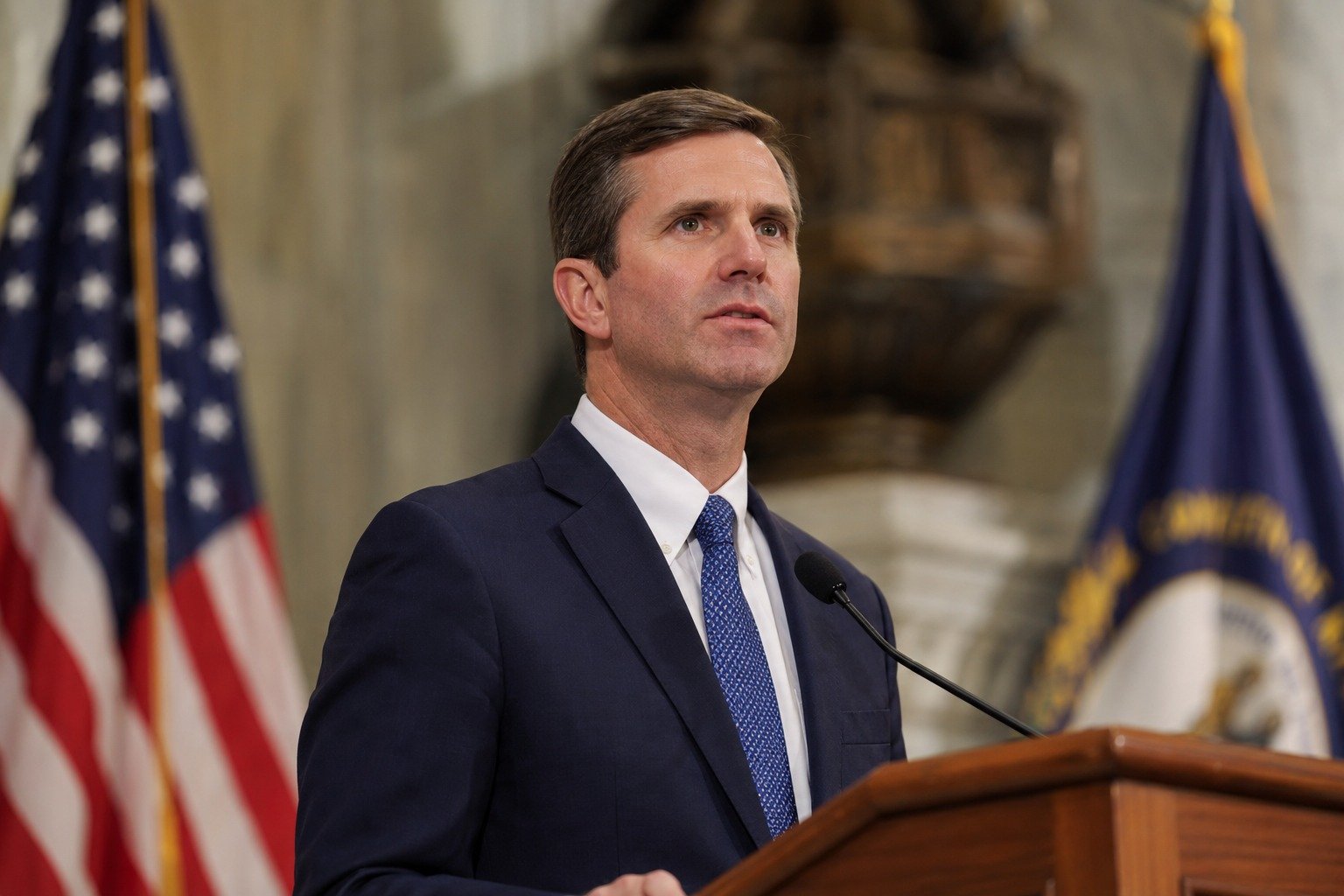
Ahead of Juneteenth, Kentucky Gov. Andy Beshear has posthumously pardoned 43 people who were imprisoned for a single act of conscience: helping enslaved men, women, and children escape to freedom. The pardons, announced June 15, formally clear the names of Kentuckians who were convicted and jailed for aiding the Underground Railroad more than a century and a half ago.
“That’s why ahead of Juneteenth, I am posthumously pardoning 43 brave Kentuckians who were wrongfully imprisoned for helping enslaved people escape to freedom,” Beshear said in announcing the action.
Convicted Under an 1835 Law
The 43 individuals were prosecuted under an 1835 Kentucky statute that made it a crime to be “seducing or enticing any slave to leave his lawful owner or possessor.” The offense carried a penalty of two to 20 years in prison. Kentucky was a slaveholding border state, separated from free territory only by the Ohio River, which made it both a major corridor of the Underground Railroad and a place where those who assisted freedom seekers faced harsh punishment.
Those pardoned were both Black and white. They were conductors, allies, and ordinary people who risked their freedom, and in some cases their lives, to move enslaved people toward liberty. For generations, the official record branded them as criminals. Beshear’s executive action reverses that judgment, recognizing instead that they acted with extraordinary moral courage.
The Names Behind the Pardons
Among those honored is Elijah Anderson, a free Black man remembered as one of the most active Underground Railroad conductors in the region. He is credited with guiding roughly 1,000 people to freedom. Anderson was ultimately imprisoned for his work and died behind bars, never living to see the cause he served prevail.
Another is Julett Miles, a Black woman who crossed the Ohio River in a desperate attempt to rescue her own children after learning they were going to be sold. She was arrested for the act and later died in prison. Her story captures the impossible cruelty of the system the pardons confront: a mother criminalized for trying to keep her family together.
A third name on the list is Thomas Brown, one of the dozens whose convictions Beshear formally set aside. Together, the 43 represent a cross-section of the people who built and sustained the secret network that carried freedom seekers north.
A Symbolic Act With Real Weight
The pardons are, by their nature, symbolic. Every person they honor died long ago, and no one walks free as a result. But symbols carry meaning, especially when issued by the same state that once handed down the convictions. In granting them, Kentucky is formally declaring that the men and women it once jailed as criminals were, in truth, on the right side of history.
Beshear paired the announcement with a broader recognition of the holiday, proclaiming Friday, June 19, 2026, as Juneteenth National Freedom Day in the Commonwealth and designating it an executive branch holiday. Juneteenth marks the day in 1865 when news of emancipation finally reached enslaved people in Galveston, Texas, more than two years after the Emancipation Proclamation.
By timing the pardons to the holiday, Beshear linked the abstract anniversary of freedom to the concrete people who helped make it possible, one river crossing and one rescued family at a time. For descendants and historians alike, the action restores dignity to names that the legal system spent more than a century treating as a list of offenders rather than a roll call of the brave.
The question the pardons quietly raise is how many other such cases remain buried in the records of other states, where the people who defied slavery are still, on paper, criminals.