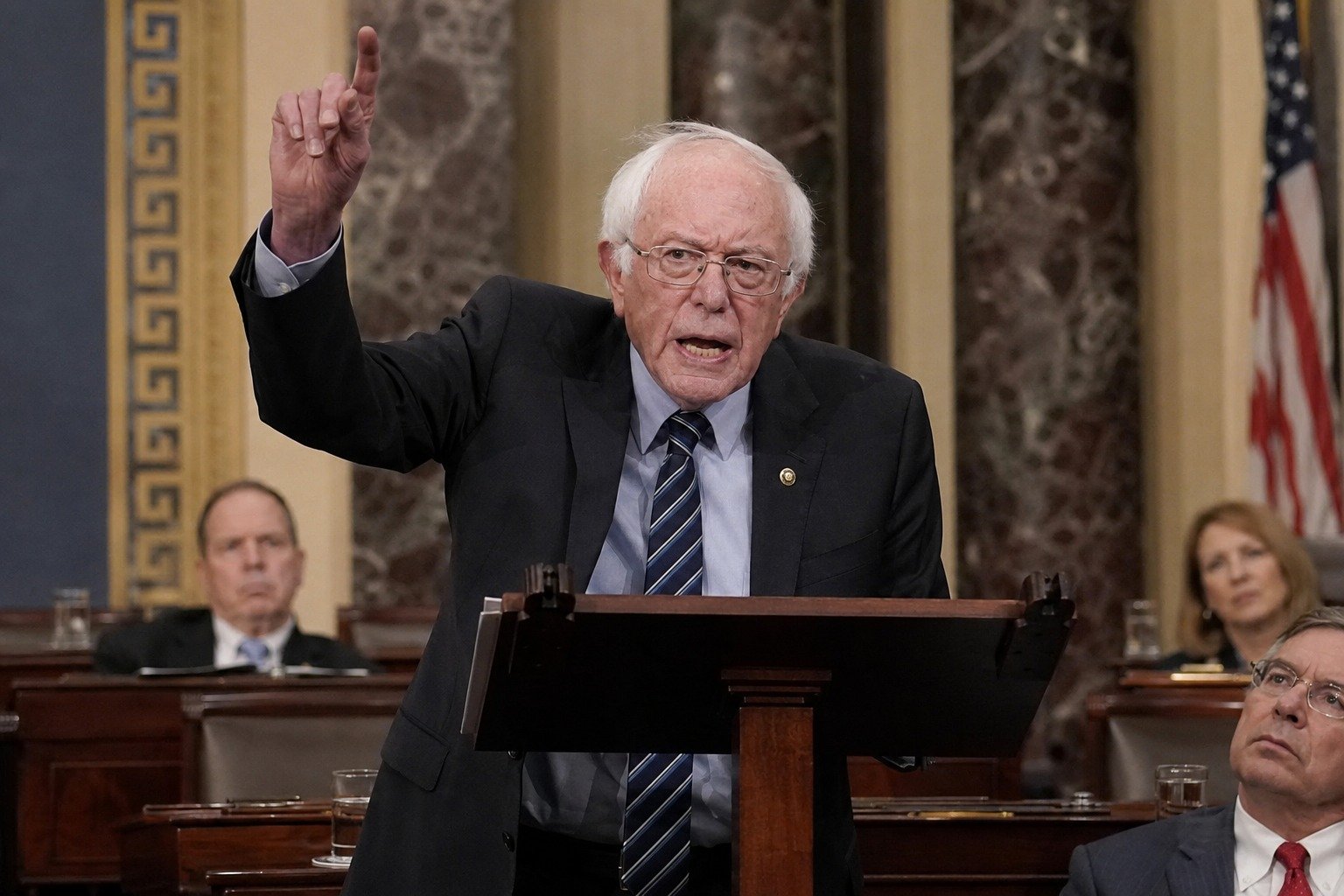
Senator Bernie Sanders forced his colleagues to do the one thing they had spent months trying to avoid: go on the record. On April 15, the Vermont independent pushed the Senate to vote on resolutions that would have halted roughly $447 million in U.S. weapons bound for Israel. The measures failed – and not a single dollar was blocked.
What Sanders Put on the Floor
Sanders used a Joint Resolution of Disapproval, a rarely successful but powerful procedural tool that lets a single senator force a floor vote on a foreign arms sale. The package he targeted in April covered about $151.8 million in gravity bombs and roughly $295 million in Caterpillar D9 bulldozers – the heavy armored machinery used to clear and demolish structures. It was only part of a larger push: Sanders has said his resolutions collectively aimed to block nearly $660 million in arms.
For Sanders, the point was never only the dollar figure. He has argued that American taxpayers should not be bankrolling what he calls Netanyahu’s illegal war, and that Congress has a legal duty to weigh in on where U.S. weapons end up rather than rubber-stamping every sale.
Why Arms Sales Rarely Get a Vote
Under the Arms Export Control Act, Congress has the authority to review major foreign weapons sales and, in theory, block them. In practice, such resolutions almost never succeed, because they require majorities in both chambers and can be vetoed by the president. That long track record is exactly why forcing the vote is itself the story: it converts a routine, low-visibility approval into a moment of public accountability.
The Votes
When the roll was called, the resolutions went down roughly 40-59 and 36-63, largely along party lines. A bloc of Democrats sided with Sanders, but the tallies were never close to the majority needed to stop the sales. Because the resolutions failed, the weapons remain cleared to ship. Nothing was actually blocked.
That distinction matters. It can sound as though the bombs were stopped; they were not. What Sanders achieved was procedural but significant – he compelled the full Senate to take a public, recorded position on U.S. arms transfers to Israel, something leadership in both parties had largely managed to sidestep. He has repeatedly pointed to the humanitarian toll of the war and questioned why the United States continues to supply offensive weapons with few conditions attached.
A Public Reckoning
Supporters called the votes the first real Senate reckoning over U.S. military support for Israel, arguing that forcing senators on the record is the necessary first step toward changing policy. Critics countered that the resolutions would undercut a key ally at a volatile moment. Either way, the votes are now part of the public record – every senator who wanted to avoid the question no longer can, with their names attached to a yes or a no.
Why It Matters
The debate cuts to a basic question of accountability: who decides how hundreds of millions of dollars in American-made weapons are used, and whether Congress has any say at all. Sanders’ resolutions lost, but they turned an issue that usually moves quietly through the executive branch into a public vote – and gave constituents a clear way to see where their senators stand. For now, the sales move forward, but Sanders has signaled he intends to keep filing resolutions and forcing votes, betting that repeated public tallies will eventually shift the politics around U.S. arms policy.
Stay informed on the stories that matter most. Follow Your Daily Updates on Facebook and bookmark yourdailyupdates.news for breaking news and analysis.