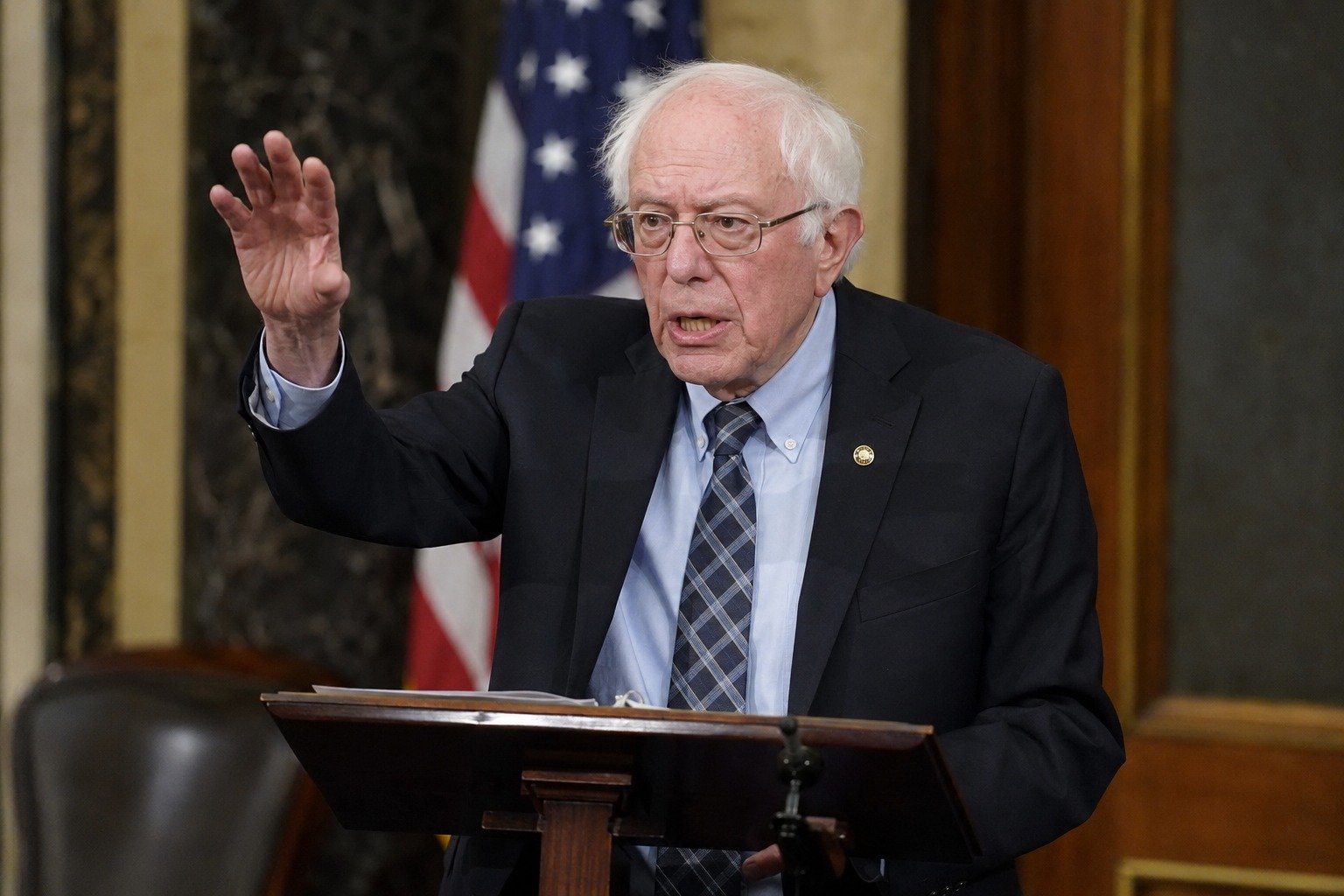
It did not pass. But it was the closest such an effort has ever come. On April 15, Sen. Bernie Sanders (I-Vt.) forced the U.S. Senate to go on the record on two joint resolutions that would have blocked roughly $446.8 million in weapons sales to Israel. Both measures failed – 40-59 and 36-63 – yet a clear majority of Senate Democrats voted with Sanders, the strongest showing of Democratic support for halting such sales the chamber has ever seen.
What the Senate Voted On
The first resolution targeted a $295 million sale of D9R and D9T Caterpillar armored bulldozers. The second went after a $151.8 million sale of roughly 12,000 general-purpose 1,000-pound gravity bombs and related support services. Together, the two packages added up to about $446.8 million in military hardware bound for Israel.
Sanders used a procedural tool – motions to discharge the resolutions from the Senate Foreign Relations Committee – to force floor votes that lawmakers could not dodge. It is a tactic he has deployed repeatedly over the past few years, and one that, until now, has been routinely crushed by lopsided margins.
The Numbers That Stunned Washington
Senators voted 40-59 to reject the motion on the bulldozer sale and 36-63 on the bomb sale. Neither came close to passing. But the breakdown of who voted yes is what set Washington talking: 40 of the 47 Senate Democrats backed at least one of the resolutions. A majority of the Democratic caucus voted to cut off a specific weapons transfer to a close ally – a line the party had never collectively crossed before.
Only seven Democrats sided fully with Republicans to keep the sales moving: Minority Leader Chuck Schumer (N.Y.), along with Sens. Chris Coons (Del.), Catherine Cortez Masto (Nev.), Kirsten Gillibrand (N.Y.), Richard Blumenthal (Conn.), John Fetterman (Pa.), and Jacky Rosen (Nev.). Every Republican voted to preserve the sales, and that unified GOP bloc was enough to defeat both measures despite the wave of Democratic support.
Why It Matters
For years, votes to block arms transfers to Israel drew only a small cluster of Democratic supporters. This time the wall cracked wide open. The result signals a significant shift in how much of the Democratic caucus now views U.S. military support for Israel’s operations – a change that was unthinkable in the Senate even a couple of years ago.
It is important to be precise about what happened: the resolutions failed. The weapons sales were not blocked. A majority of one party voted to stop them, but the full Senate – with every Republican opposed – rejected the effort. Sanders and his co-sponsors did not change U.S. policy on April 15. What they changed was the political map.
What This Means for Americans
Decisions about which foreign militaries the United States arms – and at what cost to taxpayers – are among the most consequential a government makes. The Constitution gave Congress a direct role in that process, and votes like these put each senator on the record. For Americans who want to know where their elected officials stand on funding overseas conflicts, this vote drew the clearest line yet. The measures may be dead for now, but the divide they exposed inside the Senate is not going away.
Stay informed on the stories that matter most. Follow Your Daily Updates on Facebook and bookmark yourdailyupdates.news for breaking news and analysis.