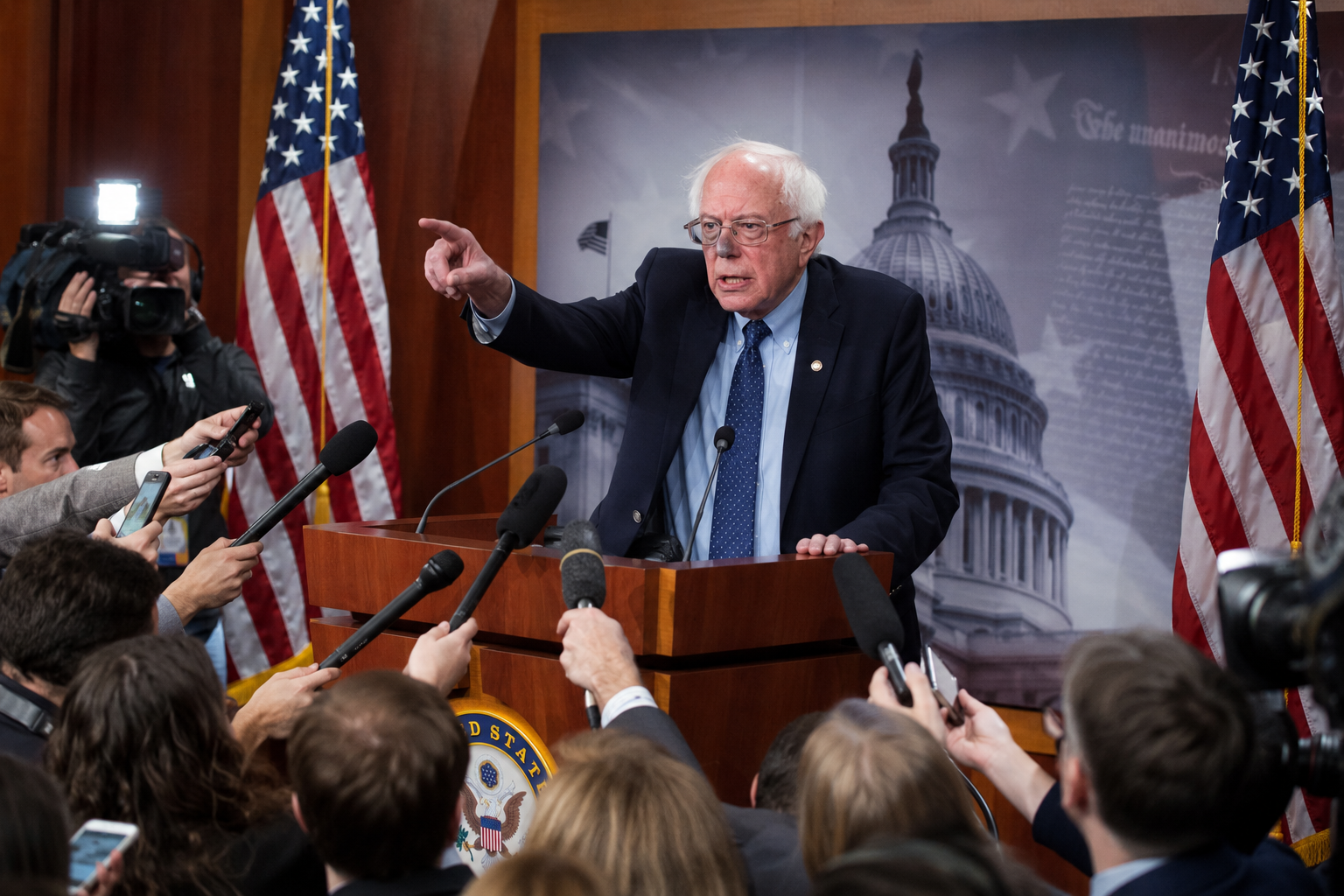
Bernie Sanders and Ro Khanna just introduced legislation that would fundamentally reshape how America taxes its wealthiest citizens — and the debate it’s igniting is enormous. The bill, formally titled the “Make Billionaires Pay Act,” is one of the most sweeping wealth tax proposals ever introduced in the U.S. Congress, and it’s already drawing fierce reactions from both sides of the aisle.
The bill targets America’s 938 billionaires with a 5% annual tax on their accumulated wealth. To put that into perspective — this isn’t a tax on income. It’s a tax on what they already own: stock portfolios, real estate, private businesses, and other assets. Economists Emmanuel Saez and Gabriel Zucman, who have spent years studying wealth concentration in America, project the plan would raise $4.4 trillion over the next decade. That’s a number large enough to fundamentally change the federal budget conversation.
Here’s where that money would go — and this is where it gets personal for millions of American households. Every person living in a household earning under $150,000 annually would receive a $3,000 direct payment. For a family of four, that’s $12,000 hitting your bank account. For a single parent with two kids, that’s $9,000 in direct financial relief. The proposal also includes a guaranteed minimum salary of $60,000 per year for public school teachers nationwide — addressing one of the most persistent complaints about America’s underfunded education system. Beyond that, Medicare would be expanded, and the bill would reverse $1.1 trillion in proposed Medicaid cuts that have alarmed health advocates across the country.
Supporters of the bill argue the math is simple: American billionaire wealth has exploded by trillions of dollars over the past decade, while wages for working and middle-class families have barely kept pace with inflation. They point to figures showing that the top 938 billionaires now hold more combined wealth than the bottom 60% of American households. “Enough is enough,” Sanders said at the bill’s introduction. “When billionaires are getting richer during a pandemic while workers struggle to pay rent and put food on the table, we have to fundamentally change our tax system.”
But the opposition is fierce — and it doesn’t just come from wealthy donors or Republican lawmakers. Some economists and legal scholars warn the bill faces serious constitutional challenges. The Supreme Court has never clearly ruled that a direct tax on wealth (as opposed to income) is constitutional under the 16th Amendment, and any implementation of such a tax would almost certainly face years of litigation before a single dollar was collected. Critics also point to a troubling track record overseas: France, Sweden, Germany, and several other European nations experimented with wealth taxes and eventually repealed them. The reasons were consistent — wealthy individuals moved assets offshore, the taxes were difficult to administer, and revenue projections consistently came in far below estimates.
There’s also the practical question of how you value a billionaire’s wealth from year to year. Unlike a paycheck, most billionaire wealth is tied up in private companies and illiquid assets that don’t have a simple market price. Forcing annual valuations on complex holdings — and requiring payment in cash — could compel billionaires to sell assets at distressed prices or restructure their holdings in ways that reduce the tax base. It’s a logistical challenge that even proponents of wealth taxation acknowledge.
So where does that leave everyday Americans? The core question is whether a 5% annual wealth tax is the most effective way to close the growing gap between the ultra-wealthy and everyone else — or whether different approaches, like higher income taxes on top earners, closing loopholes on capital gains, or eliminating the carried interest deduction, might raise comparable revenue with fewer legal and administrative hurdles.
The bill is unlikely to pass in its current form given the current composition of Congress. But Sanders and Khanna are putting a number on the table — and forcing a national conversation about whether billionaire wealth should be taxed the same way working Americans’ income is taxed. That debate is now happening at kitchen tables across the country. Would a $12,000 household check make a real difference for your family — and do you think a 5% annual tax on billionaires is the right way to fund it?