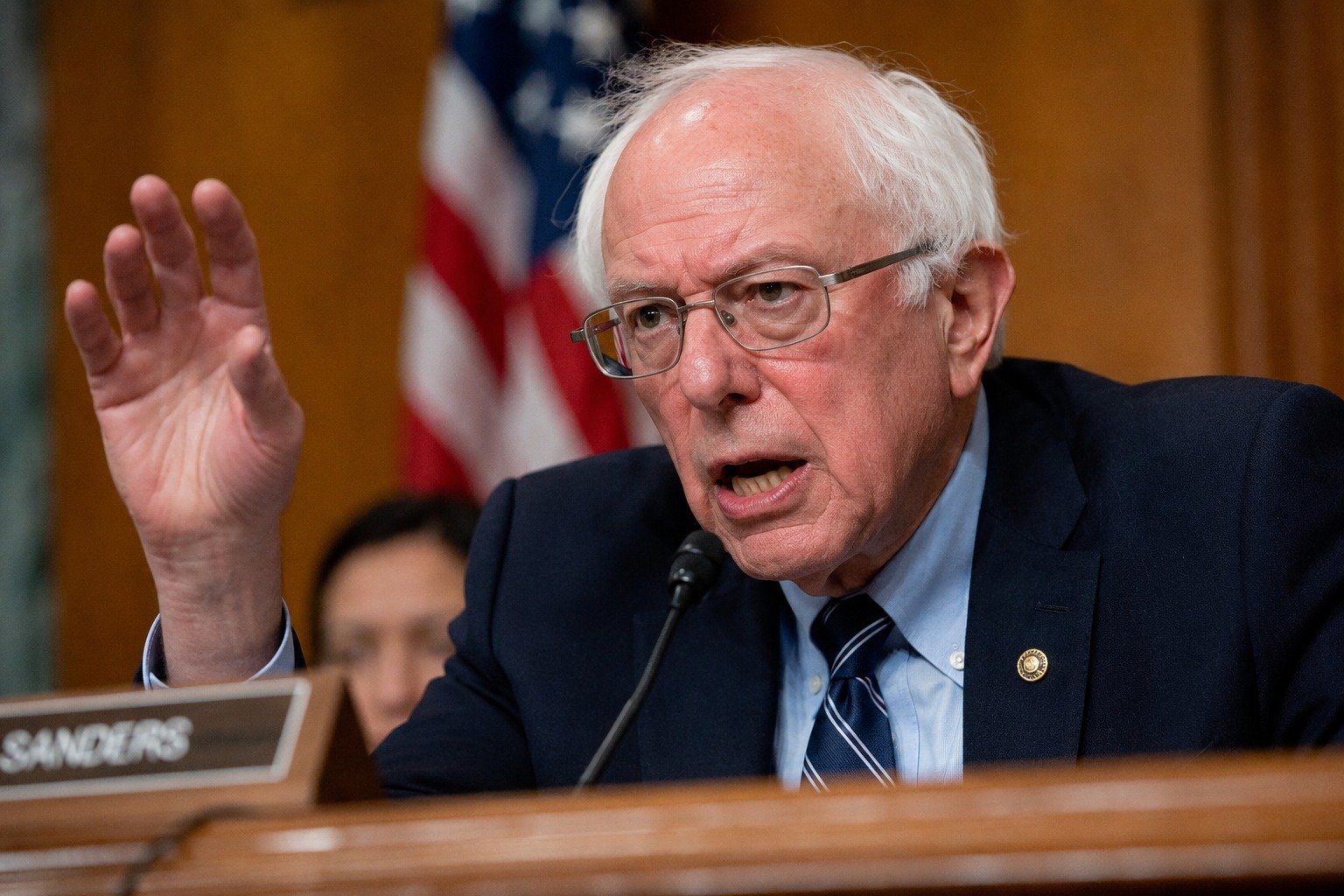
Senator Bernie Sanders is issuing one of his bluntest warnings yet about artificial intelligence — and he says Washington is asleep at the wheel. On June 7, the Vermont independent warned that AI and robotics could wipe out millions of American jobs, pointing to a Senate report from his office estimating the technology could eliminate nearly 100 million U.S. jobs in the years ahead.
His message to Congress was direct: Is anyone in Washington actually doing anything to protect the workers who could lose everything? His own answer was just as direct — no.
A Targeted Pause, Not a Blanket Ban
It would be easy to read Sanders’ alarm as a call to halt AI altogether. It isn’t. His central legislative vehicle is far more specific. On March 25, Sanders teamed up with Rep. Alexandria Ocasio-Cortez to introduce the AI Data Center Moratorium Act — a bill that would freeze the construction and expansion of massive new data centers, the power-hungry physical backbone of the AI boom, until strong national safeguards are in place.
The proposal would pause the buildout of large facilities — those with significant power demand — until lawmakers put real guardrails on the industry. The stated goals: protect workers from mass displacement, guard people’s privacy, and slow a technology racing ahead with almost no federal oversight. It is a pause aimed at the infrastructure and the rules around it, not a switch to shut AI off.
Why Sanders Says Congress Won’t Act
Sanders has been unusually frank about why he believes Congress keeps stalling. Lawmakers, he argues, are intimidated by the hundreds of millions of dollars the AI industry is pouring into super PACs — political money that, in his telling, buys silence while working families are left to absorb the fallout.
That framing places the AI fight squarely inside Sanders’ long-running campaign against what he calls oligarchy — the concentration of wealth and political power in the hands of a small number of tech billionaires. To him, the danger isn’t just that machines might replace human labor. It’s that the people profiting from that shift are also the ones funding the campaigns of the lawmakers who are supposed to regulate them.
The Stakes for Workers
The nearly 100 million jobs figure from Sanders’ Senate report is staggering, and it covers a wide swath of the economy — not just factory floors but offices, call centers, transportation, and retail. The report frames automation as the most transformative economic shift in generations, one that could deliver enormous gains to corporations while leaving ordinary workers with shrinking options and stagnant wages.
Critics of the moratorium argue that freezing data center construction could slow American innovation and cede ground to overseas competitors. The bill faces long odds in a closely divided Congress, and even supporters acknowledge it is unlikely to become law in its current form. But Sanders’ goal appears to be as much about forcing a national conversation as passing a single statute — putting worker protections on the table before the technology outpaces any chance to regulate it.
What This Means for Americans
For working families, the debate is not abstract. If even a fraction of the jobs Sanders warns about are at risk, the question of whether Congress builds a safety net before the disruption hits — or scrambles after — could shape millions of livelihoods. Sanders is betting that voters, not just lawmakers, will demand answers.
Stay informed on the stories that matter most. Follow Your Daily Updates on Facebook and bookmark yourdailyupdates.news for breaking news and analysis.