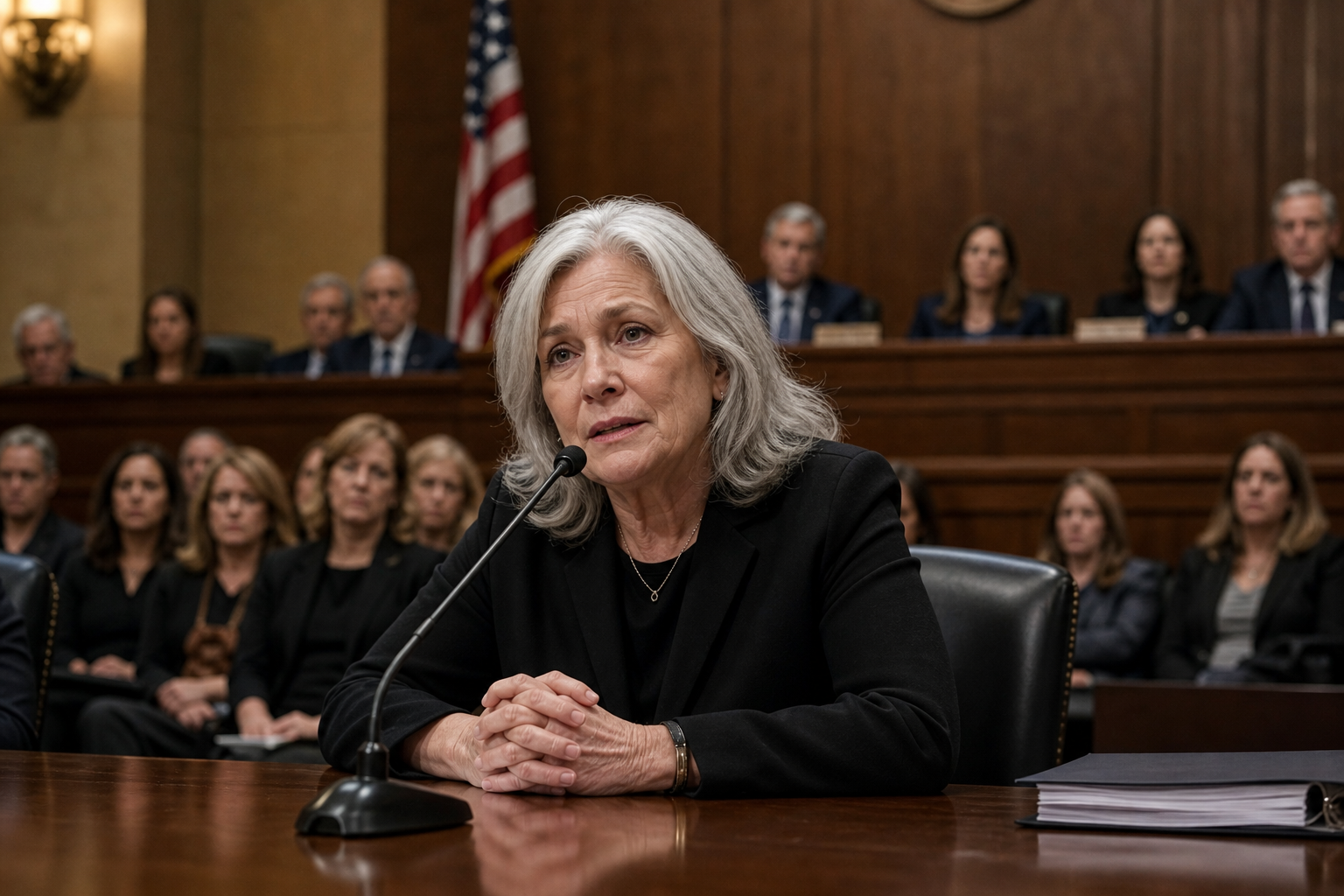
A Missouri grandmother has spent years turning her grief into legislation. The cause is called Bentley’s Law, and it’s gaining traction in state capitals across the country. The idea is straightforward, the principle is powerful, and the opposition hasn’t been able to land a clean punch against it.
Here’s how it works: if you’re convicted of killing a parent while driving drunk, you don’t just serve your prison sentence and walk away. Once you’re out, child support payments kick in automatically and continue until every child that parent left behind either reaches adulthood or finishes school.
If your reckless decision destroyed a family, you spend years paying for it — not just in time served, but in dollars.
What the Law Would Do
Under Bentley’s Law, the child support obligation begins the moment a convicted drunk driver completes their sentence. Courts would set the payment amount based on the driver’s income and the number of surviving children. The payments function similarly to traditional child support — structured, court-enforced, and tied to the children’s development timeline.
The law targets a gap that current criminal statutes don’t address. Drunk driving already carries criminal penalties: jail time, fines, license suspension, and in fatal cases, felony manslaughter charges. But those penalties are designed to punish the driver. They do nothing to address the economic devastation left for the children who just lost a parent.
A family that loses a breadwinner to a drunk driver faces years of financial hardship that no prison sentence fixes. Bentley’s Law is designed to make the person who caused that hardship share in carrying it.
The Momentum Is Real
The law originated in Missouri, but it hasn’t stayed there. Similar legislation has been introduced in multiple states, and the support is growing with each new news cycle that brings another drunk driving tragedy into the national spotlight. Advocacy groups, child welfare organizations, and victims’ families have all rallied behind the concept.
The emotional logic is hard to argue with. The political logic is even harder. No politician wants to be on record defending the right of convicted drunk drivers to walk out of prison debt-free after killing someone’s parent.
The Pushback
Critics and legal experts have raised legitimate questions, and it’s worth taking them seriously.
The biggest enforcement challenge: what happens when the convicted driver can’t pay? Many individuals leaving prison have limited employment prospects and no savings. If the law creates a child support obligation that can never realistically be met, it may produce court judgments that look significant on paper but deliver nothing in practice.
Some constitutional attorneys have also raised questions about whether extended financial obligations tied to a criminal conviction could face legal challenges, though supporters argue the mechanism mirrors existing civil court orders in family law.
The child support system itself is already under strain in most states. Adding a new category of cases — involving individuals with criminal records, limited income, and often contentious legal situations — could add complexity to agencies already stretched thin.
For the Families, the Debate Isn’t Complicated
The legal questions are real. But for the families living the aftermath of these crashes, the argument is simple.
A drunk driver made a choice. That choice killed a parent. That choice left children growing up without someone who would have provided for them for years. Why should the financial consequences of that choice fall entirely on the surviving family?
Bentley’s Law doesn’t give those children their parent back. It doesn’t erase what happened. What it does is establish a principle: that the person responsible for a child’s loss carries some of the financial weight of that loss for as long as the child needs support.
Critics of the law are free to propose a better mechanism. Until they do, Bentley’s Law is the only framework on the table that actually tries to answer the question families in this situation have been asking for decades.
The drunk driver did time. Now the kids are doing time too — growing up without a parent, often without the financial stability that parent would have provided. Is it too much to ask that the driver who caused that does something about it?
Supporters of the law don’t think so. And given the momentum this legislation is building across state lines, a growing number of lawmakers agree.