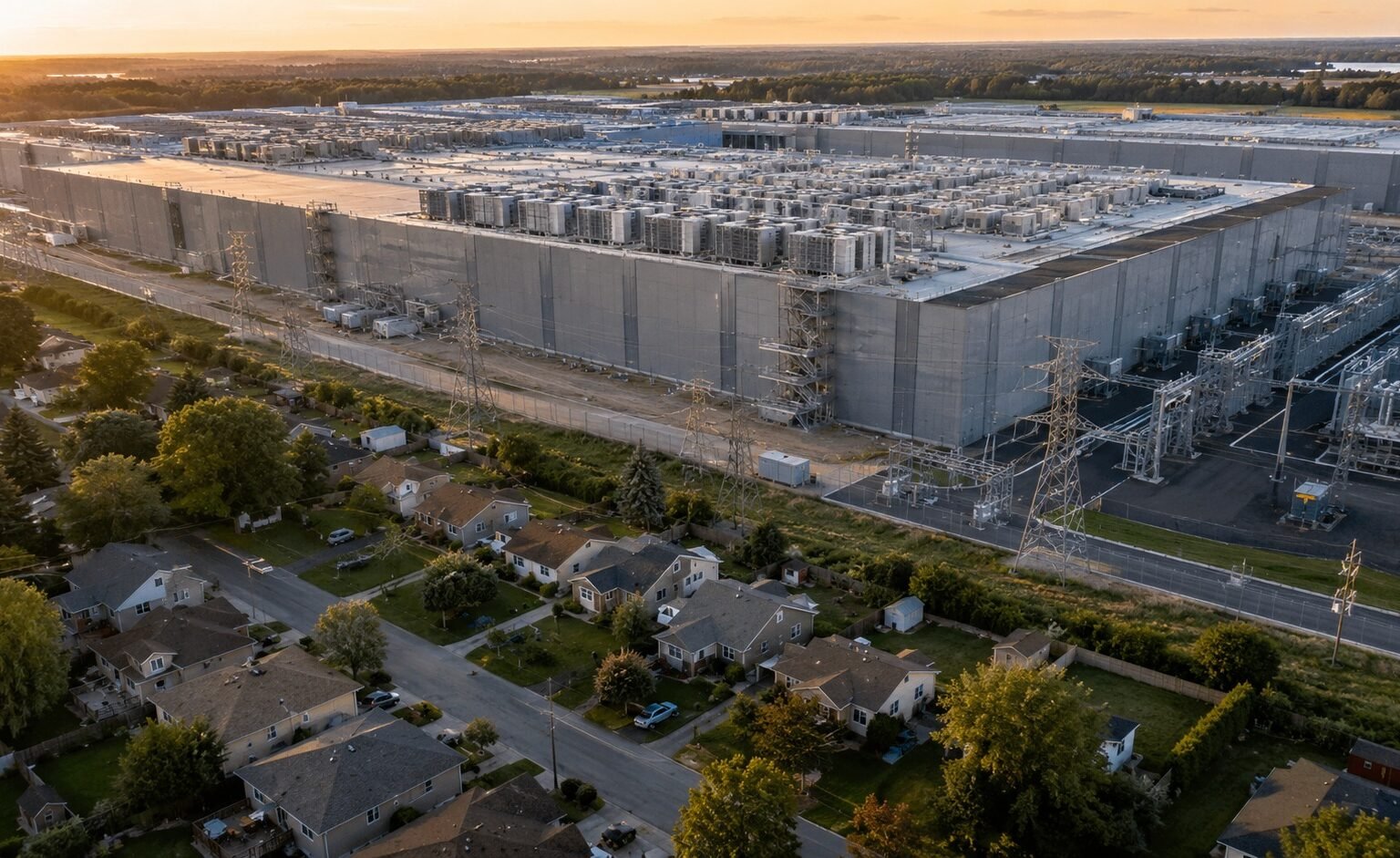
The artificial intelligence boom has to be built somewhere — and a striking new poll shows that most Americans do not want it built near them. According to a Gallup survey conducted March 2–18, 2026, 70% of U.S. adults oppose an AI data center being built in their local community, with nearly half of all respondents (48%) saying they are strongly opposed.
That is not a narrow plurality. Seven in ten is a commanding majority, and the intensity behind it is what makes the number so notable. When almost half of the country says it is not just against a policy but strongly against it, that signals a level of concern that local officials and corporations cannot easily wave away.
A rare point of bipartisan agreement
Perhaps the most surprising finding is how far the opposition reaches across the political spectrum. Gallup found that 75% of Democrats and 63% of Republicans opposed having an AI data center built in their area. In a country where partisans disagree on almost everything, the prospect of a massive server farm arriving next door has produced something close to consensus.
That cross-party alignment suggests the resistance is rooted less in ideology than in tangible, local concerns — the kind of kitchen-table worries that do not sort neatly into red or blue.
Why communities are pushing back
Modern AI data centers are enormous industrial facilities, and they are famously resource-hungry. To keep thousands of servers running and cool, they draw staggering amounts of electricity and, in many cases, millions of gallons of water. As tech companies race to expand their computing capacity, the physical footprint — and the utility demand — of these facilities has grown accordingly.
For residents living near proposed sites, that translates into a familiar set of anxieties: Will my electricity bill go up? Will the local grid be able to handle the load? What happens to our water supply during a dry year? Who pays for the new substations, transmission lines, and pipes that a facility of this scale requires — the corporation reaping the profits, or the households next door?
Noise, traffic during construction, and the sheer visual imposition of a windowless megastructure looming over a residential street add to the unease. Across the country, community meetings over proposed data centers have grown crowded and contentious, with neighbors demanding answers before shovels hit the ground.
The other side of the ledger
Supporters of these projects point to real benefits. Data centers can bring construction jobs, a smaller number of permanent high-skill positions, and a boost to the local tax base that can fund schools and services. Economic development officials often court them aggressively, offering tax incentives to win a facility over competing towns.
But the Gallup numbers suggest most Americans are not convinced the trade-off works in their favor — particularly when the incentives that lure a data center can reduce the very tax revenue supporters promise, and when the water and power costs land on the whole community while the profits flow to a handful of technology giants.
The bigger question
The poll captures a tension at the heart of the AI era. The technology promises transformative economic gains, but the infrastructure that powers it has to be built in real places, using real water and real electricity, next to real people. As the buildout accelerates, the question of who bears the costs — and who gets a say — is only going to get louder.
So we want to hear from you. If a company wanted to build a massive AI data center in your town, would you support it or fight it? Tell us where you stand.