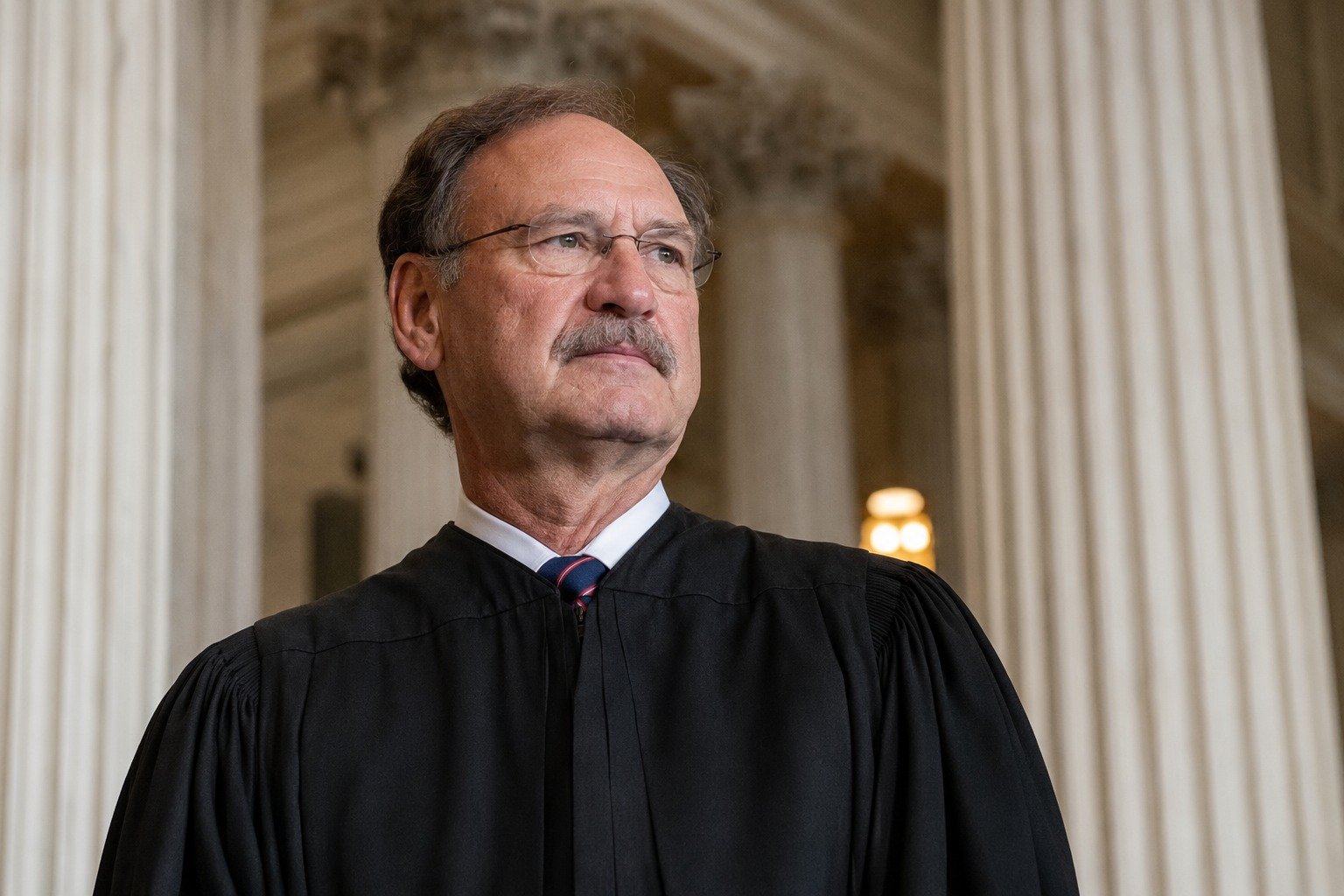
Anyone hoping Justice Samuel Alito is headed for the exit just got their answer: he is not going anywhere. One of the most conservative members of the U.S. Supreme Court has given no indication that he plans to step down, and the signals coming out of his chambers all point in the opposite direction.
Far from winding down, Alito is actively hiring law clerks for the 2026-27 term and is positioning himself to serve well into 2027 and beyond. Clerk hiring is one of the clearest tells in the judiciary. A justice contemplating retirement does not lock in a full slate of clerks for a term that is still more than a year away. That is the behavior of a justice digging in for the long haul.
How the Retirement Story Started
The confusion traces back to a stunning newsroom error. On June 30, NPR briefly published a story claiming that Alito was retiring. The report was the result of a misheard announcement by veteran legal affairs correspondent Nina Totenberg as she was leaving the Court on the final day of the term.
According to NPR’s own account, Totenberg asked a bystander what was happening as Chief Justice John Roberts was making end-of-term announcements, and the reply about “retirement announcements” was misunderstood as applying to Alito specifically. The story went live on NPR’s website at 10:51 a.m. ET and was up for roughly five minutes before it was pulled. An editor’s note replaced it by 10:57 a.m., and an on-air correction followed at 11:07 a.m.
Totenberg, who has covered the Court for more than 50 years, called it the worst professional mistake of her career and said she had sent a personal apology to Justice Alito. NPR’s public editor published a detailed accounting of how the error happened and how quickly it was corrected.
What Alito Staying Actually Means
The retraction is the real story here, and its implications are significant. Alito has been one of the driving forces behind some of the Court’s most sweeping conservative rulings in recent years, from decisions reshaping abortion rights to expansive readings of executive power. His continued presence on the bench means that influence is not fading. It is locked in for years to come.
The Court’s rightward tilt was already the defining feature of American law heading into this term. A justice of Alito’s seniority and ideological consistency settling in for another term reinforces that reality. For those watching the bench hoping for a shift in its balance, the message is clear: they are going to be waiting a long time.
Speculation about Supreme Court retirements is a perennial feature of Washington, particularly around the end of each term when the justices wrap up their biggest decisions. But speculation is not fact, and in this case the facts are unambiguous. Alito is hiring, Alito is planning, and Alito is staying.