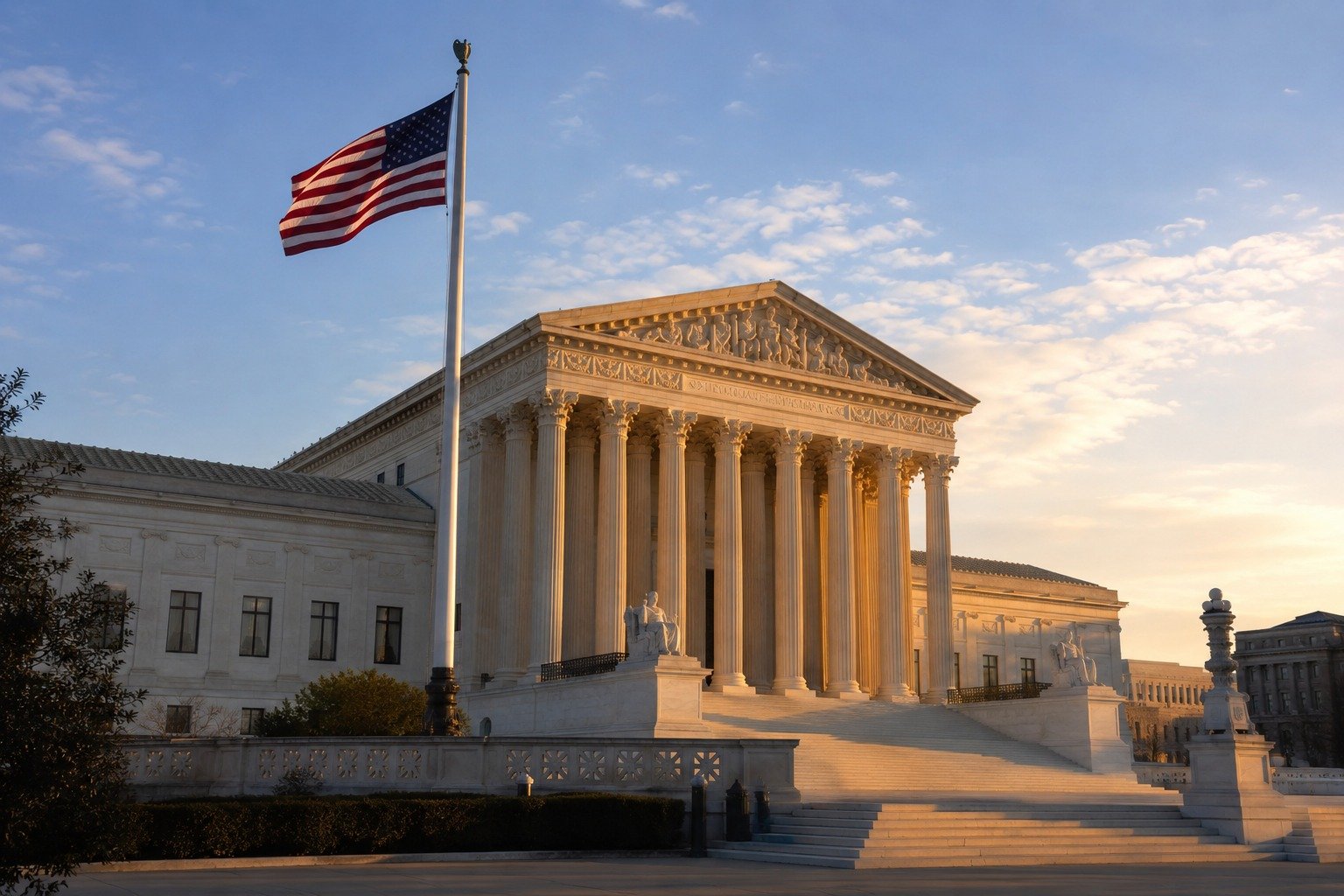
Alabama is taking another shot at the U.S. Supreme Court to revive a congressional map that federal courts have repeatedly struck down for diluting Black voters’ power.
The Background
The dispute traces back to the Supreme Court’s 2023 ruling in Allen v. Milligan, in which a five-Justice majority found that Alabama’s congressional map likely violated Section 2 of the Voting Rights Act. The Court concluded that Alabama — where roughly 27% of the population is Black — should have a second congressional district where Black voters can elect a candidate of their choice.
Alabama lawmakers responded by passing a new map, but the new lines still contained only a single majority-Black district. A three-judge federal panel struck that map down as well, finding that the legislature had failed to comply with the Supreme Court’s ruling. Court-appointed special masters then drew a remedial map with two majority-Black-leaning districts, which is currently in effect for federal elections.
What the State Is Asking
Alabama’s new appeal asks the Supreme Court to review the lower courts’ rulings on multiple grounds. The state argues that the remedial map drawn by court-appointed special masters is itself an unconstitutional racial gerrymander, and that the lower courts overstepped by effectively requiring race-based district lines.
The state is also asking the Court to revisit broader questions about how Section 2 of the Voting Rights Act applies to congressional redistricting — questions that, if reopened, could affect not just Alabama but every state with majority-minority districts.
The Stakes
The political stakes are immediate. The current remedial map helped Democrats flip a previously Republican-held House seat. If Alabama prevails and is allowed to revert to lines closer to its preferred map, that seat would likely shift back. With control of the House often turning on a small number of seats, even a single district can carry national weight.
The legal stakes are larger. A Supreme Court ruling in Alabama’s favor could narrow the reach of Section 2 of the Voting Rights Act — one of the few remaining federal mechanisms that requires states to consider racial fairness in redistricting. Voting rights advocates argue that the Court already settled the central question in 2023, and that Alabama is asking the Justices to relitigate a recently decided precedent.
What Happens Next
The Supreme Court has not yet announced whether it will take up the appeal. Even if the Justices decline, the underlying litigation will continue in the lower courts. If they accept the case, oral arguments could come as soon as next term — placing voting rights once again at the center of the national legal conversation heading into the next election cycle.