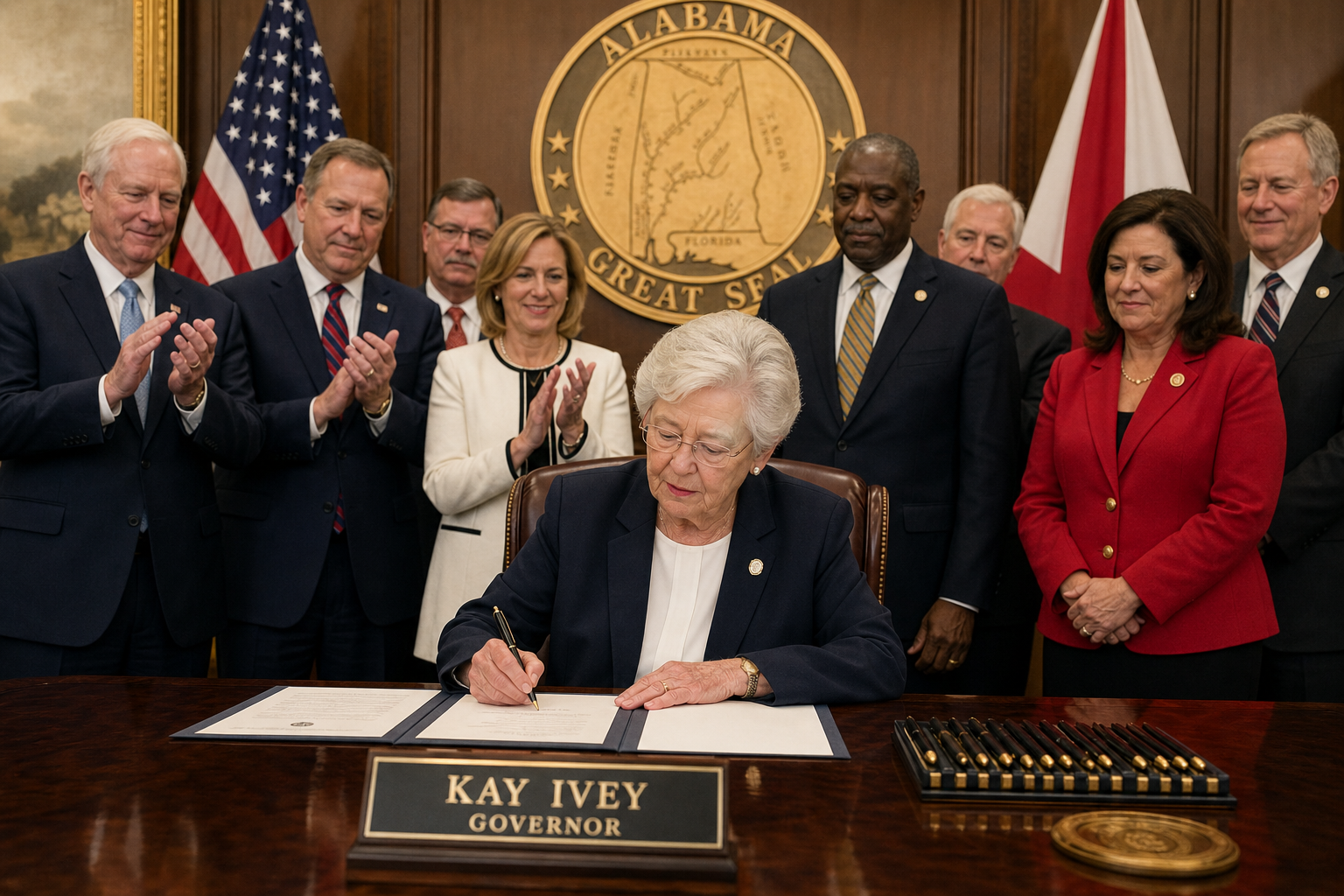
Alabama Governor Kay Ivey has signed the Child Predator Death Penalty Act into law, making Alabama the first state in modern history to authorize capital punishment for the rape and sexual torture of children under 12. The law, known as HB41, takes effect October 1, 2026 — and legal experts say it is almost certain to land before the U.S. Supreme Court.
A Law Born From Outrage
The legislation was sparked by a shocking 2025 case in Bibb County, Alabama. Eight people were arrested on charges of trafficking and sexually torturing children — some as young as three years old. The arrests sent shockwaves through the state legislature, which responded by drafting what would become some of the most severe child protection laws in the country.
Alabama has long maintained some of the nation’s strictest criminal penalties. But HB41 broke new ground, extending the death penalty beyond murder to cover what lawmakers called the most unforgivable offenses against children.
What the Law Does
Governor Ivey signed HB41 on February 12, 2026. The bill was sponsored by Republican state Rep. Matt Simpson and state Sen. April Weaver, and it passed with overwhelming, near-unanimous margins — 73–6 in the House and 33–1 in the Senate. The bipartisan landslide reflected just how broadly the Bibb County case had shaken Alabama lawmakers.
Under the new law, first-degree rape, first-degree sodomy, and sexual torture of a child under the age of 12 are now capital offenses in Alabama. Prosecutors can seek the death penalty in these cases — the same punishment currently reserved for murder. The act takes effect October 1, 2026, giving courts and law enforcement several months to prepare for its implementation.
The eight individuals charged in the 2025 Bibb County case — where at least 10 children were victimized — are expected to be among the first defendants prosecutors consider charging under the new statute.
Supporters and Critics Clash
Supporters of HB41 argue it sends an unambiguous message: the rape and torture of children will be treated with the full weight of the law’s most severe punishment. Rep. Matt Simpson, the bill’s lead sponsor, called it a necessary response to crimes that shock the conscience of every decent person. For many Alabamians, the Bibb County case made the need for stronger penalties impossible to ignore.
Legal experts, however, warn the law faces a steep constitutional climb. In 2008, the U.S. Supreme Court ruled 5–4 in Kennedy v. Louisiana that the death penalty for child rape — where the victim survives — violates the Eighth Amendment’s prohibition on cruel and unusual punishment. That precedent has stood for nearly two decades. Multiple constitutional law scholars have said Alabama’s law is on a direct collision course with Kennedy, and that a challenge will almost certainly be filed the moment prosecutors seek the death penalty under HB41.
Could the Supreme Court Revisit Kennedy v. Louisiana?
The Supreme Court that decided Kennedy v. Louisiana in 2008 is not the Court that exists today. The current bench has a more conservative majority, and several justices have signaled openness to revisiting precedents on criminal punishment. Some legal observers believe a future challenge to Alabama’s law — if it survives lower courts — could give the Supreme Court an opportunity to narrow or reverse Kennedy. Others argue the 2008 ruling’s reasoning remains sound and will hold. Either way, the Court will almost certainly have the final word.
What This Means for Americans
For families across the country, Alabama’s law represents a flashpoint in a broader national debate about how the justice system should punish the worst crimes against children. If HB41 survives constitutional challenge, it could embolden other states to pass similar legislation. If the Supreme Court strikes it down, that ruling will set a national standard affecting child protection laws in all 50 states. Either outcome will have consequences that reach far beyond Alabama’s borders.
Stay informed on the stories that matter most. Follow Your Daily Updates on Facebook and bookmark yourdailyupdates.news for breaking news and analysis.