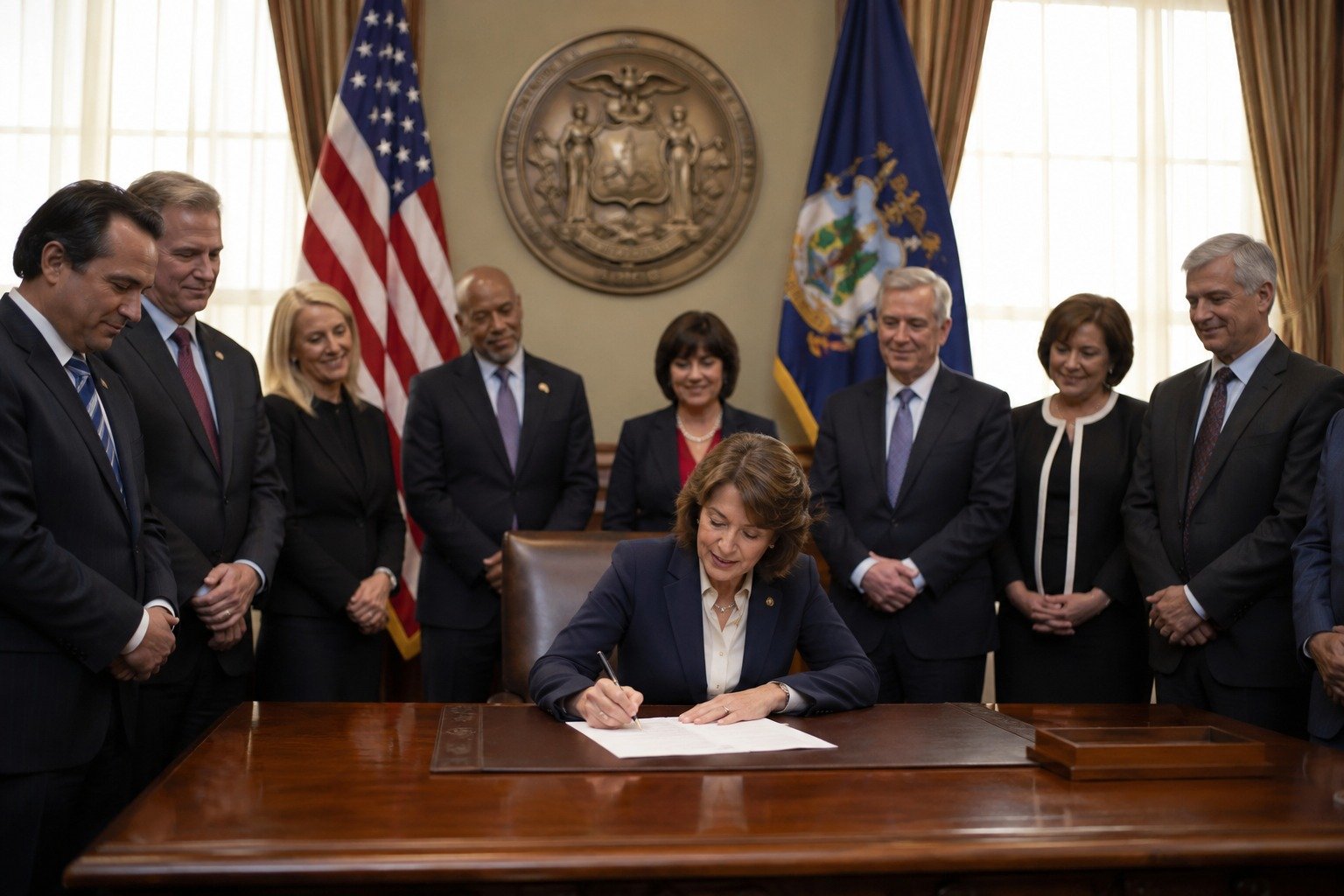
Alabama has made the sexual abuse of a young child a death-penalty crime. On February 12, 2026, Gov. Kay Ivey signed the Child Predator Death Penalty Act, a law that makes first-degree rape, first-degree sodomy, and first-degree sexual abuse of a child under 12 a capital offense. The law takes effect October 1, 2026 — and it sets up a constitutional fight that could reach the U.S. Supreme Court.
What the Law Does
Under the new statute, the most serious sexual crimes committed against a child younger than 12 automatically become capital offenses — meaning prosecutors can seek the death penalty even when the victim survives. Sponsored by state Rep. Matt Simpson and state Sen. April Weaver, the measure was one of Gov. Ivey’s top priorities for the legislative session. The governor’s office framed it as the strongest possible legal protection for the state’s youngest and most vulnerable residents.
The bill moved through the Alabama Legislature with overwhelming bipartisan support. The House approved it by a vote of 73-6. The Senate passed it 33-1. That kind of margin is rare for any bill, let alone one that expands the death penalty into new territory.
The Case That Drove It
The push for harsher penalties gained urgency in 2025, after a horrifying case in Bibb County. Eight people were arrested and charged in connection with the abuse and trafficking of at least 10 children who had been held captive. Some of the victims were as young as three years old. The case shocked the state and gave lawmakers a powerful argument that existing penalties did not match the severity of the crimes.
A Major Constitutional Obstacle
There is a significant legal problem standing in the way. In 2008, the U.S. Supreme Court ruled in Kennedy v. Louisiana that imposing the death penalty for the rape of a child — when the crime does not result in the victim’s death — is unconstitutional under the Eighth Amendment’s ban on cruel and unusual punishment. That decision remains binding law across the country.
That means any death sentence handed down under Alabama’s new law is almost certain to be challenged immediately, and lower courts would be bound by the 2008 precedent unless the Supreme Court chooses to revisit it. Supporters of the Alabama law are betting that the current, more conservative Court might be willing to overturn or narrow Kennedy v. Louisiana. The law is, in effect, a deliberate test case designed to invite that fight.
Reactions and Implications
Supporters argue the law sends an unambiguous message that Alabama will not tolerate the worst crimes against children. Critics counter that the state is setting up years of expensive, drawn-out appeals over a statute that may not survive judicial review — and that families of victims could be dragged through prolonged legal battles with no guarantee of a final result. Some legal scholars warn that staking out a direct conflict with settled Supreme Court precedent is a gamble with real human costs on every side.
What This Means for Americans
Alabama is not acting alone — it is part of a broader national effort to challenge the 2008 ruling and expand the reach of capital punishment. Whether that effort succeeds will ultimately be decided not in the state legislature but in the federal courts. For now, the law takes effect October 1. Whether it ever leads to an actual execution is a question only the judiciary can answer, and the outcome could reshape death-penalty law for the entire country.
Stay informed on the stories that matter most. Follow Your Daily Updates on Facebook and bookmark yourdailyupdates.news for breaking news and analysis.