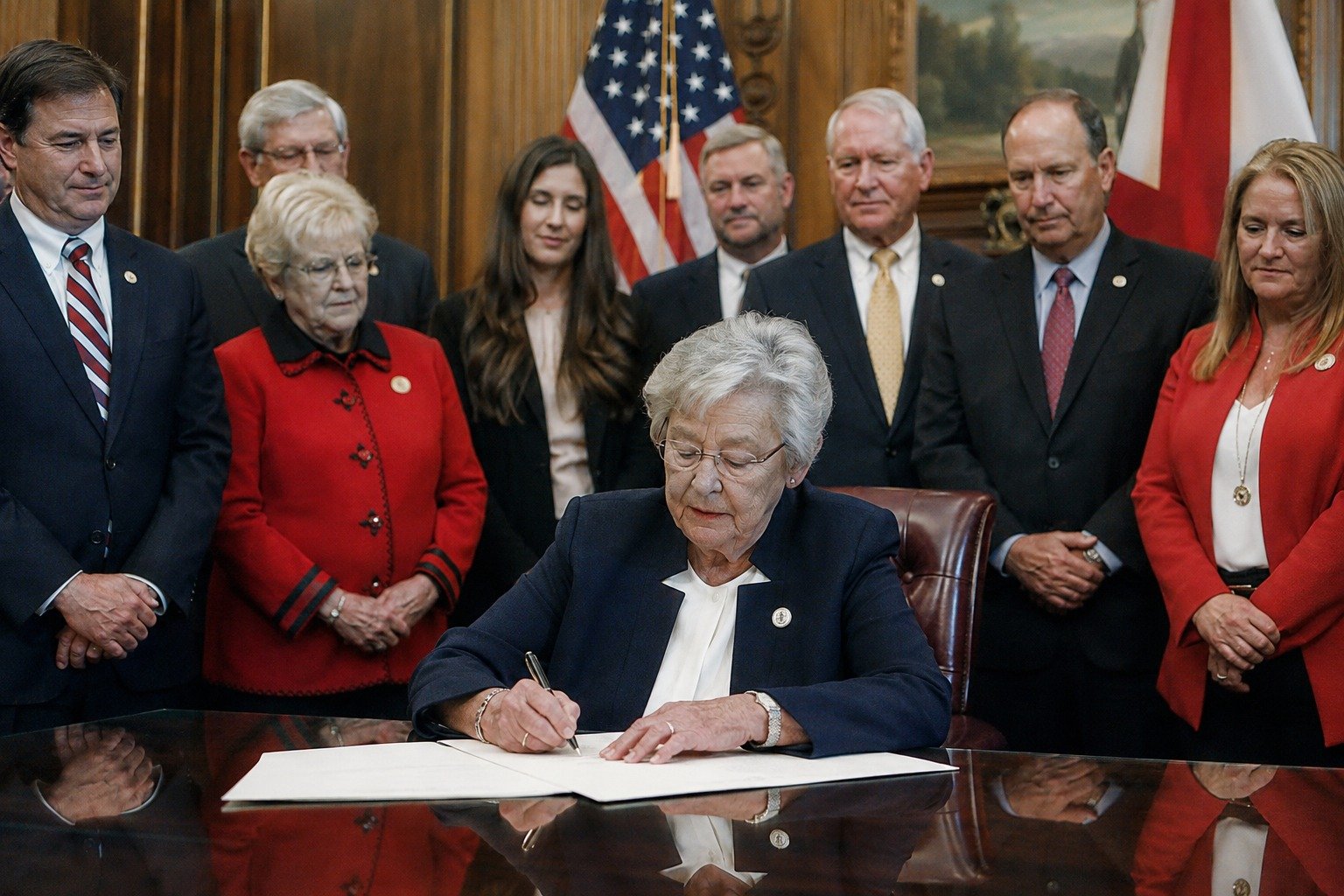
Starting October 1, Alabama will be able to seek the death penalty for the most serious child sex crimes, after Governor Kay Ivey signed the Child Predator Death Penalty Act into law.
What the Law Does
The law makes first-degree rape, first-degree sodomy, and first-degree sexual abuse capital offenses when the victim is under 12 years old. In practical terms, the most severe crimes against young children could now carry a death sentence in the state.
Supporters describe it as the strongest legal protection Alabama can offer children, arguing that the worst offenders deserve the harshest penalty available under the law.
How It Passed
The act moved through the legislature with overwhelming bipartisan support. The Alabama House approved it 73-6, and the Senate followed 33-1, sending it to the governor’s desk as one of her top priorities for the session. Ivey signed it in February, and it takes effect October 1.
The Constitutional Question
The law is widely expected to face a legal challenge. In 2008, the U.S. Supreme Court ruled in Kennedy v. Louisiana that imposing the death penalty for the rape of a child, in cases where the victim did not die, was unconstitutional under the Eighth Amendment.
Alabama is among several states that have recently passed similar laws, in part to set up a direct challenge to that precedent. Legal analysts expect the issue could eventually return to the Supreme Court, especially given changes in the Court’s composition since 2008.
What Happens Next
For now, the law is set to take effect as written. Whether it survives the courts is a separate question – and one that could have implications well beyond Alabama, shaping how far states can go in punishing the most serious crimes against children.
Stay informed on the stories that matter most. Follow Your Daily Updates on Facebook and bookmark yourdailyupdates.news for breaking news and analysis.