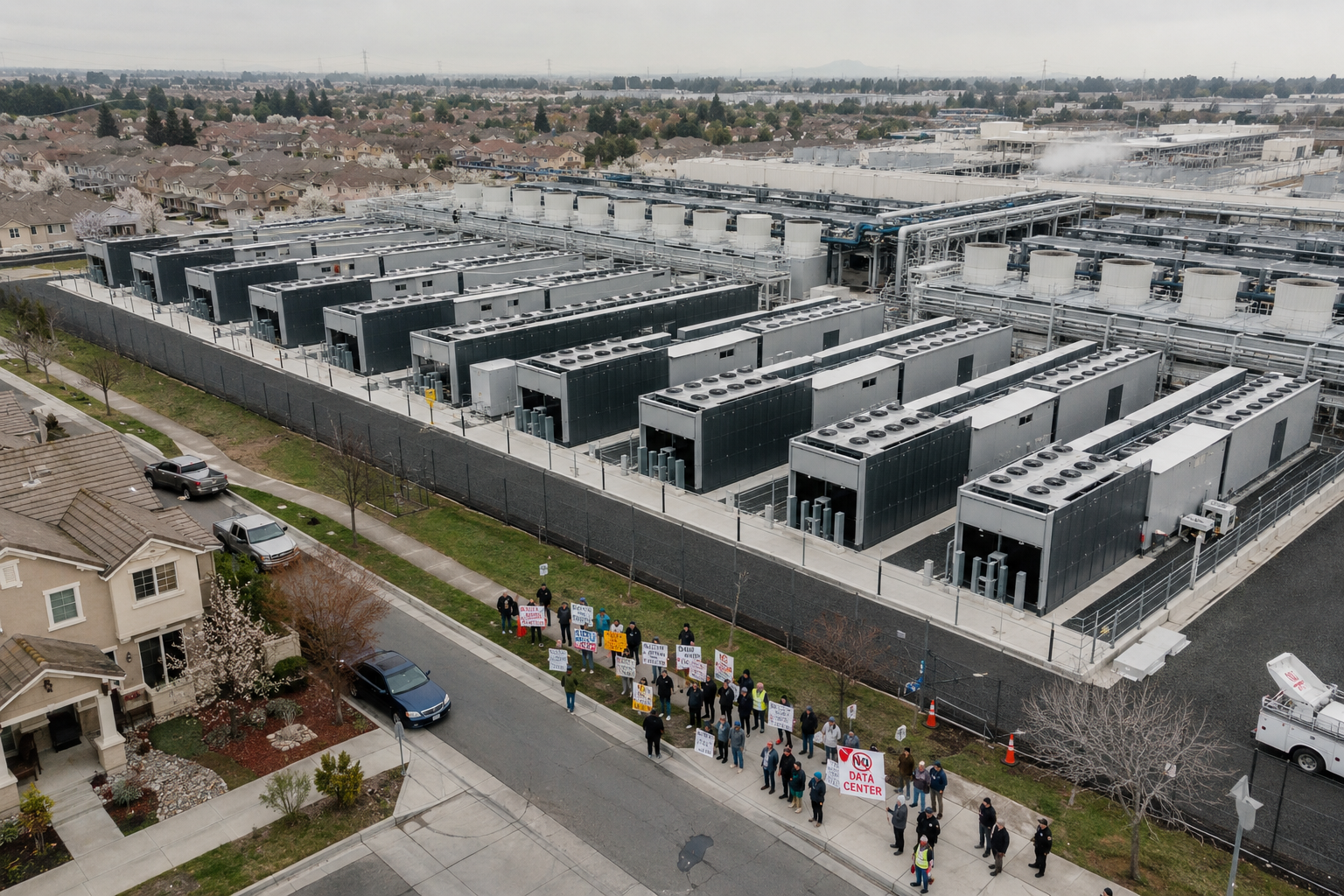
A new national poll is sending a clear warning to the tech industry: most Americans don’t want AI data centers built in their communities — and the opposition is stronger than Silicon Valley expected.
What the Poll Found
The Gallup survey found that 70 percent of Americans — more than 7 in 10 — oppose the construction of AI data centers near their communities. The backlash is being driven by three primary concerns: skyrocketing energy consumption, massive water usage for cooling systems, and the near-total absence of public input before construction begins.
The results were consistent across geographic and demographic lines. Opposition was high in rural communities worried about power grid strain, in suburban neighborhoods concerned about noise and traffic, and in urban areas where residents say they’re being cut out of decisions that affect their daily lives. This isn’t a partisan issue — the concern crosses party lines.
Why Communities Are Pushing Back
The scale of what’s being built is hard to overstate. A single large AI data center can consume as much electricity as a small city — tens of thousands of megawatt-hours per day. They also require millions of gallons of water for cooling systems, drawing from local aquifers and municipal water supplies. And they’re going up fast, often with minimal environmental review and little to no community notification before ground breaks.
Tech giants including Microsoft, Google, Meta, and Amazon are collectively spending hundreds of billions of dollars to expand AI infrastructure across the United States. The buildout is accelerating rapidly — driven by the explosion in demand for AI computing power following the mainstream adoption of tools like ChatGPT, Gemini, and other large language models. Industry analysts estimate that AI data center capacity needs to quadruple by 2030 to keep pace with projected demand.
The Local Impact
For residents living near these facilities, the impact is already being felt. Utility rates in several counties that host major data center hubs have increased as grid operators scramble to meet the new demand. In drought-prone regions of the Southwest and Southeast, water utility boards have raised alarms about the strain on already-stressed water supplies. Noise complaints from cooling equipment have become common in communities built near large facilities.
The pushback is growing. Communities in Virginia, Texas, Arizona, and Georgia — all major data center hubs — have seen residents file formal objections, push for environmental impact assessments, and lobby state legislatures for disclosure laws that would require companies to report energy and water usage projections before permits are issued. Several local zoning boards have begun requiring community hearings before approving new construction.
The Industry Argument
Tech companies argue the buildout is essential to American competitiveness. They point to China’s aggressive AI infrastructure investment and warn that slowing construction in the U.S. cedes ground in the global AI race. Many of these companies have also pledged carbon-neutral operations and investment in renewable energy to power their facilities — though critics argue those promises are far behind the pace of current construction.
Supporters of the expansion also note the economic benefits: data centers bring construction jobs, long-term employment, and significant tax revenue to host communities. Some smaller municipalities have actively courted tech investment, offering tax incentives to attract facilities.
What This Means for Americans
For ordinary Americans, this debate comes down to a fundamental question about who gets to decide what gets built in their communities. Right now, in most states, there are no laws requiring tech companies to hold public hearings, disclose their environmental footprint, or get community approval before breaking ground on a facility that could fundamentally change a neighborhood’s energy costs, water supply, and quality of life. The Gallup poll suggests that 70 percent of Americans think that needs to change.
Stay informed on the stories that matter most. Follow Your Daily Updates on Facebook and bookmark yourdailyupdates.news for breaking news and analysis.