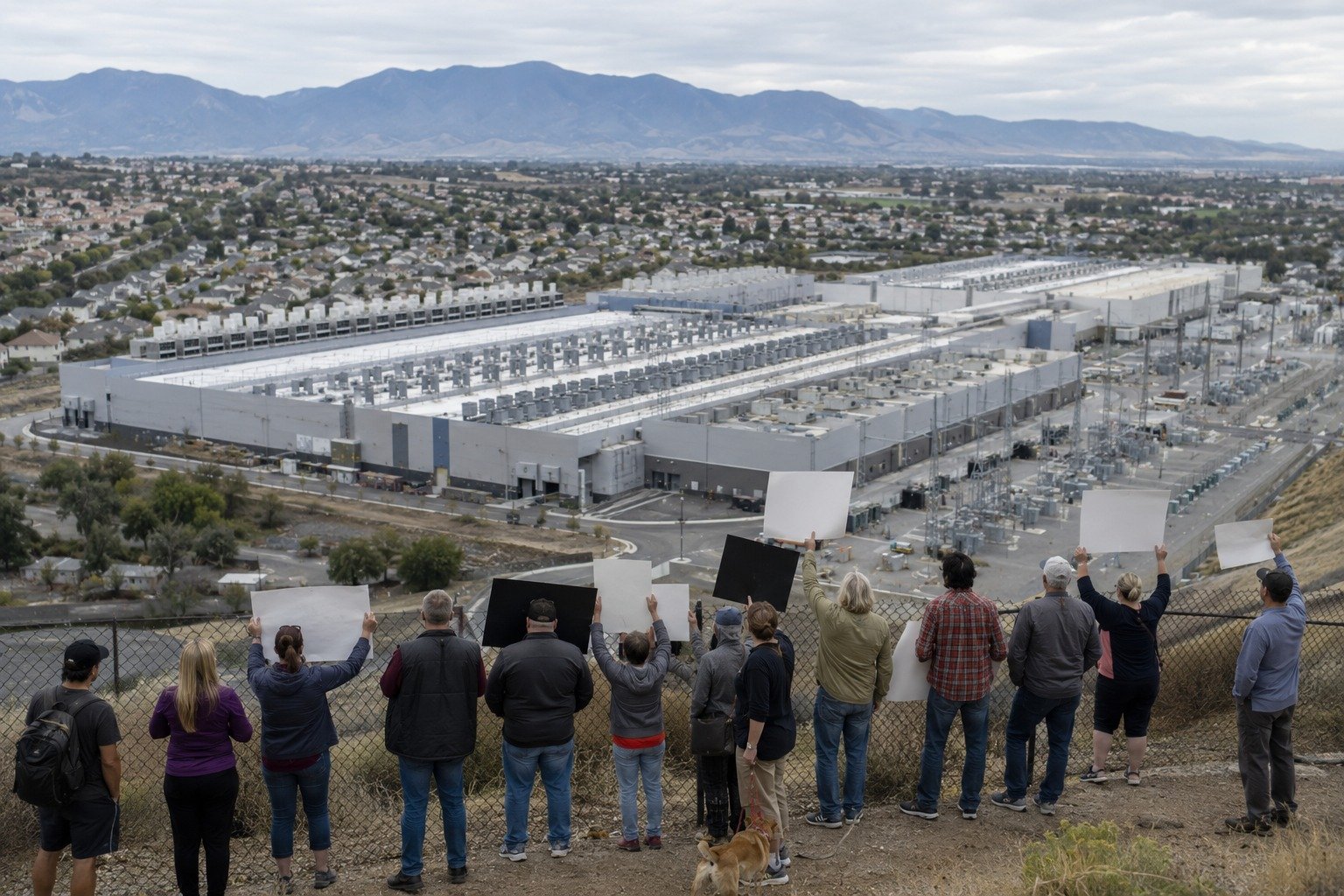
Seven in ten Americans want nothing to do with AI data centers being built near their homes — and a sweeping new national poll is putting that opposition on full display. The survey, which polled thousands of adults across the country, found that 70% of respondents actively oppose large-scale AI data centers in or near their communities. The backlash cuts across party lines, geographic regions, and income levels.
What’s Behind the Opposition?
The concerns are straightforward. AI data centers are industrial giants — massive warehouse-sized facilities packed with thousands of servers that consume extraordinary amounts of electricity and water. A single large-scale facility can draw as much power as a small city and consume water at a rate that strains local supplies for years. Residents near existing facilities have raised ongoing concerns about noise pollution, environmental degradation, and declining property values.
The water issue, in particular, has emerged as a flashpoint. AI data centers use water-intensive cooling systems that require millions of gallons annually. In drought-prone regions across the American West and in rural communities already dealing with aging infrastructure, the arrival of a massive tech facility can immediately impact residential water access and pressure local utilities in ways that are difficult to reverse.
The Industry’s Counterargument
The tech industry argues the opposite: that data centers bring jobs, tax revenue, and economic development to communities that need it. Major companies like Microsoft, Google, and Amazon have pledged hundreds of billions of dollars in domestic data center expansion — and several state governments have responded with substantial tax incentives to attract them. Supporters of these projects say the construction and operational jobs represent a genuine economic boost for communities that have seen manufacturing and industrial employment decline over the past two decades.
Some state and local leaders have enthusiastically welcomed these investments. Virginia’s data center corridor, often called “Data Center Alley,” is frequently held up as a model for how communities can leverage tech infrastructure for economic growth. Texas, Ohio, and Georgia have all seen major data center announcements in recent years, with local officials touting thousands of construction jobs and millions in property tax revenue.
Why Critics Say the Math Doesn’t Add Up
But critics say the numbers rarely match the promises. Data centers are highly automated facilities, meaning the number of permanent local jobs created is often far fewer than initially advertised during the approval process. A facility that promises 500 construction jobs may ultimately employ only 50 to 100 people full-time once operational. Meanwhile, the environmental costs — particularly water and energy demands — arrive immediately and persist for decades. In rural communities already dealing with strained utilities, a major AI facility can create genuine hardship for residents who had no meaningful voice in the decision.
Legal challenges have followed in several states. Community groups in Nevada, Arizona, and North Carolina have filed lawsuits over water rights and environmental impact assessments, arguing that local governments approved data center projects without adequate review. Some of these cases are still working their way through the courts, and their outcomes could set precedents for how future projects are approved or blocked.
The Political Fight Ahead
The political fight over AI infrastructure is only going to intensify. With billions in federal investment flowing into AI development and tech companies racing to build capacity to compete with China, proposed data center sites are multiplying across the country at a pace that many communities say they are unprepared to handle. Zoning laws designed for factories and warehouses are often being stretched to accommodate facilities with far greater environmental footprints. Community organizations that once had no voice in these decisions are now organizing, lobbying state legislatures, and going to court to push back.
What This Means for Americans
For most Americans, the question of AI data centers may seem abstract until one is proposed in their backyard. Then it becomes very concrete, very fast — affecting water bills, electricity rates, road traffic, noise levels, and property values. The 70% opposition number in this poll suggests that when people are asked directly, they are not willing to simply accept the tech industry’s framing that these facilities are purely a public good. Whether lawmakers at the state and federal level respond to that sentiment is a question that will define AI infrastructure policy for the decade ahead.
Stay informed on the stories that matter most. Follow Your Daily Updates on Facebook and bookmark yourdailyupdates.news for breaking news and analysis.