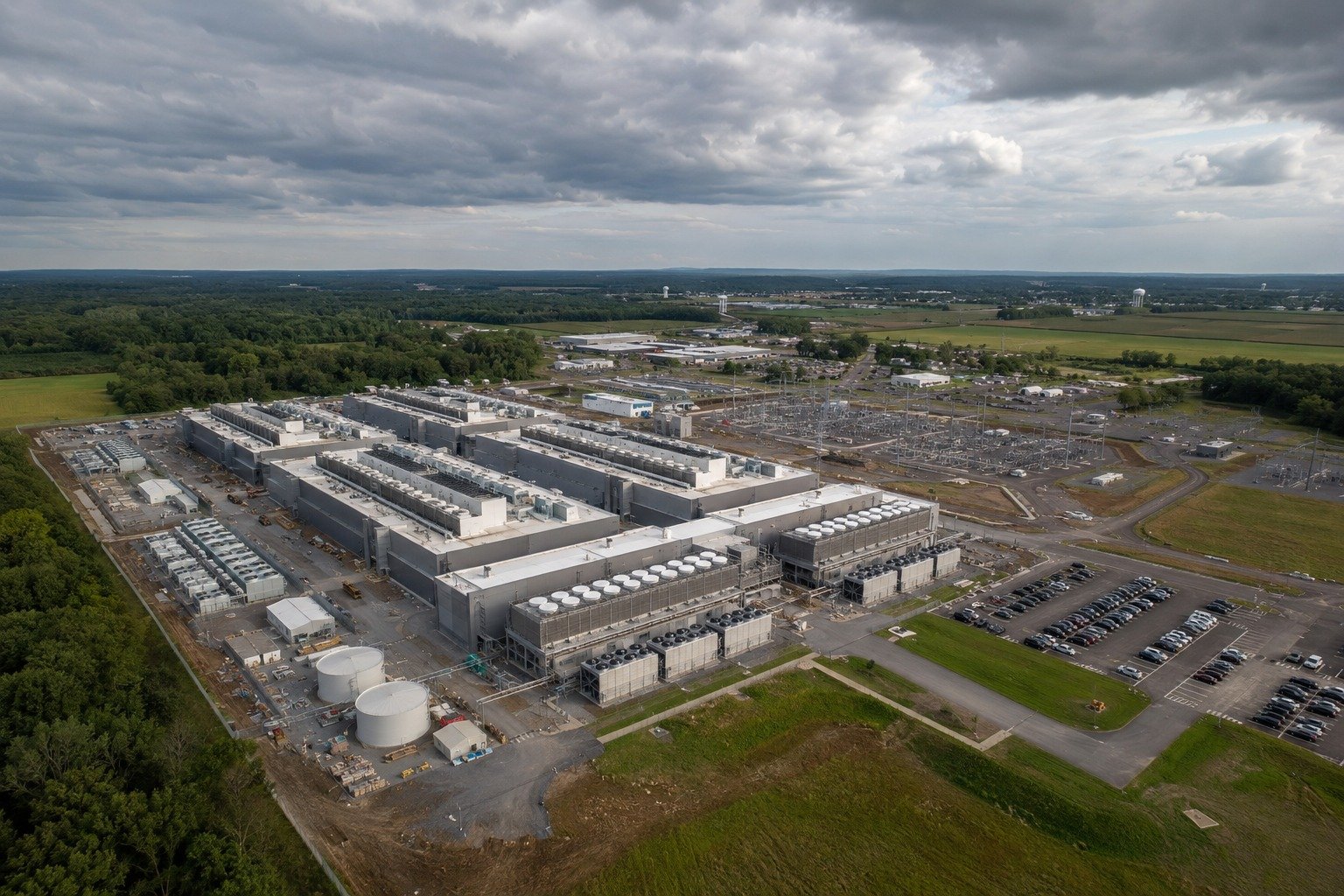
The backlash against AI data centers is no longer a local story — it’s a national movement. In just twelve months, the number of U.S. communities that have taken formal action to block, restrict, or place moratoriums on AI data center construction jumped from 8 to 78. What started as scattered resistance in a handful of rural counties has become a coordinated, bipartisan fight between Big Tech and the communities it wants to move into.
The Scale of the Buildout
To understand why communities are pushing back, you have to understand how fast the AI infrastructure boom has moved. The United States now has roughly 3,000 operational data centers, with more than 700 additional facilities currently under construction. Total capacity has nearly quadrupled since 2021 — and energy and water consumption have scaled right along with it.
AI data centers are not your average office park. A single hyperscale facility can consume as much electricity as a small city and draw millions of gallons of water per day for cooling. Tech companies — from Microsoft and Google to Amazon and a growing field of AI-focused startups — have been racing to lock up real estate, sign power agreements, and break ground before competitors can. The speed has been extraordinary. The transparency has not.
The Pushback Is Organized and Growing
As of this year, local and state governments have responded with force. There are now 69 active moratoriums on AI data center construction across the country, 4 permanent bans, and legislation pending or already signed in 10 states. Maine’s governor vetoed one such bill — but another is already working its way through the legislature. In Reno, Nevada, the city council approved a 30-day emergency moratorium after Kevin O’Leary’s Stratos Project announced plans to develop 40,000 acres of AI infrastructure in the region, catching residents entirely off guard.
The opposition isn’t limited to moratoriums and vetoes. Seventeen AI data center projects have been outright canceled as a direct result of local resistance. Another 18 have been delayed, with timelines pushed back by months or years while regulatory and public approval battles play out. For an industry that measures competitive advantage in quarters, these delays carry real cost.
A Rare Moment of Bipartisan Agreement
What makes this revolt unusual is that it doesn’t fit neatly on the political spectrum. On the left, Sen. Bernie Sanders and Rep. Alexandria Ocasio-Cortez have called for a federal freeze on hyperscale AI data center construction, citing energy consumption and environmental impact. On the right, rural Republican county commissioners in states like Texas, Idaho, and South Carolina are raising alarms about aquifers running dry and power grids being strained to serve facilities that provide few local jobs. The common thread across both sides: tech companies made billion-dollar commitments before anyone in the affected communities was consulted.
Critics of the industry have repeatedly used the phrase “speed, scale and secrecy” to describe how these projects are developed — decisions made in boardrooms and announced to communities as a fait accompli. That pattern has eroded trust and accelerated political action at every level of government.
What This Means for Americans
If you live near a proposed data center site — or near a power grid that serves one — this fight is already affecting you. Higher electricity costs, strained water infrastructure, and communities that find their local governments locked out of decisions that directly shape their quality of life are the real-world consequences of unchecked AI expansion. The question of who gets to decide where AI infrastructure goes, and at whose expense, is no longer theoretical. It’s being answered right now in county commission chambers and state capitols across the country.
Stay informed on the stories that matter most. Follow Your Daily Updates on Facebook and bookmark yourdailyupdates.news for breaking news and analysis.