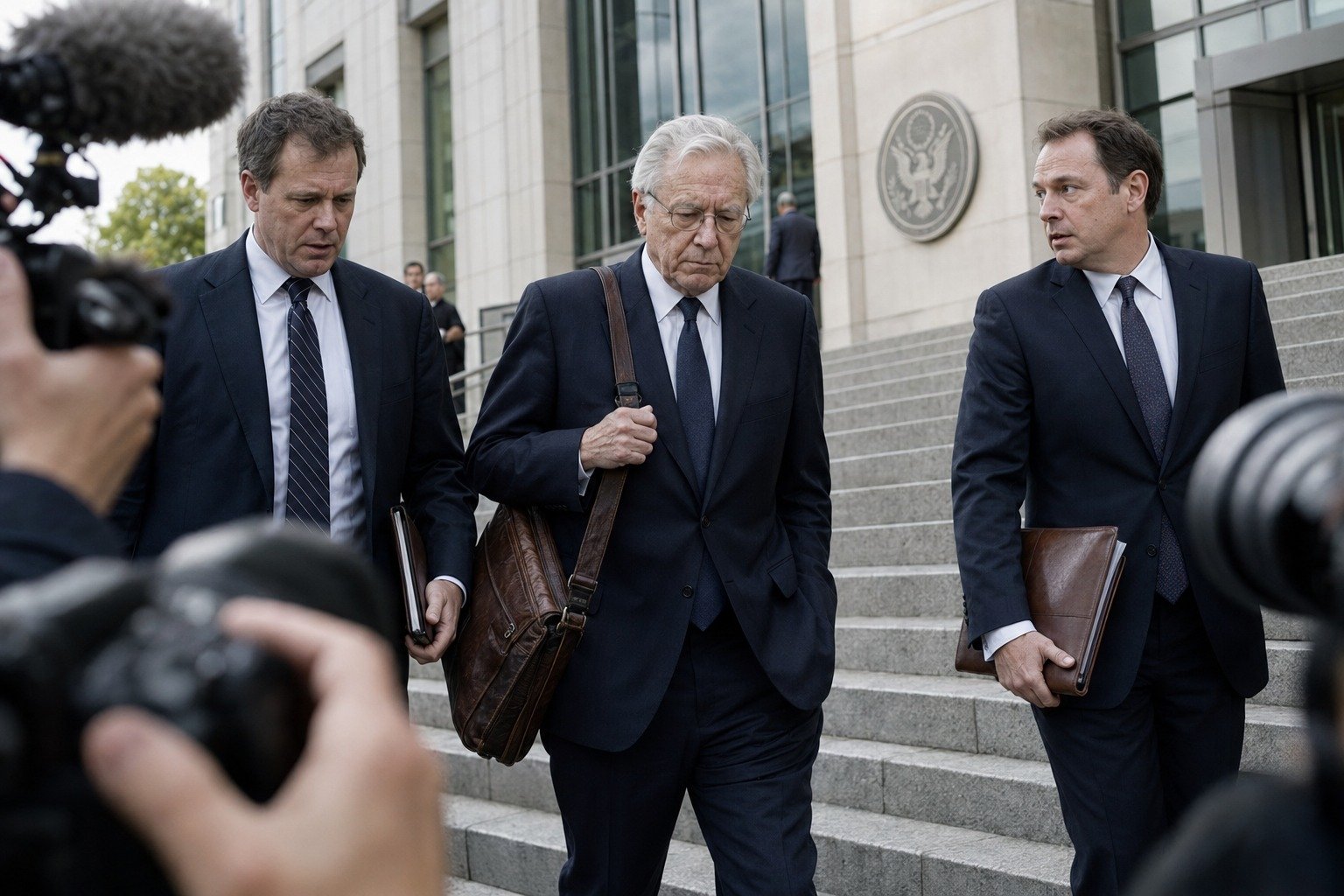
A senior federal health official who spent 16 years inside the National Institutes of Health has admitted in open court that he deliberately routed government records around the law that guarantees the public can see them. Dr. David M. Morens, 78, of Chester, Maryland, pleaded guilty Tuesday in federal court in Greenbelt to one felony count of conspiracy to commit offenses against and defraud the United States. He faces up to five years in prison when he is sentenced in November.
How a Grant Termination Led to a Federal Felony
Morens served as a senior advisor in the Office of the Director at the National Institute of Allergy and Infectious Diseases from 2006 to 2022, working for years as one of Dr. Anthony Fauci’s closest advisers. That proximity is part of what makes the case notable. It is also what makes the government’s careful language notable: the Justice Department’s announcement does not name Fauci. He appears in the filing only as an unnamed Senior NIAID Official 1, and he has not been charged with anything.
The conduct at the center of the case traces back to a research grant titled Understanding the Risk of Bat Coronavirus Emergence. NIH awarded the grant to EcoHealth Alliance, which passed a portion of the funding to the Wuhan Institute of Virology as a subaward. After NIH terminated that grant, the communications surrounding it became a matter of intense public and congressional interest.
The Private Gmail Arrangement
According to the plea, Morens and his co-conspirators did not simply drift into using personal email out of convenience. They agreed in writing to shift their communications off his official NIH account and onto his personal Gmail account. The purpose, as charged, was specific: to place those messages beyond the reach of the Freedom of Information Act and the Federal Records Act.
Those two laws are the backbone of federal transparency. FOIA gives any member of the public the right to request government records. The Federal Records Act requires officials to preserve them in the first place. A written agreement to route official business through a private inbox is an agreement to defeat both at once.
Wine, Michelin Stars, and an Official Act
The plea also carries a gratuities component, and it is among the most striking details in the case. Morens admitted that a person identified in court documents only as Co-Conspirator 1 gifted him wine in recognition of what was described as his behind-the-scenes shenanigans. Morens then identified an official act he had performed to deserve the gift: authoring a journal commentary arguing that COVID-19 had natural origins.
Michelin-starred meals in Paris, New York and Washington were also discussed. Press reporting has identified Co-Conspirator 1 as Peter Daszak of EcoHealth Alliance, though the Justice Department’s own release does not name him and he is not a defendant in this case.
What the Plea Does and Does Not Establish
It is worth being precise about the scope here, because a case like this gets stretched in both directions within hours.
Morens pleaded guilty. He was not convicted at trial, and he has not been sentenced. The plea resolved a five-count indictment returned in April 2026; the remaining counts, which involved destruction, alteration and falsification of records and concealment of records, were dropped as part of the agreement. Dropped counts are not convictions.
Just as importantly, nothing Morens admitted settles the question of where the virus came from. He did not admit to falsifying scientific findings about the origins of COVID-19. The crime he admitted is records evasion paired with an illegal gratuity: hiding documents and accepting gifts tied to an official act. Those are serious federal offenses on their own terms. They are not a verdict on virology.
The Penalty and What Comes Next
Morens faces a statutory maximum of five years in prison, up to three years of supervised release, and a fine of up to $250,000. The Justice Department notes that actual federal sentences are typically well below the statutory maximum. Sentencing is set for November 12, 2026, before U.S. District Judge Paula Xinis.
The case was investigated by the FBI’s Baltimore Field Office and the Department of Health and Human Services Office of Inspector General. U.S. Attorney Kelly O. Hayes announced the plea.
What This Means for Americans
Public records law is not a technicality. It is the mechanism ordinary people use to find out what their government did with their money and in their name. When a senior official decides in advance which records the public will be allowed to see, and then accepts gifts tied to the official work he performed, the damage is not limited to one grant or one virus. It sets a template. Any future official who wants to keep an inconvenient conversation off the books now has a roadmap, and the only thing standing against it is whether this conduct actually carries a consequence.
That is what makes the November sentencing worth watching. The admission is already on the record. What it costs him is not yet decided.
Stay informed on the stories that matter most. Follow Your Daily Updates on Facebook and bookmark yourdailyupdates.news for breaking news and analysis.