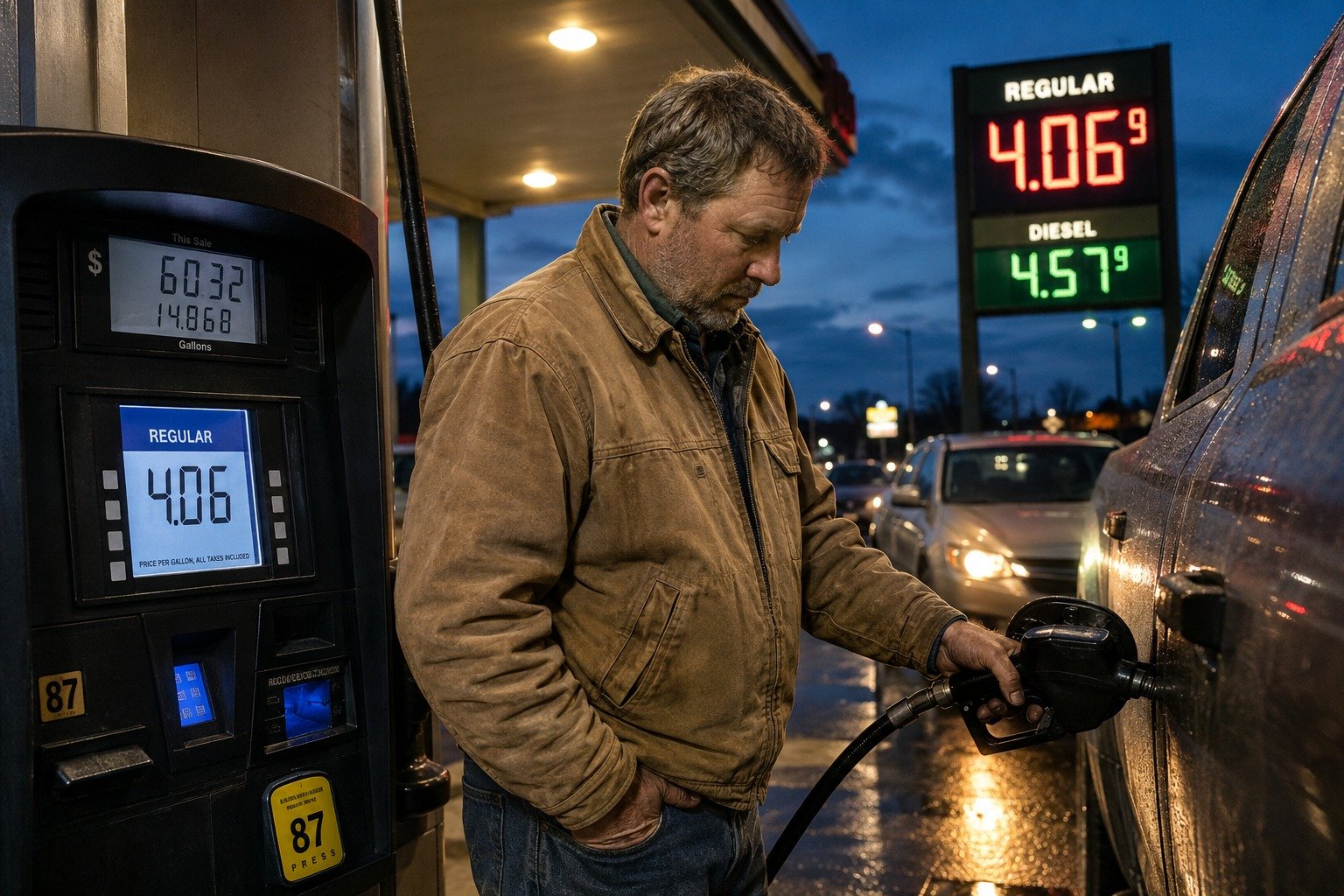
The national average price for a gallon of regular gasoline reached about $4.06 on Monday, August 17, according to AAA. It is the highest price ever recorded at this point in August. It also sits more than two dollars above the $1.85 gasoline President Donald Trump repeatedly promised American drivers.
What “Highest August on Record” Actually Means
The phrase needs a precise reading. This is a calendar-month record, not an all-time record. The all-time high for the national average remains roughly $5.02 a gallon, set in June 2022. The current figure is also nominal, meaning it has not been adjusted for inflation. What makes August 2026 notable is that no other August in the history of the data has been this expensive.
The comparison that matters most to household budgets is the year-over-year one. Drivers are paying more than 92 cents a gallon more than they were a year ago. On a 15-gallon fill-up, that is close to $14 in additional cost every single time a driver stops at the pump.
The Details
Patrick De Haan, the petroleum analyst at GasBuddy, confirmed the milestone, describing it as the highest price ever recorded for mid-August.
The pain is not distributed evenly. In California and Hawaii, two states that already carry the steepest fuel taxes and the tightest refining constraints in the country, averages are approaching or have already passed $5.40 a gallon.
The pressure behind the climb is the ongoing war between the United States and Iran, which has disrupted energy supply routes for months. On Monday, a 60-day window for peace talks expired without a lasting deal to end the fighting. It is worth being precise about what happened: the talks did not collapse, and they were not cancelled. A negotiating deadline came and went without agreement.
The sticking point is the Strait of Hormuz. Iran refuses to give up control of the waterway, and the United States will not accept an arrangement in which Iran charges tolls or otherwise controls which ships are allowed to pass through it. Neither side moved far enough for a deal.
Markets Shrugged, but the Trend Is Clear
Oil markets reacted with a shrug rather than a shock. Brent crude sat at about $88.85 a barrel, up 0.38% after the deadline lapsed. That is a fractional move, and it should not be mistaken for a spike.
The longer trend tells the real story. Brent is up roughly $10 a barrel from its early-August lows, and crude has stayed below $100 a barrel for months. What Americans are feeling at the pump is not a single dramatic event. It is a slow, grinding climb that has been building all summer while the war goes unresolved.
What This Means for Americans
For anyone who drives to work, this functions as a pay cut that never appears on a pay stub. It lands hardest on hourly workers, delivery drivers, contractors, home health aides, and rural commuters, because those are the people with the least ability to simply drive less. A household filling two tanks a week is absorbing well over $100 a month in extra fuel costs compared with last year, and that money comes out of groceries, rent, and savings.
The accountability question is straightforward. The $1.85 figure was a specific, repeated, public promise. The $4.06 figure is the number on the sign. The gap between the two is not an abstraction. It is the distance between what working people were told to expect and what they are actually paying, while the decisions that shape energy supply are made far above their heads.
Stay informed on the stories that matter most. Follow Your Daily Updates on Facebook and bookmark yourdailyupdates.news for breaking news and analysis.