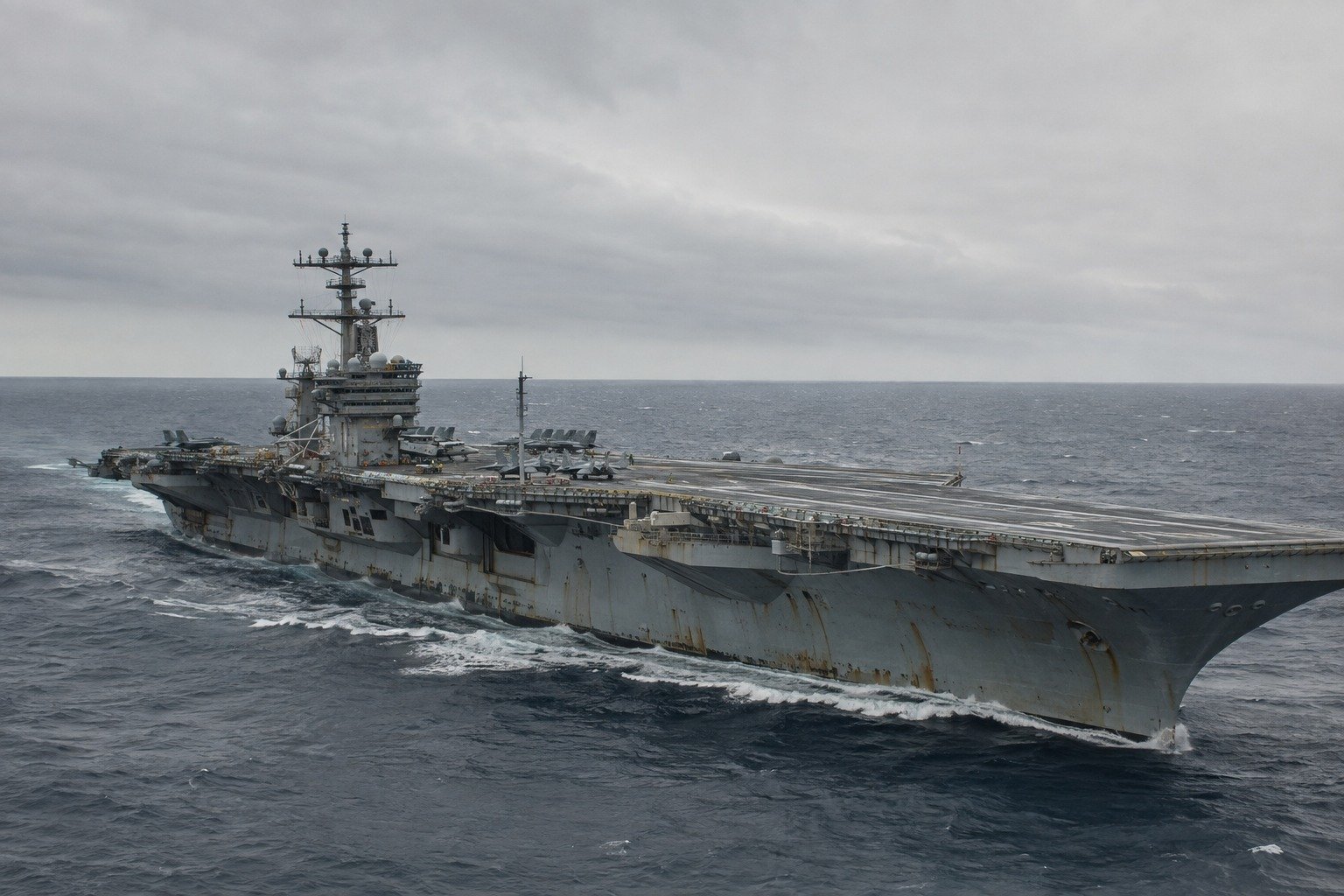
The USS Abraham Lincoln has been at sea for more than 250 days, and according to reports and the lawmakers now demanding answers, the sailors aboard have paid a steep price for a deployment that kept getting stretched. Reported conditions on the nuclear-powered aircraft carrier — from food and supply shortages to broken plumbing, water contamination, and deck safety concerns — have prompted two U.S. senators to press the Navy for accountability.
The Lincoln departed San Diego on November 21, 2025, before being rerouted to the Middle East. It has now gone more than 200 consecutive days without a port call, a stretch widely described as a modern record for time at sea. For the thousands of sailors aboard, that means the better part of a year without setting foot on shore — the kind of grind that wears down even the most seasoned crew.
What sailors and families are reporting
Much of what has been reported about daily life aboard the carrier comes from crew accounts, family members, and lawmakers rather than confirmed Navy findings. Those accounts describe shortages of basic supplies, broken toilets and showers, concerns about water quality, and worries about safety on a flight deck where fatigue can turn dangerous. Senator Richard Blumenthal, in pressing the Defense Department, pointed to widespread reports of shortages, water contamination, plumbing problems, deck safety issues, and deteriorating mental health.
It is important to be precise about what has been verified and what has not. Many of the specific condition claims remain reports and allegations, not established Navy conclusions. But the volume of those accounts — and the length of the deployment itself — is what has lawmakers alarmed.
A sailor overboard
Earlier this month, a sailor went overboard from the Lincoln. The Navy has characterized the incident as a mental health episode, and the sailor was rescued and medically evacuated. Lawmakers and family members have tied the episode to the broader strain of an over-long deployment and reports of sagging morale, though the Navy has not described it as a confirmed suicide attempt.
Mental health and the welfare of service members has become the throughline of the story. When a crew is kept at sea for months on end without relief, the human cost can be as real as any mechanical failure — and far harder to see from the outside.
Senators demand accountability
Senators Richard Blumenthal and Ruben Gallego, himself a combat veteran, are demanding that the Navy account for conditions aboard the ship. Gallego has called for a bipartisan Senate delegation to make an official oversight visit to the carrier to investigate the reported conditions firsthand. Blumenthal has pressed the Defense Department directly on what it is doing to support the sailors on board.
Their message is pointed: leadership stretched a deployment to the breaking point, and the people absorbing the cost are the sailors who serve. Oversight, they argue, is not an attack on the Navy — it is the least the country owes the men and women it sends to sea.
The bigger question
The core issue is straightforward. A crew was kept at sea for the better part of a year, and reports suggest their basic welfare suffered as a result. The Navy will have its own account of what happened and why, and some claims may not hold up under scrutiny. But the demand from Capitol Hill is simple and hard to argue with: show us the conditions, and show us the plan to take care of the people aboard.
For now, the USS Abraham Lincoln remains a symbol of a hard truth about military readiness — that ships and machines can be pushed for a long time, but the sailors who run them cannot be pushed forever. When does the mission stop and the duty to the crew begin?