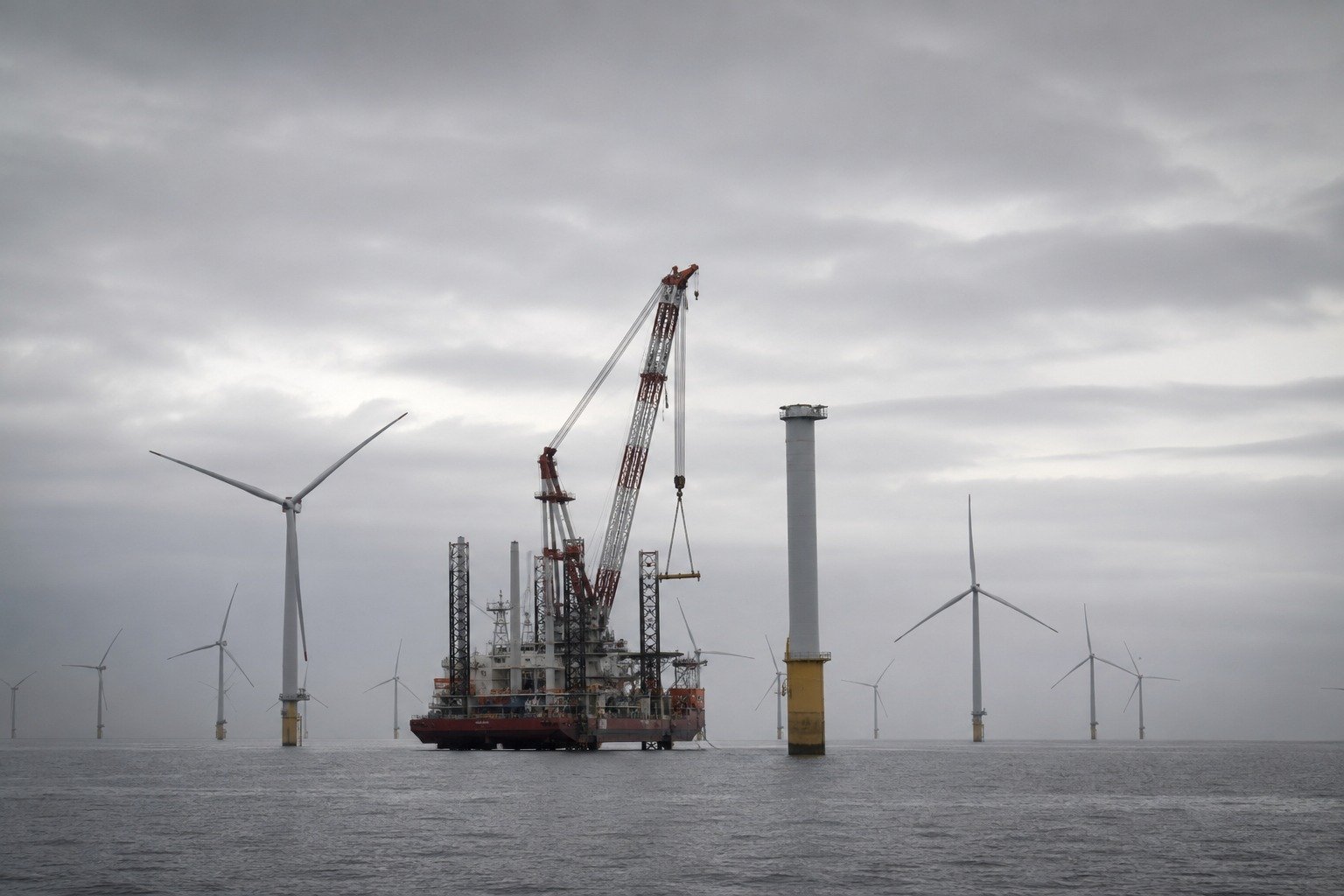
The Trump administration has agreed to pay a German energy company roughly $1.2 billion to walk away from building offshore wind farms in American waters. It is one of the most unusual energy deals in recent memory: public money spent not to generate power, but to guarantee that a set of clean-energy projects never gets built.
The agreement, confirmed this week, compensates the firm for canceling US offshore wind projects that were in the pipeline. Administration officials framed the decision as “common sense.” Critics see something else entirely: taxpayers footing the bill to shut down an industry that promised thousands of jobs and a large block of new renewable electricity.
A Pattern, Not a One-Off
This is not the first time the administration has spent public money to stop wind development. In March, it reached a similar arrangement – worth roughly $1 billion – with the French company TotalEnergies to drop its US offshore wind leases. Taken together, that is well over $2 billion in public funds committed to two foreign firms for the express purpose of halting clean-energy construction.
Offshore wind has been a political flashpoint. The administration has repeatedly criticized the technology, and these buyouts turn that opposition into policy. Rather than let permits and leases run their course, the government is paying developers to abandon projects outright – locking in the outcome before a single turbine goes up.
What Gets Lost
Offshore wind is labor-intensive. Building it means construction crews, port upgrades, specialized vessels, and domestic manufacturing for the massive towers, blades, and foundations each project requires. When a project is canceled, those jobs vanish with it – along with the tax base and local investment that come with a major build.
There is also the electricity itself. Each canceled project represents generating capacity that now has to be replaced by something else – typically fossil fuels, which carry their own price volatility and pollution. Supporters of the wind buildout argue the country is surrendering a foothold in an industry that Europe and China are racing to dominate, and paying for the privilege of doing so.
The Debate
Defenders of the deals say offshore wind is expensive and that scrapping the projects protects ratepayers and ocean views. Opponents counter that spending billions to cancel infrastructure – money that produces no power, no jobs, and no long-term asset – is the opposite of fiscal responsibility. The question of who ultimately benefits when a foreign company is paid to stop working remains unanswered.
What is clear is the direction of travel. Two deals in a matter of months suggest a deliberate strategy to wind down offshore projects using public dollars, rather than through the normal permitting and market process.
What This Means for Americans
For working families, the stakes are concrete. Every offshore project that dies is a set of paychecks that never gets cut and a block of homegrown power that never reaches the grid. And the money used to cancel these projects is not free – it comes from the same public purse that funds everything else. When taxpayers pay a company to build nothing, it is fair to ask what the country got in return.
Stay informed on the stories that matter most. Follow Your Daily Updates on Facebook and bookmark yourdailyupdates.news for breaking news and analysis.