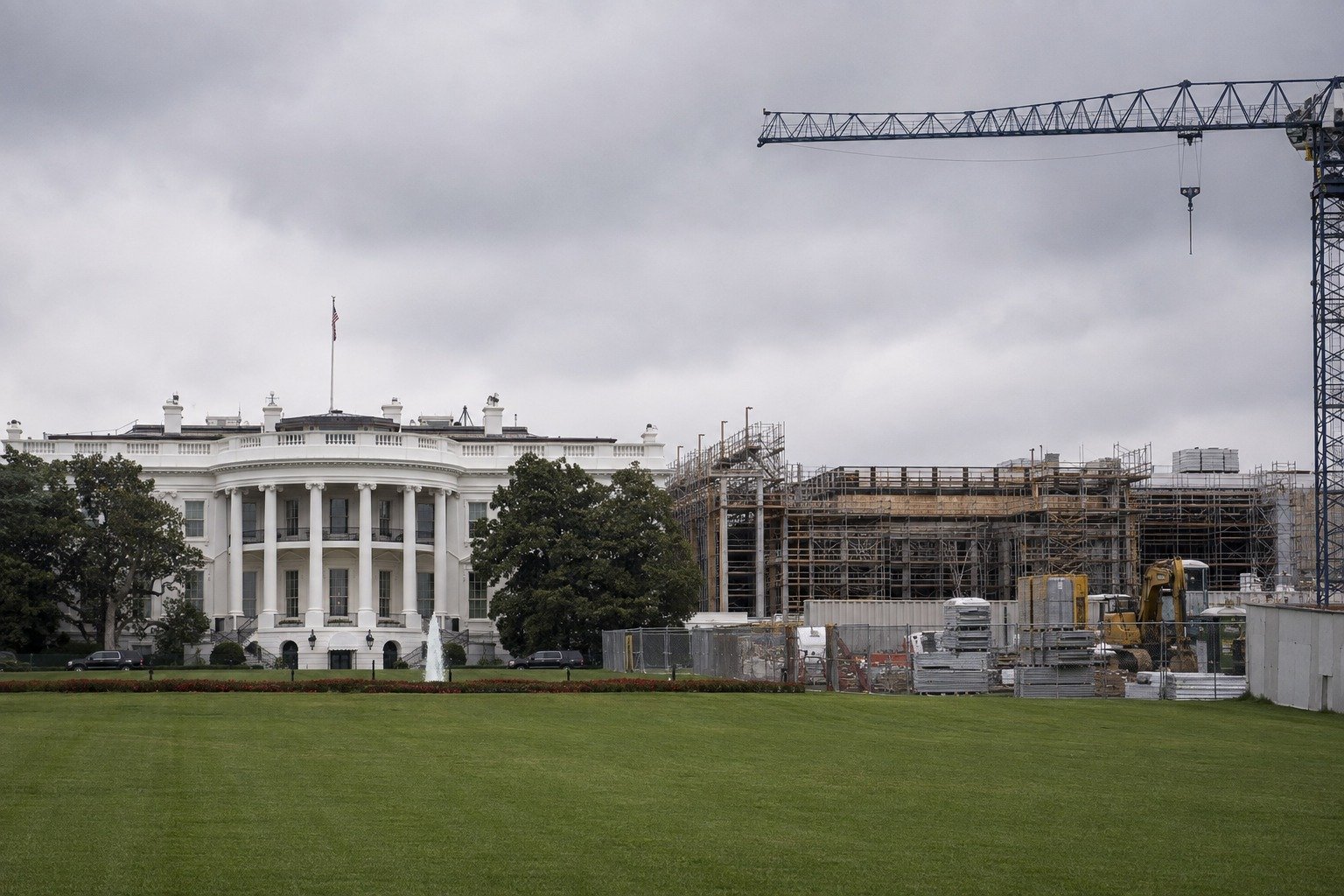
A federal appeals court has halted construction of the Trump administration’s roughly $400 million White House ballroom, ruling that a building project of that size and cost cannot move forward without the approval of Congress. The decision, handed down on August 7, 2026, stops work on one of the most expensive additions to the White House complex in modern history while the legal battle over it continues.
The court did not weigh in on whether the ballroom itself is a good idea. Instead, it grounded its ruling in a much older question: who gets to decide how hundreds of millions of dollars in federal money are spent. The answer, the court concluded, is Congress – not the president acting alone.
A Ruling About Power, Not Taste
At the heart of the case is the Constitution’s power of the purse. That principle gives the legislative branch, not the executive, the authority to authorize federal spending. It is one of the oldest checks in the American system, designed specifically to prevent any single official from unilaterally directing large sums of public money.
The appeals court found that the administration pushed the ballroom project forward without securing the congressional authorization that a commitment of this scale requires. Because the ruling rests on that procedural, separation-of-powers ground, it is not a judgment about the design, the location, or the value of the project. It is a statement about process – and about the limits of what a president can order built on his own.
What the Court Decided
Construction on the ballroom had been underway as recently as early August, with crews and heavy equipment already active at the site. The court’s order stops that work immediately and holds it in place while the underlying lawsuit plays out. In practical terms, the cranes go quiet and the project sits frozen until the courts resolve the central question of whether it was ever properly authorized.
It is important to understand what this ruling is and is not. It is preliminary, meaning it pauses the project rather than permanently killing it. It is also appealable – and the administration has made clear it intends to fight. But for now, the block is real, and the message from the bench is direct: the executive branch cannot green-light a $400 million construction project and leave Congress out of the decision.
The Fight Isn’t Over
President Trump has said he will appeal the decision to the Supreme Court, setting up a high-stakes clash over the boundaries of presidential spending authority. If the case reaches the justices, it could produce a ruling with implications far beyond a single ballroom – potentially shaping how much latitude any future president has to launch expensive projects without first going through Congress.
Supporters of the project argue the ruling is judicial overreach that ties the president’s hands and second-guesses routine decisions about the White House grounds. Critics counter that this is exactly the kind of check the system was built for: a court reminding the White House that no administration gets to spend hundreds of millions of dollars on a lavish project without the people’s elected representatives weighing in first.
What This Means for Americans
Beyond the politics, the case touches something every taxpayer has a stake in: accountability for how public money is used. When a project carries a price tag in the hundreds of millions, the question of who signed off – and whether the proper process was followed – is not a technicality. It is the difference between spending that has been debated and approved by Congress and spending directed by a single office. This ruling reasserts that distinction, and the coming appeal will test how firmly it holds.
Stay informed on the stories that matter most. Follow Your Daily Updates on Facebook and bookmark yourdailyupdates.news for breaking news and analysis.