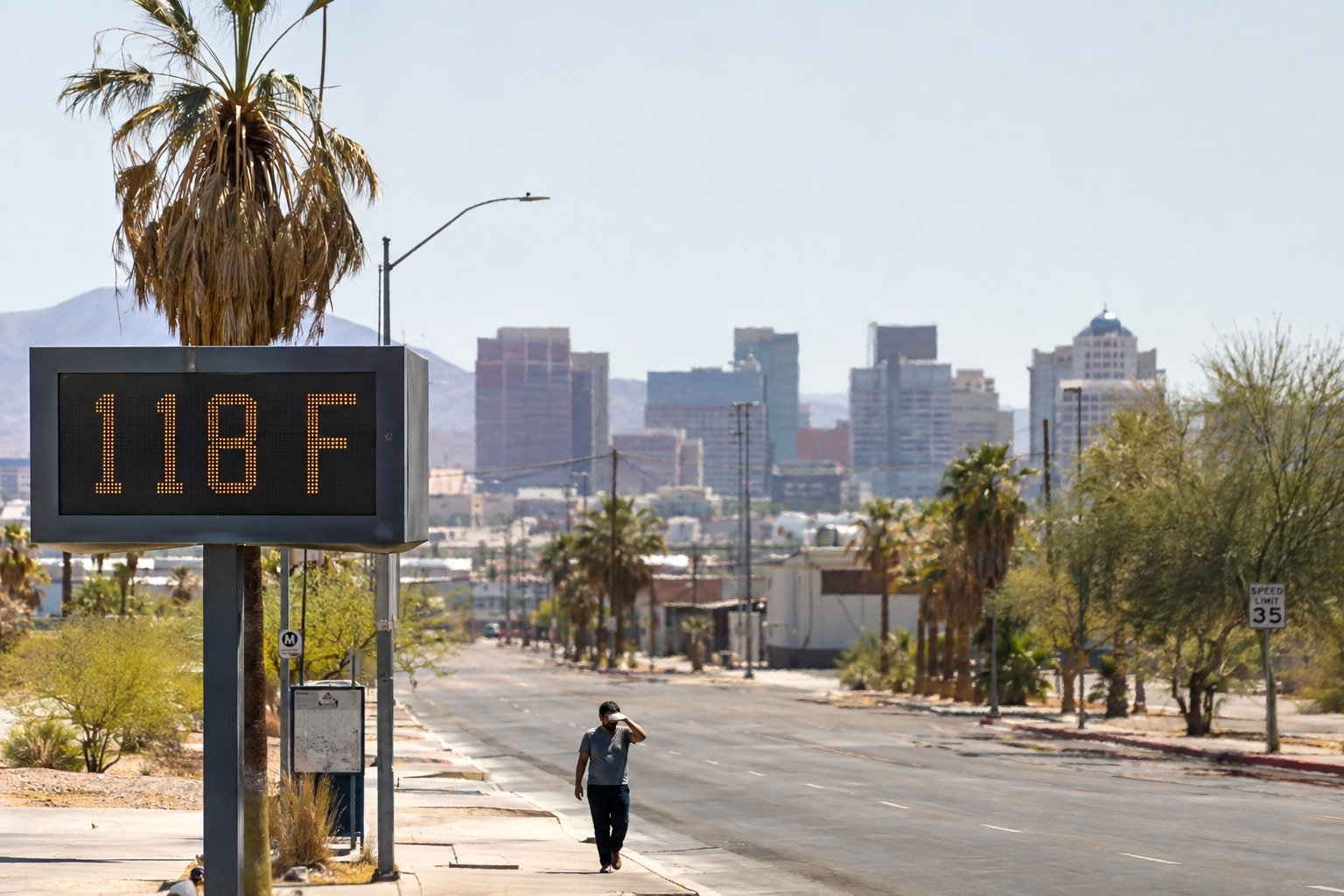
A dangerous heat dome settled over the western United States this weekend, and by Saturday, August 2, roughly 55 million Americans were living under heat alerts stretching from the deserts of the Southwest all the way up to the Canadian border. The National Weather Service warned of temperatures capable of turning an ordinary summer afternoon into a life-threatening emergency.
A Heat Dome Locks in Over the West
A heat dome forms when a strong ridge of high pressure parks over a region and traps hot air beneath it, like a lid on a pot. The air sinks, compresses, and heats further day after day, with few clouds and little wind to break the pattern. This one clamped down over the weekend of August 1-2, and its reach was enormous. Extreme heat warnings and advisories covered California, Nevada and Arizona, ran north through the Pacific Northwest, and extended across the Plains and the northern Rockies, including Montana, Wyoming, Colorado and Nebraska.
Los Angeles, a city where many homes and apartments have no air conditioning, was placed under an extreme heat warning, the National Weather Service’s most serious heat alert.
The Numbers Are Brutal
The forecast highs read like something out of a record book. Phoenix was headed for around 118 degrees. Las Vegas was staring down highs near 115. Across the desert Southwest, afternoon temperatures were expected to flirt with all-time records for early August.
But the daytime highs are only half the danger. What makes a heat wave truly deadly is the lack of relief after the sun goes down. During this event, overnight lows in some areas were forecast to fall only into the upper 80s and low 90s. When the temperature never drops enough for the body to cool off and recover, the physical toll compounds hour after hour, and that is when hospitals start to fill up.
Why Extreme Heat Is So Dangerous
It is easy to underestimate heat because it lacks the drama of a hurricane or a tornado. But extreme heat is the number one weather-related killer in the United States every year, causing more deaths on average than floods, hurricanes and tornadoes. Fox Weather described this system bluntly as a “life-threatening heat dome.”
The people most at risk are the ones least able to escape it: the elderly, young children, people with chronic health conditions, outdoor workers, and anyone without reliable air conditioning. Heat illness can escalate fast, from cramps and dizziness to heat stroke, a medical emergency that can cause organ damage or death within hours.
The Climate Backdrop
Scientists have long warned that heat waves like this one are becoming more frequent, more intense, and longer-lasting as the planet warms. No single weather event can be pinned entirely on climate change, but the trend is clear in the data: record-hot days are outpacing record-cold days, and the kind of oppressive, multi-day heat that used to be rare is showing up more often.
That larger pattern is why emergency managers increasingly treat extreme heat not as a seasonal inconvenience but as a public safety threat on par with any storm.
What This Means for You
If you live anywhere in the West right now, the guidance from forecasters is straightforward. Stay indoors during the hottest part of the day. Drink water even before you feel thirsty. Never leave children or pets in a parked car, where temperatures can turn fatal in minutes. And check on the people around you. Elderly neighbors, relatives who live alone, and anyone without air conditioning are the ones most likely to get into trouble quietly.
Cooling centers open in many cities during events like this, and a single air-conditioned room can be the difference between a miserable afternoon and a trip to the emergency room.
Stay informed on the stories that matter most. Follow Your Daily Updates on Facebook and bookmark yourdailyupdates.news for breaking news and analysis.