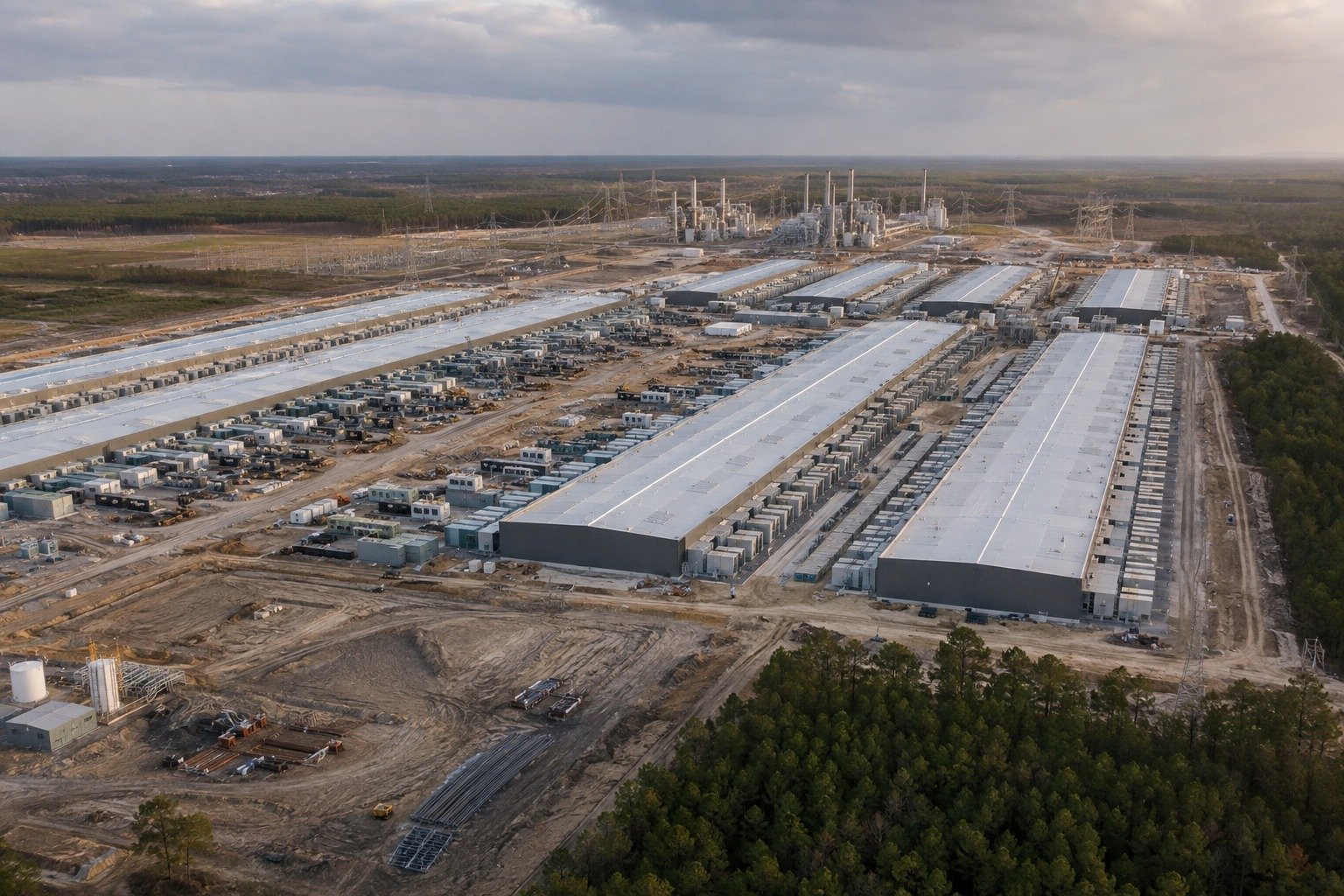
In the rural stretches of northeast Louisiana, Meta is building something enormous – and for months, almost no one outside a small circle of executives and officials knew the full scope of what was being negotiated. A New York Times investigation published in late July laid out how the tech giant assembled a data center campus of roughly six square miles in Richland Parish, with an investment that reaches $50 billion. The scale is staggering. So is the secrecy that surrounded it.
According to the Times, the deal was hammered out over about nine months, with state and local officials bound by non-disclosure agreements as they negotiated with Meta and the utility Entergy. The reporting drew on corporate, tax and property records and interviews with more than 40 people to reconstruct what happened behind closed doors. The $50 billion figure has been confirmed by CNBC, and the project has been covered by outlets including The Real Deal.
What “secret” actually means here
It is worth being precise. Nothing about this deal appears to be illegal, and the project is public now. “Secret” refers to the NDA-shielded negotiations that kept the terms out of view while they were being decided – not to any criminal wrongdoing. But there is a meaningful difference between a deal that is public after the fact and a deal that was accountable while it was being made. By the time the details reached daylight, the key decisions had already been locked in.
The part that should concern Louisiana households most is what happened at the regulatory level. The state power commission bypassed its standard independent review of the project – the very process designed to test whether a massive new electricity customer, and the infrastructure built to serve it, are in the public interest. Skipping that step means one of the most consequential energy decisions in the state’s recent history moved forward without the scrutiny that normally applies.
New gas turbines, and who pays for them
Data centers are voracious consumers of electricity, and this one is no exception. To power the site, Entergy’s chief executive promised dedicated new natural gas turbines – brand-new fossil fuel infrastructure built specifically to feed Meta’s servers. That raises two questions that tend to get lost in celebratory announcements about jobs and investment. First, who pays to build and run those turbines? And second, who absorbs the pollution they produce?
In the utility model, the costs of new generation are frequently spread across the customer base. That means ordinary ratepayers – families and small businesses who had no seat at the negotiating table – could end up helping to underwrite the power supply for one of the most valuable companies on earth. The emissions from new gas turbines, meanwhile, do not stay inside the fence line of the data center. They settle over the surrounding communities.
The accountability question
Supporters of the project point to construction jobs, long-term investment, and the prestige of landing a Meta campus. Those benefits are real, and they matter to a region that has long sought economic development. But the pattern here is a familiar one to anyone who has watched big infrastructure deals: a giant corporation and a monopoly utility move quickly, negotiate privately, and secure favorable terms before the public can weigh in – while the reviews meant to protect that public are set aside.
The deal is done, and the buildout is underway. What remains an open question is whether the people who will live with the consequences – higher potential power costs, new emissions, and a precedent for how these deals get made – will get any meaningful say in what comes next. When a $50 billion project can be fast-tracked behind NDAs with the standard review skipped, the real issue is not just one data center. It is who the system is built to serve.