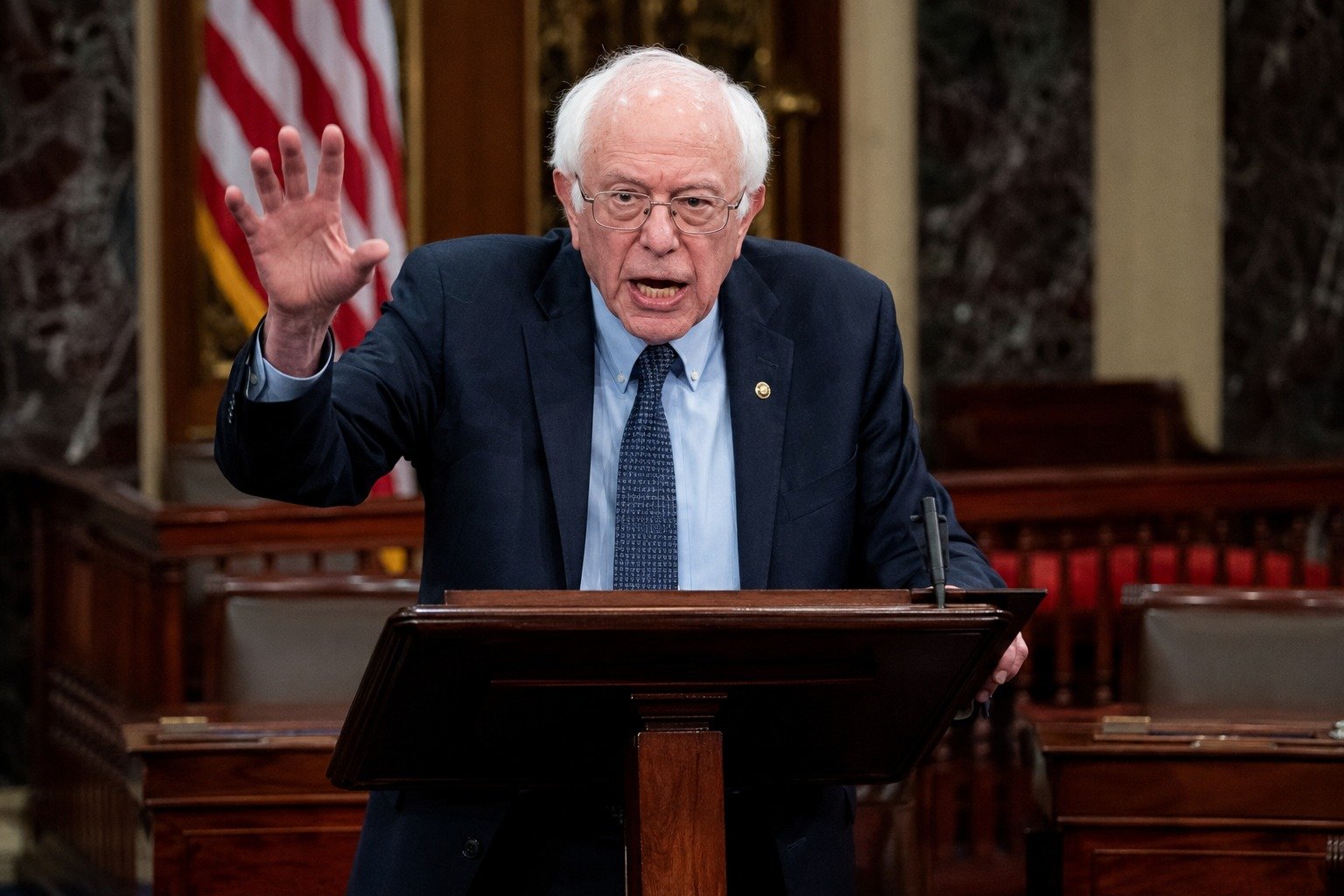
On April 15, 2026, Senator Bernie Sanders forced the U.S. Senate to do something it usually avoids: take a public, on-the-record vote on whether to block roughly $447 million in American weapons bound for Israel. The measures failed. Not a single dollar of the sales was stopped, and the bombs and bulldozers remain cleared to ship.
The votes were the culmination of a months-long effort by the Vermont independent to force his colleagues to go on record over U.S. military support for Israel. Instead of quietly letting the sales proceed, Sanders invoked a tool that most senators would rather never touch.
What Sanders Actually Did
Sanders filed Joint Resolutions of Disapproval, a mechanism under the Arms Export Control Act that lets Congress try to block specific foreign arms sales. Under that law, any senator can force a floor vote on a proposed sale. It is rarely used, and it almost never succeeds, because it requires majorities in both chambers and can be vetoed by the president.
The point, for Sanders, was less about winning than about accountability. By forcing the vote, he made every senator choose a side in public rather than letting the sales move through without scrutiny. That record now exists, whether or not the resolutions passed.
The Numbers Behind the Vote
The specific measures voted on April 15 targeted about $447 million in weapons: roughly $151.8 million in gravity bombs and about $295 million in Caterpillar D9 bulldozers, the heavy armored machinery used to clear and demolish structures. Sanders has framed these votes as part of a broader push to halt nearly $660 million in arms across the resolutions he filed.
Both resolutions went down. The tallies landed at roughly 40 to 59 and 36 to 63, largely along party lines. That means a substantial bloc of senators was willing to back Sanders, but nowhere near enough to overcome the opposition. The sales survived intact.
The Argument on Both Sides
Sanders argues that American taxpayers should not be bankrolling what he calls Netanyahu’s illegal war, and that Congress has both the authority and the responsibility to weigh in on where U.S. weapons end up. For him, waving through arms sales without debate is an abdication of one of Congress’s core duties.
Opponents counter that cutting off weapons would undercut a key U.S. ally and send the wrong signal at a volatile moment. To them, the resolutions were a symbolic gesture that risked real strategic damage. Supporters of Sanders see it differently: they call it the first real Senate reckoning over U.S. military aid to Israel, and a marker for future fights.
What This Means for Americans
Every weapons sale like this is funded, directly or indirectly, by U.S. taxpayers. The vote forced a simple question into the open: should elected officials have to defend, out loud, how that money is spent abroad? Regardless of where you land, the roll call is now public, and voters can see exactly how their senators answered.
Stay informed on the stories that matter most. Follow Your Daily Updates on Facebook and bookmark yourdailyupdates.news for breaking news and analysis.