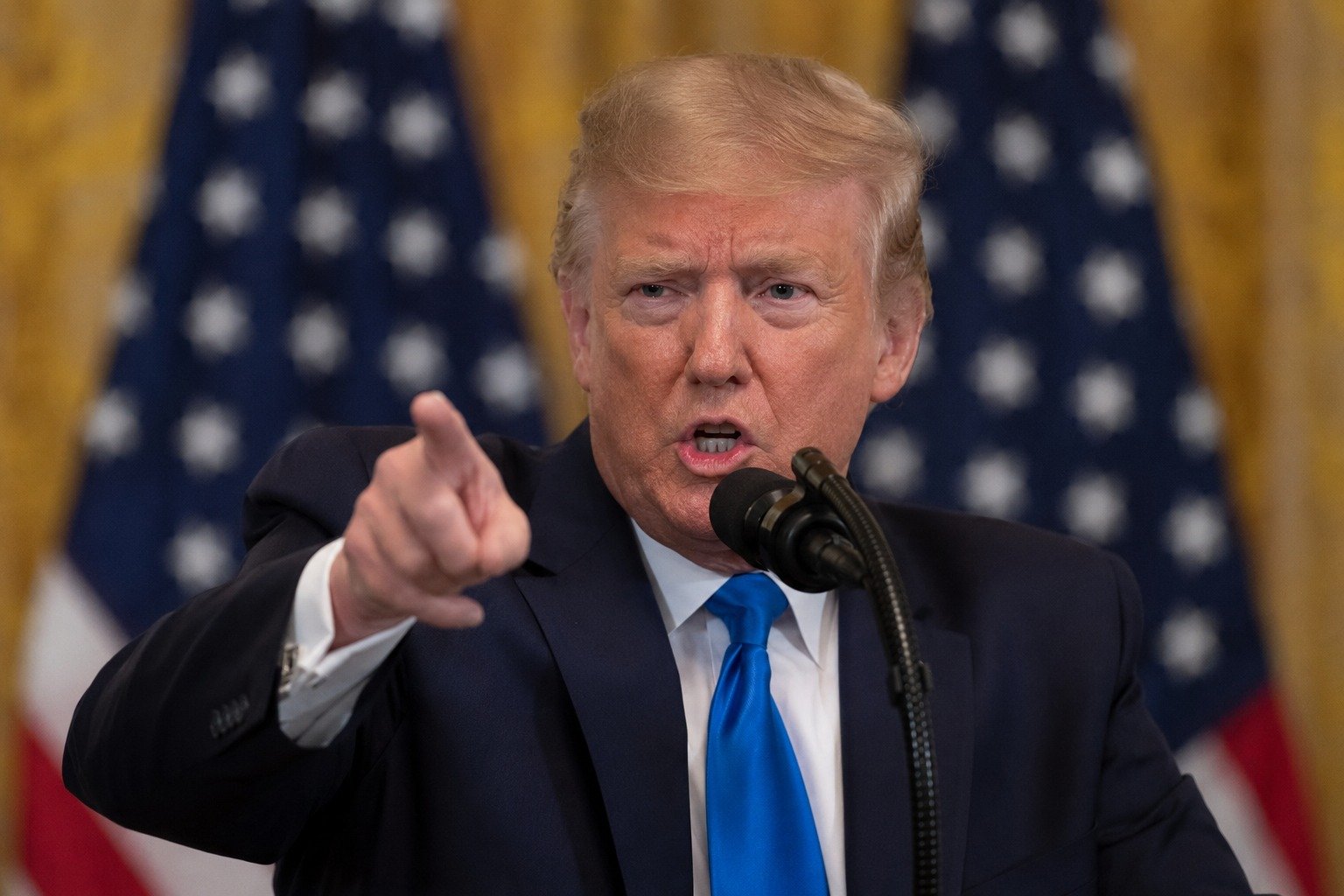
President Donald Trump used a Truth Social post on Friday, July 10, 2026, to threaten the destruction of Iran, writing that “1000 Missiles are Locked and Loaded and aimed at the Islamic Republic of Iran, with thousands of more to immediately follow,” should the Iranian government act on what he described as a threat to assassinate the sitting President of the United States.
He went further in the same post. “Orders have already been given,” Trump wrote, adding that the U.S. military is “ready, willing, and able, for a one year period of time, subject to extension, to completely decimate and destroy all areas of Iran.”
What the post actually says — and what it does not
The language is worth reading slowly, because the distinction matters. Trump did not announce a strike. No missiles have been launched. No military action against Iran has been confirmed by the Pentagon, and there is no independent verification that 1,000 missiles are literally targeted at Iranian sites or that any order has been operationalized. What exists, at this point, is a conditional threat published on a social media platform.
The phrase that has drawn the most alarm is “all areas of Iran.” Not military installations. Not nuclear enrichment sites. Not the command structure of the Islamic Revolutionary Guard Corps. All areas — language that, read plainly, encompasses the cities and civilian population of a country of roughly 90 million people, the overwhelming majority of whom have no influence over the decisions of their government.
The intelligence report behind it
Trump’s post came one day after The Wall Street Journal reported that Israeli intelligence had shared information with U.S. officials indicating that Tehran was weighing a new plot to assassinate Trump. That reporting describes an intelligence assessment — not a confirmed attempt, not an attack, and not a publicly evidenced operation. Iran has denied previous allegations of plots against Trump.
The same day, the Treasury Department sanctioned an alleged Iranian financier said to be tied to the threat network, according to CNBC. Sanctions are a concrete, documented action; they are also the ordinary instrument governments use in precisely this situation, and they sit at a considerable distance from the threat to destroy an entire country.
This is not the first time
Trump issued a similar, vaguer warning in February 2025, saying that Iran “would be obliterated” if he were harmed. The July post escalates that considerably: it attaches a number, a stated duration, a claim that orders have already been issued, and an explicit scope of “all areas.”
The constitutional question nobody is answering
Strip away the theatrics and a structural problem remains. Under Article I of the Constitution, the power to declare war belongs to Congress. It does not belong to a president, and it does not belong to a president’s social media account. There has been no congressional authorization for military action against Iran, no debate, and no vote.
There is also the matter of what, exactly, is being avenged. Trump is not describing retaliation for an attack on the United States, on American troops, or on American civilians. He is describing retaliation for a potential threat to himself, personally. That is the premise on which the destruction of “all areas” of a foreign country is being floated — and the president of the United States is not the same thing as the United States.
Threatening mass destruction of civilian areas is, in the plainest terms, a threat that no democratic government should make casually. Making it in a post, without Congress, without evidence presented to the public, and without any apparent internal process, is how a country stumbles into a war that nobody voted for.
For now, nothing has been launched. The missiles remain a claim. But the willingness to say it out loud, in those words, is itself the story — and it is one Congress has so far declined to address.