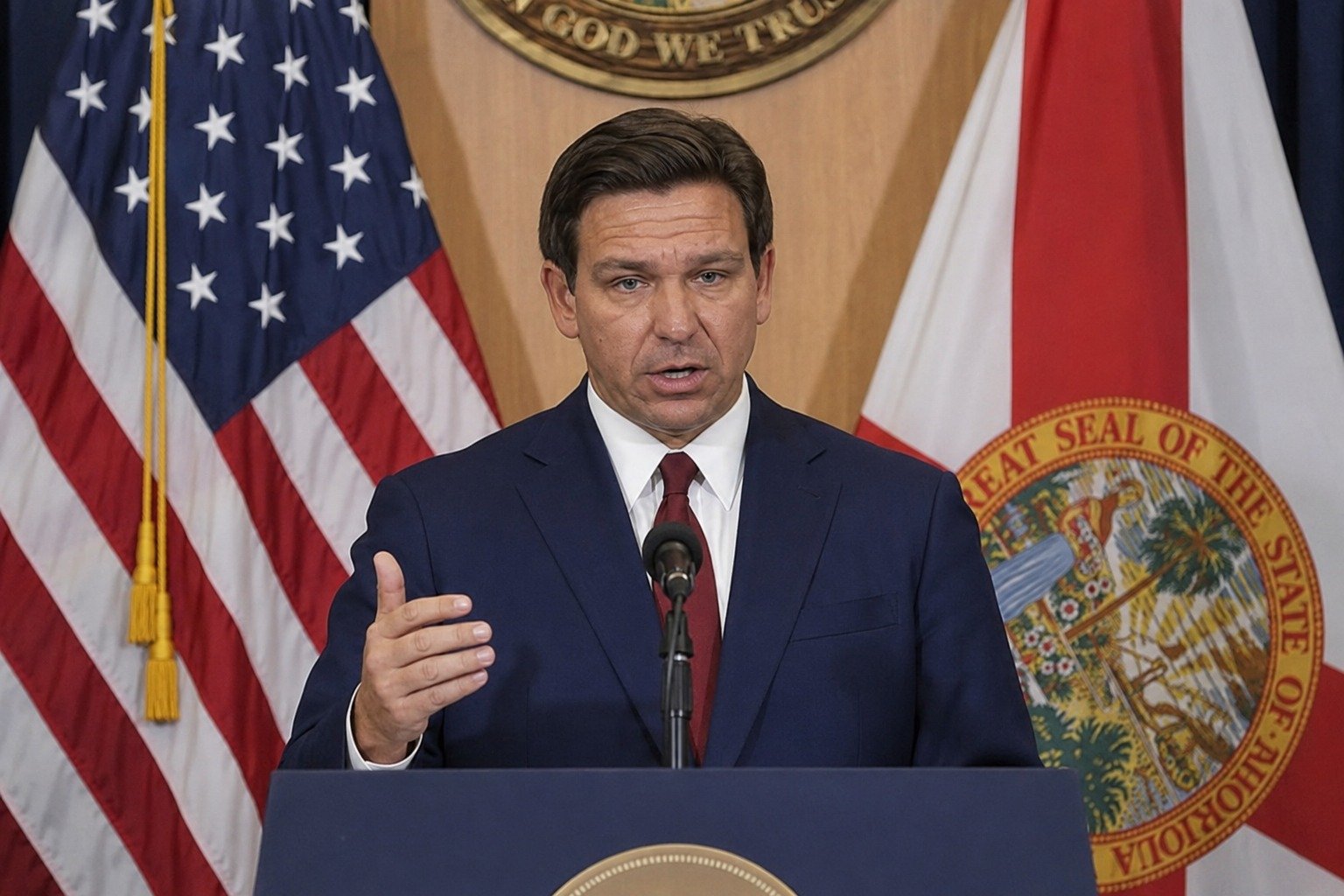
A federal appeals court has struck down the higher-education provisions of Florida’s “Stop WOKE” Act, ruling that the state cannot dictate what public university professors teach about race and gender. In a 2-1 decision issued July 7, 2026, a panel of the 11th U.S. Circuit Court of Appeals held that the law’s college classroom restrictions violate the First Amendment, blocking Florida from enforcing them against professors at its public universities.
A Trump Appointee Wrote the Opinion
The majority opinion was written by Judge Britt Grant, an appointee of President Donald Trump. Her assessment of the statute was blunt: “If the First Amendment offers any boundary of protection at all for public university classrooms, this statute crosses it.”
That detail matters. Governor Ron DeSantis and his allies have long framed judicial pushback against the law as partisan resistance. This ruling came from a conservative jurist applying a straightforward reading of the First Amendment — and finding the state’s flagship education law on the wrong side of it. Judge Barbara Lagoa dissented from the panel’s decision.
What the Law Did
The Individual Freedom Act — better known as the “Stop WOKE” Act — was signed by DeSantis in 2022 as a centerpiece of his education agenda. Among other things, it restricted how professors at Florida’s public colleges and universities could present certain “concepts” related to race, gender, and American history, exposing institutions and instructors to discipline if classroom instruction was deemed to endorse prohibited viewpoints.
Civil liberties groups, including the ACLU and the Foundation for Individual Rights and Expression, challenged the higher-education provisions almost immediately, arguing the state was engaging in viewpoint discrimination — the government picking which ideas may be discussed in a university classroom. A federal district court agreed and blocked the provisions in 2022. The 11th Circuit panel has now affirmed that the restrictions cannot be enforced against public university professors.
What the Ruling Does — and Does Not — Do
The decision strikes at the law’s college classroom provisions specifically. It does not erase the entire statute, portions of which apply to workplace training and K-12 instruction and have followed separate legal tracks. And the fight is not necessarily over: Florida can ask the full 11th Circuit to rehear the case en banc or petition the U.S. Supreme Court for review.
But as of now, the state of Florida cannot police what professors at its public universities teach about race and gender. The panel’s reasoning was direct: a state that claims the power to silence disfavored academic viewpoints in university classrooms is exercising exactly the kind of censorship the First Amendment forbids.
Reactions and Implications
Free-speech advocates hailed the decision as one of the most significant academic-freedom rulings in years, noting that the government does not gain the power to script classroom discussion simply because it disagrees with the ideas being discussed. Supporters of the law argue states fund public universities and should have a say in what is taught there — an argument the panel majority rejected as applied to university instructors.
The ruling lands squarely in the national debate over government control of education, as multiple states weigh similar restrictions on how race, gender, and history are taught. A binding appellate decision that such laws cross the First Amendment line will shape those fights far beyond Florida.
What This Means for Americans
If the government can dictate which ideas a professor may discuss, it can do it on any topic, in any state, under any party. This ruling reaffirms that public university classrooms are not government megaphones — and that politicians who try to control them will answer to the Constitution. For students, it means their education is shaped by scholarship, not statutes written in Tallahassee.
Stay informed on the stories that matter most. Follow Your Daily Updates on Facebook and bookmark yourdailyupdates.news for breaking news and analysis.