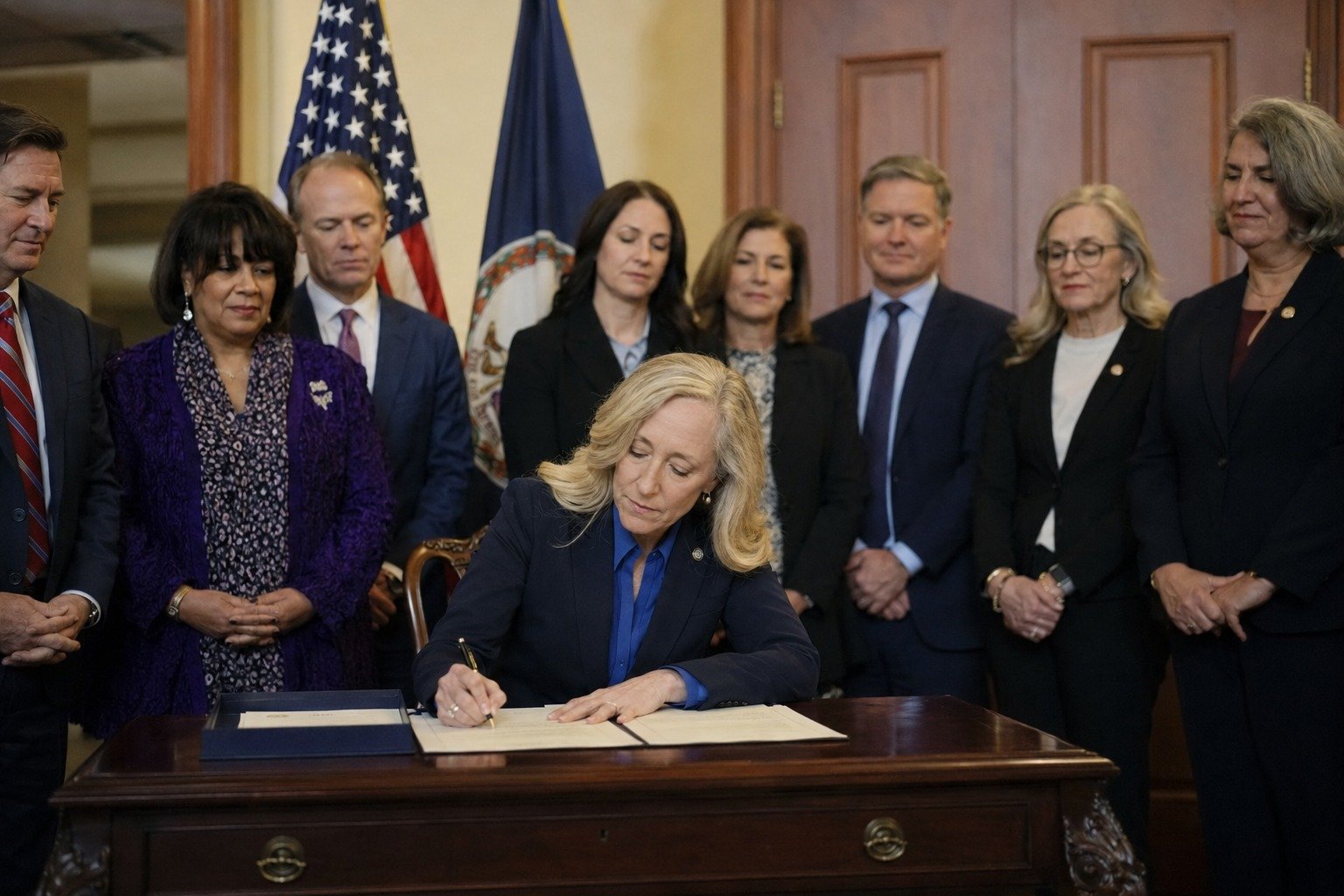
Virginia has closed one of the most persistent loopholes in American gun law. Governor Abigail Spanberger has signed HB40, a measure banning “ghost guns” — untraceable firearms sold or assembled without serial numbers — as part of a broader gun-safety package aimed at giving law enforcement the ability to trace weapons used in crimes.
Ghost guns have become a growing challenge for investigators across the country. Often assembled from kits or produced piece by piece, they carry no serial number and leave no paper trail. That makes them nearly impossible to track after a shooting, and it has made them an increasingly common feature of crime scenes where police have no way to trace the weapon back to its source.
The premise behind the new law is straightforward: if a firearm is used in a crime, law enforcement should be able to trace it. By requiring that firearms circulating in Virginia carry serial numbers, the state is applying the same basic traceability standard that already governs nearly every gun sold legally through licensed dealers.
A bipartisan vote, not a party-line fight
What sets this measure apart from the usual gun-policy battles is how it passed. The tracing bill cleared the Virginia Senate on a 36-4 vote and the House of Delegates 95-4 — overwhelming, bipartisan majorities. Lawmakers from both parties crossed the aisle to support it, a rare show of consensus on an issue that typically divides sharply along party lines.
Those margins matter. They signal that the ability of police to trace firearms used in crimes drew support well beyond one party, reframing the measure as a public-safety and accountability tool rather than a partisan flashpoint.
Accountability, not confiscation
Spanberger and supporters have emphasized that the law does not take anyone’s guns away. No firearms are being confiscated, and lawful gun owners are not losing their weapons. The requirement is narrow: the guns circulating in the state must be traceable. Supporters describe it as a common-sense step that gives detectives a fighting chance to solve cases that would otherwise go cold.
The ghost-gun ban was signed alongside other measures in the state’s gun-violence package. Framed around traceability and accountability, the law reflects a growing effort by states to address the specific problem of untraceable firearms rather than sweeping restrictions on gun ownership.
What comes next
Virginia now joins a growing list of states moving to regulate ghost guns, and the strong bipartisan vote could serve as a model for others weighing similar action. For law enforcement, the practical impact is direct: a firearm recovered at a crime scene is far more useful to an investigation when it can be traced to a point of sale or manufacture.
The open question is how many other states follow Virginia’s lead — and whether the bipartisan coalition that carried this measure can hold together elsewhere.