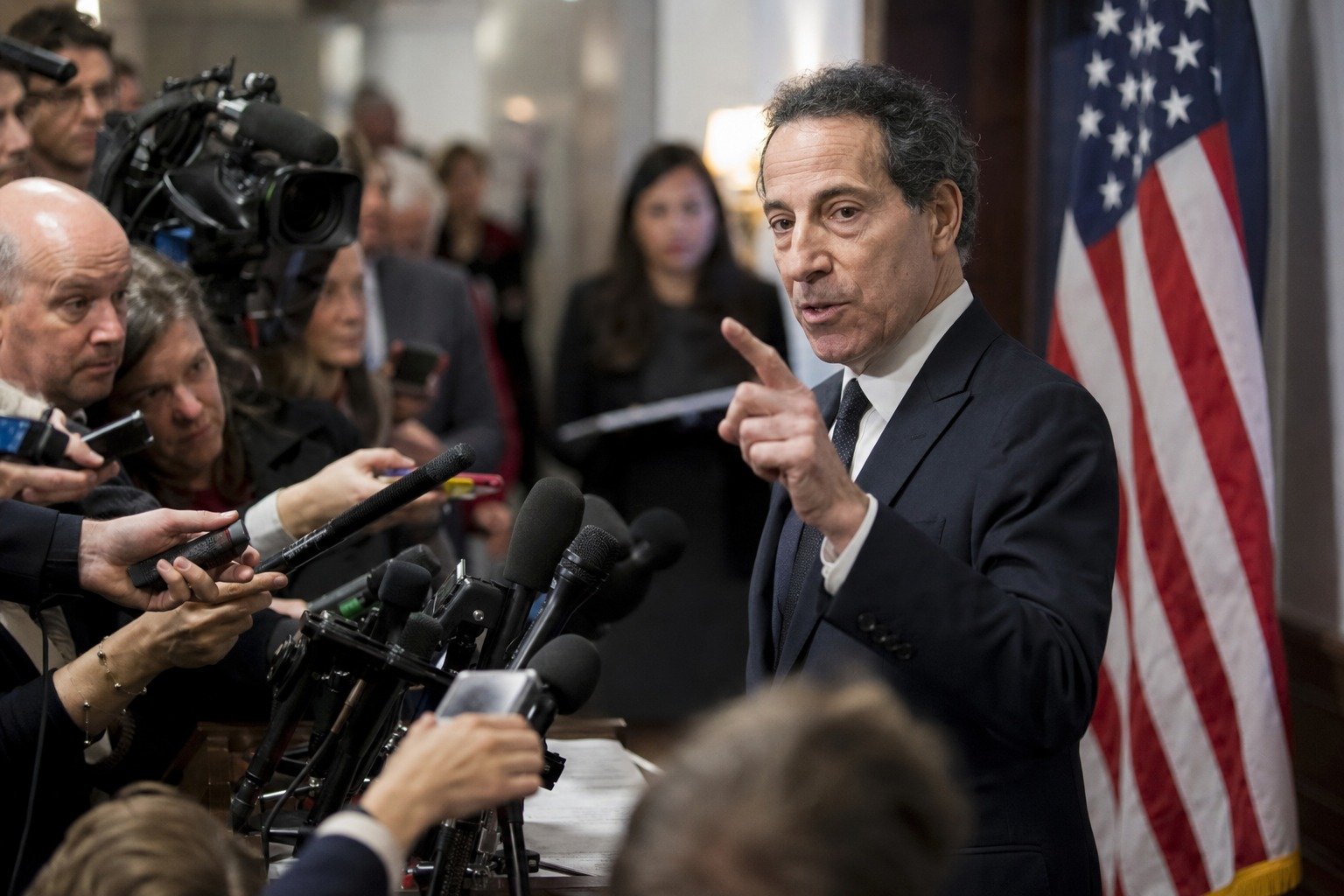
Rep. Jamie Raskin has introduced legislation that would flatly prohibit a president from pocketing payments from the very people they pardon or appoint to office. The Maryland Democrat, joined by Reps. Robert Garcia and Joe Morelle, is pitching the measure as a hard legal line against turning the pardon power into a cash register.
The bill is part of the broader Protecting Our Democracy Act package, a sweeping set of proposals aimed at fencing off the powers of the presidency. It also ties directly to the related BLANCHE Act, which targets what critics have described as a Justice Department “super pardon” plan floated under the Trump administration.
Closing a Long-Standing Loophole
For all its weight, the presidential pardon power sits in a legal gray zone. The Constitution grants a president near-total authority to grant clemency for federal offenses, but there has never been a clear federal statute barring a president from personally profiting off those decisions. That gap is exactly what Raskin says he wants to close.
Under his proposal, a president would be barred from accepting money from anyone they pardon or appoint. Raskin framed the push as shutting the door on influence-peddling at the highest level, arguing that no president should be able to run what he called a “pay-to-play scheme from the Oval Office.”
The Details of the Bill
The legislation would prohibit the president, and those closest to the office, from pocketing payments tied to clemency or appointments. Supporters say the change would put an enforceable rule where there has only been an assumption of good faith. Pardon someone, the logic goes, and you cannot then turn around and take their money.
Garcia and Morelle signed on as co-sponsors, positioning the bill within the larger Protecting Our Democracy Act framework. That package has long sought to codify guardrails on executive power that many lawmakers assumed were already ironclad but that recent years have shown to be surprisingly thin.
Reactions and Implications
The timing is pointed. The bill lands as the Justice Department under Trump has weighed an expansive approach to pardons, and the companion BLANCHE Act is aimed squarely at that effort. Critics of unchecked clemency have warned for years that without statutory limits, pardons can be quietly bought and sold, favors traded behind closed doors with no paper trail.
It is important to be clear about where this stands. This is an introduced bill, not enacted law. It still has to move through committee and win votes in a divided Congress, a steep climb for any measure that constrains presidential power. But by putting the idea into legislative text, Raskin forces a blunt question into the open: should presidential mercy ever come with a price tag?
What This Means for Americans
At its core, this is a fight about whether the most powerful office in the country can be leveraged for personal gain. For ordinary Americans, the stakes are simple: a pardon power that can be sold is a justice system that answers to money, not law. Raskin’s bill is a bet that voters want a clear rule on the books rather than trust that no president will ever cross the line.
Stay informed on the stories that matter most. Follow Your Daily Updates on Facebook and bookmark yourdailyupdates.news for breaking news and analysis.