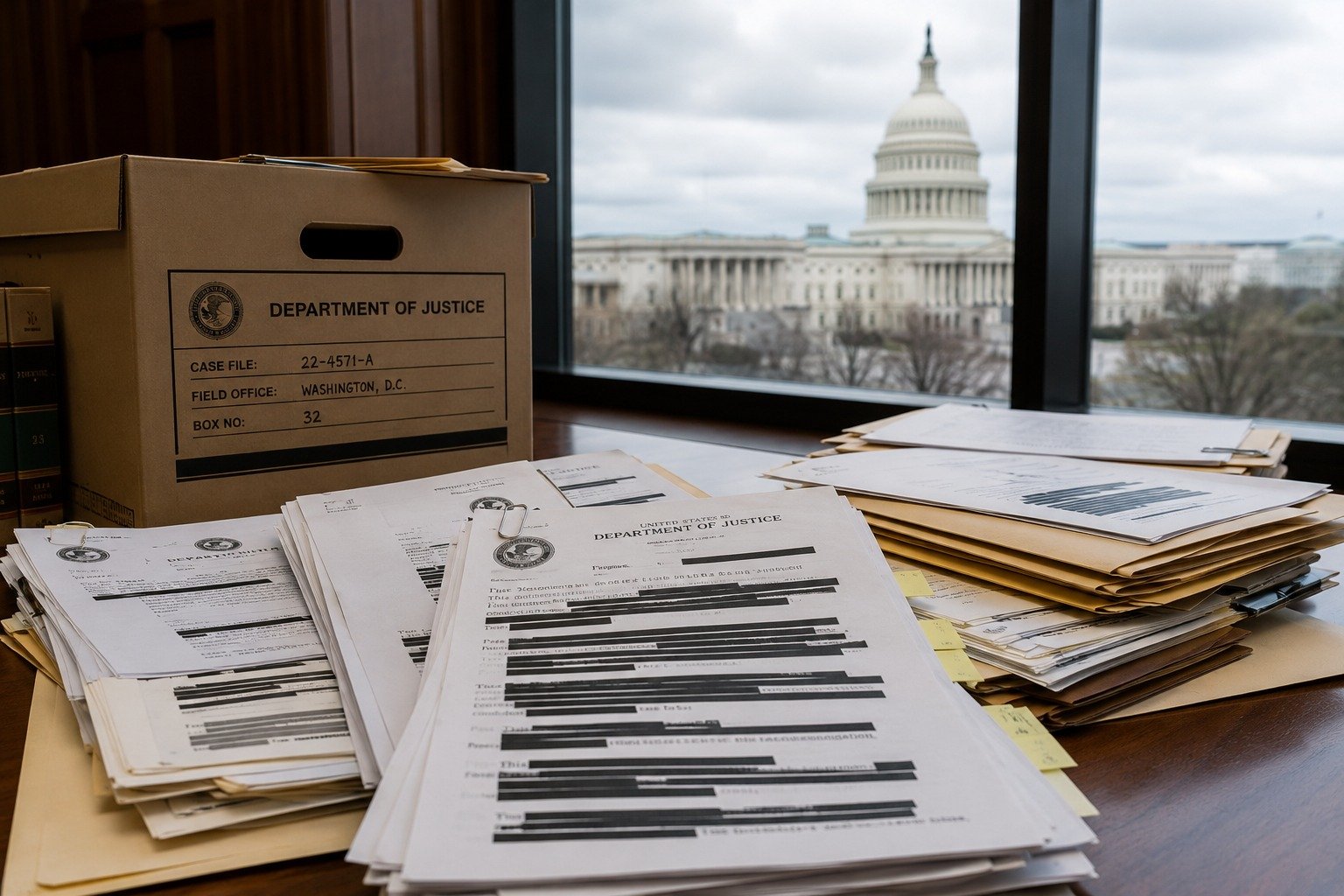
For years, the public was told the Jeffrey Epstein files were too sensitive to see. Late last year, Congress said the opposite — with almost no dissent. The Epstein Files Transparency Act passed the House 427 to 1, cleared the Senate by unanimous consent, and was signed into law on November 19, 2025, as Public Law 119-38. It orders the Justice Department to release the government’s full trove of unclassified Epstein records to the public.
A Rare Moment of Near-Total Agreement
In an era defined by partisan gridlock, the vote was striking. The House approved the measure 427 to 1 on November 18, 2025, with Rep. Clay Higgins of Louisiana casting the lone no vote. The Senate followed a day later, clearing the bill by unanimous consent — a procedure that requires that not a single senator object. Within hours, it was signed into law.
That level of unity is almost unheard of for legislation touching powerful people. For years, victims, journalists, and members of both parties had demanded a full accounting of what the government knew about Epstein, his associates, and the circumstances of his 2019 death in federal custody. The law was Congress’s answer: transparency by statute, not by discretion.
What the Law Actually Requires
The Epstein Files Transparency Act is blunt about what it demands. It directs the Attorney General to make publicly available, in a searchable and downloadable format, all unclassified records, documents, communications, and investigative materials in the Justice Department’s possession that relate to Epstein — including materials held by the FBI and U.S. Attorneys’ Offices.
That sweep is broad by design. It covers flight logs and travel records — manifests, itineraries, pilot records, and customs or immigration documentation — for any aircraft, vessel, or vehicle tied to Epstein. It covers the records of his detention and death, including incident reports, witness interviews, medical examiner files, and autopsy reports.
Crucially, the law slams the door on the usual reasons records stay hidden. No file can be withheld, delayed, or redacted simply because releasing it might cause embarrassment, reputational harm, or political sensitivity to a government official, public figure, or foreign dignitary. In other words, being powerful or well-connected is no longer a reason to keep a name out of the public record.
The Releases Have Already Begun
This is not a promise on paper. The Justice Department began publishing the records in December 2025, rolling them out in waves. By late January 2026, more than 3.5 million pages had been made public — an enormous volume of material that researchers, reporters, and ordinary citizens can now examine directly rather than relying on secondhand summaries.
The scale of the release underscores how much had been sitting in government files, unseen. And it sets a precedent: when Congress decides the public has a right to know, it can force the disclosure of even the most closely held records.
What This Means for Americans
At its core, this is a story about who government secrecy protects. For years, the argument for keeping these files sealed leaned on the discomfort they might cause the people named inside them. The new law rejects that logic outright — the public’s right to know is placed above any official’s right to avoid embarrassment. For anyone who believes accountability shouldn’t stop at the powerful, that is a meaningful shift.
It also raises a larger question that reaches well beyond this one case. If the public has a right to see the Epstein files, no matter whose name turns up inside, what about every other locked government cabinet? The Epstein Files Transparency Act may end up being remembered less for what it revealed than for the standard it set.
Stay informed on the stories that matter most. Follow Your Daily Updates on Facebook and bookmark yourdailyupdates.news for breaking news and analysis.