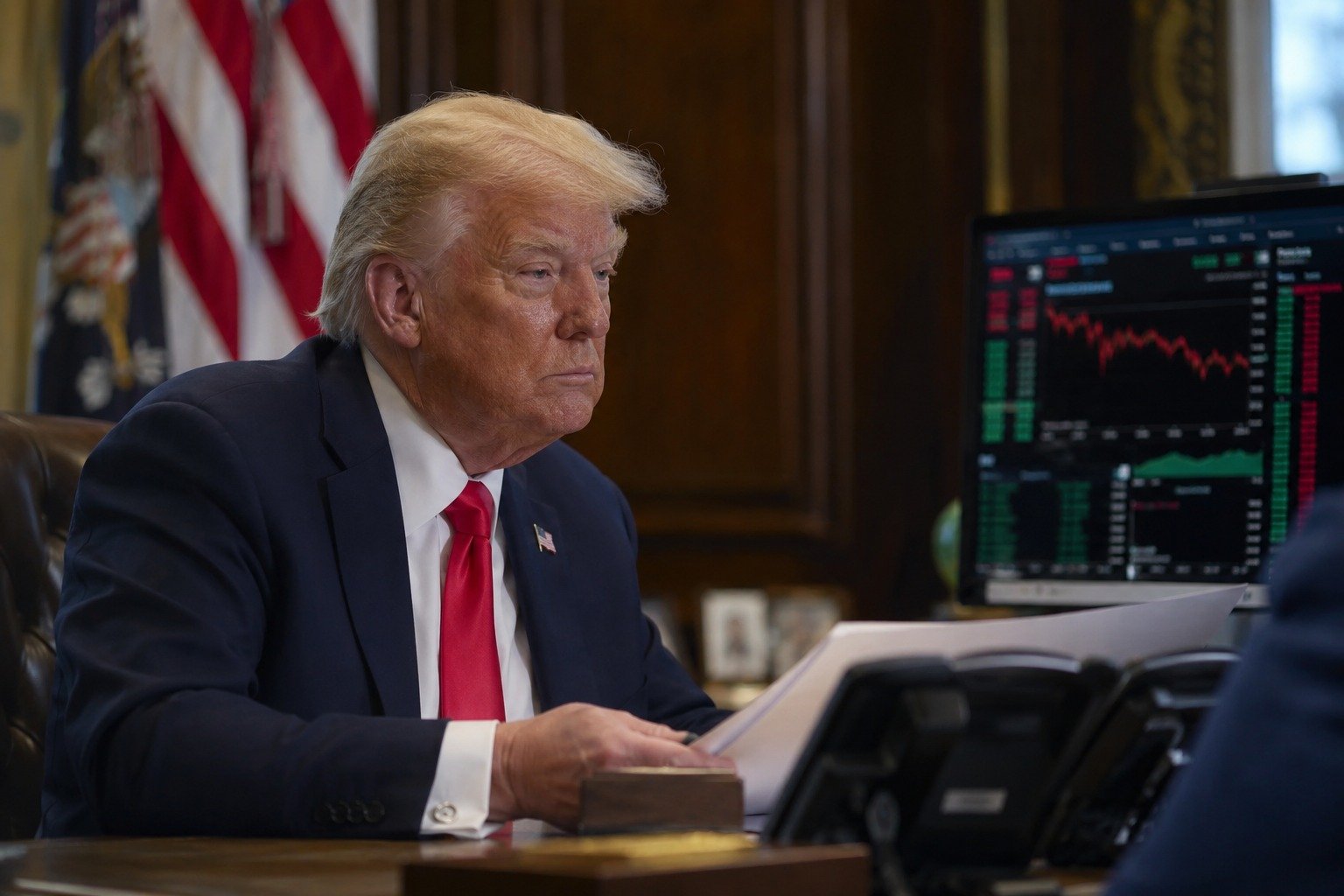
President Donald Trump’s newly filed annual financial disclosure has landed, and one figure is drawing attention across Washington: more than 21,000 securities trades were made across his investment accounts during his first year back in office in 2025. It is a volume of trading activity without a clear precedent among modern sitting presidents.
The number works out to roughly 85 trades on every single market day of the year. But the trades were not spread evenly. According to an analysis of the report, just 10 days accounted for about a quarter of all the transactions. Many of those bursts of activity came during periods of heightened volatility on Wall Street — volatility that in several cases followed policy announcements from Trump’s own White House.
It is important to be precise about what the disclosure does and does not show. The filing reflects trades executed by Trump’s asset managers and investment advisers, not the president personally sitting at a screen buying and selling stocks. Presidents commonly place their holdings in the hands of professional managers, and the disclosure itself is a routine, legally required ethics document. The White House has emphasized that everything was properly reported and permitted under the rules.
Still, for government ethics experts, that distinction only goes so far. When a sitting president’s portfolio is actively moving in and out of roughly 1,600 different companies, and the broader market is swinging on decisions coming directly out of his administration, the potential for conflicts of interest is difficult to ignore. The concern is not whether Trump personally clicked “buy” or “sell” — it is that the office he holds has enormous power to move markets, and his personal wealth is deeply exposed to those same markets.
The disclosure lists eight separate investment accounts. Trump’s portfolio has grown to at least $858 million, with top holdings concentrated in some of the largest names in the S&P 500 — Apple, Nvidia, Broadcom, Microsoft, and Tesla. Overall, the filing reported 15,524 purchases and 5,761 sales. Notably, about half of the individual transactions fell within the lowest disclosed value range, between roughly $1,000 and $15,000, meaning the sheer count of trades outpaced the dollar size of many of them.
The trading activity was not the only eye-catching detail in the report. In the same filing, Trump disclosed earning at least $1.4 billion tied to his crypto and memecoin-related business ventures in 2025 — a figure that adds another layer to the debate over how a sitting president’s private financial interests intersect with the powers of the presidency.
Supporters point out that none of this is illegal. Disclosure is exactly what the ethics rules require, and the report is evidence that the system worked as designed: the public now has a window into the president’s financial life. From that view, the story is simply one of a wealthy businessman whose money continued to be managed while he served in office.
Critics see it differently. They argue that the volume of trading, the timing of the biggest bursts around market-moving events, and the fundamental power of the presidency to shape the economy add up to precisely the kind of arrangement that federal ethics rules were built to guard against. The concern is less about any single trade and more about the structure: a president whose personal fortune rises and falls with markets he can influence.
What is not in dispute is the scale. No sitting president in recent memory has disclosed trading activity anywhere close to 21,000 transactions in a single year. As that number circulates, it is likely to keep the questions about presidential finances, transparency, and conflicts of interest firmly in the spotlight.