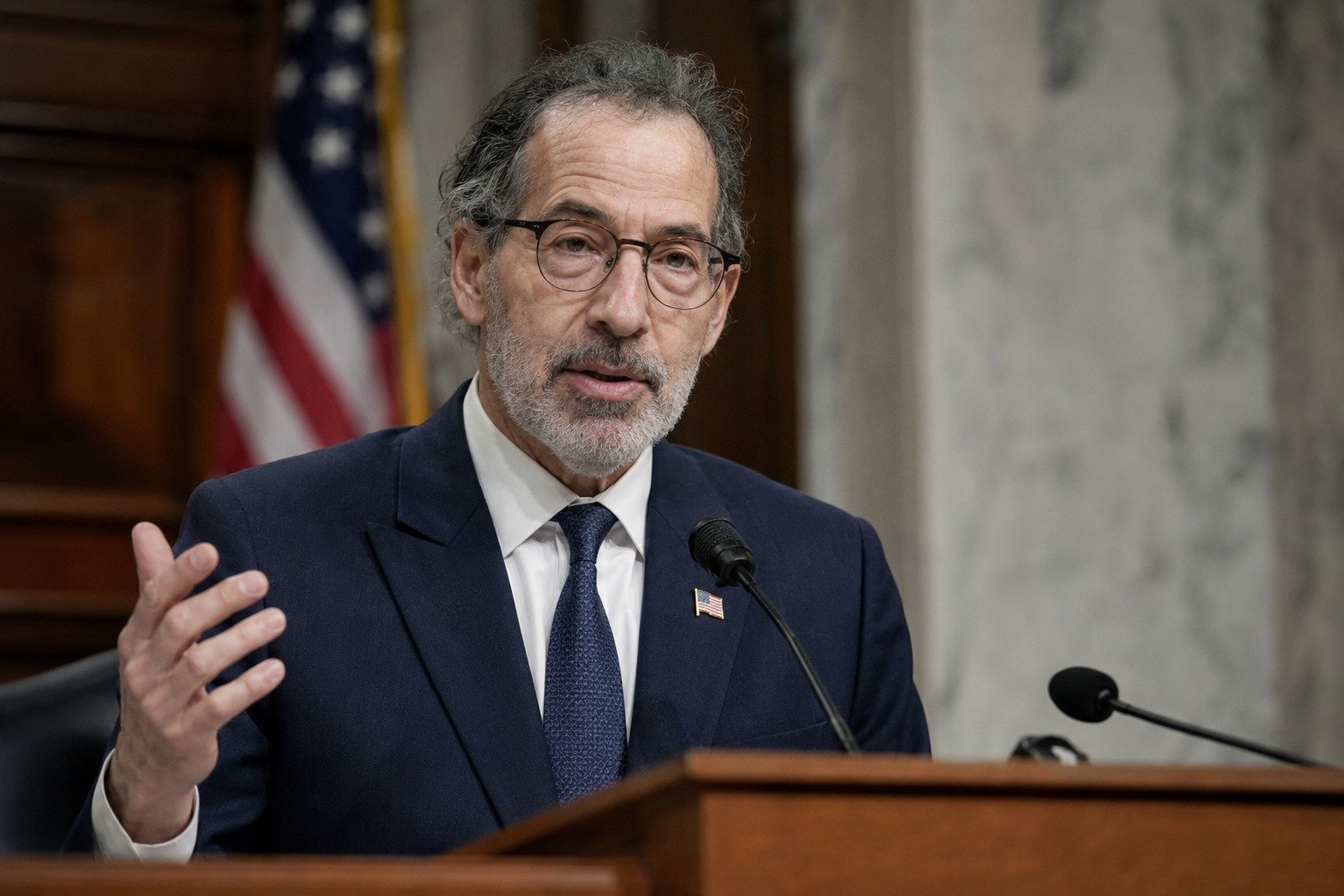
Should a president be allowed to take money from the very people he pardons? Rep. Jamie Raskin (D-Md.) says no — and he has introduced sweeping legislation designed to slam that door shut.
On May 14, 2026, Raskin, the ranking member of the House Judiciary Committee, joined Reps. Robert Garcia (D-Calif.) and Joe Morelle (D-N.Y.) to introduce the Protecting Our Democracy Act, a broad anti-corruption package aimed at reining in what its authors describe as historic abuses of presidential power and profiteering from public office. According to Raskin’s office and House Judiciary Committee Democrats, the bill takes direct aim at the murky intersection of clemency and cash.
Banning pay-to-play pardons
One of the measure’s core provisions would flatly prohibit a president from accepting payments — including through a business the president owns — from anyone they have pardoned. It would also bar those pardon recipients from making such payments in the first place, and would require disclosure of any gifts or money that flow to a president from someone whose criminal case was wiped away.
Under the bill, a covered individual who gives a gift to the president who pardoned them would have to file a financial disclosure report with the Office of Government Ethics during the five-year period following the pardon. The goal, supporters say, is simple: make it impossible to quietly turn an act of mercy into a private transaction, and drag any such dealing into public view.
Voiding self-pardons and forcing tax disclosure
The Protecting Our Democracy Act goes well beyond pardon payments. It would declare that a president’s attempt to pardon himself or herself is void and of no effect — meaning a self-pardon would not strip courts of jurisdiction or shield the president from investigation or prosecution. And it would require presidents to disclose their tax returns, closing a loophole that has allowed those at the top to keep potential conflicts of interest hidden from the public.
Taken together, the provisions form a guardrail against self-dealing at the very highest level of government — the kind of safeguard many Americans probably assume already exists. “A pardon is supposed to be an act of mercy, not a transaction,” is the animating idea behind the legislation. When a president can collect money from the people whose cases they erase, critics argue, the pardon power risks becoming a pay-to-play scheme — forgiveness for sale to the highest bidder.
Introduced, not yet law
It is important to be precise about where this stands. The Protecting Our Democracy Act is introduced legislation, not enacted law. It still has to move through a sharply divided Congress, where the politics of restraining presidential power are anything but simple, and its path to becoming law is steep.
Still, the bill plants a flag on a principle that draws support across the political spectrum: no one — not even the president — should be able to turn justice into a cash register. The open question now is whether lawmakers will actually vote to hold the most powerful office in the country to that standard, or let the door stay open.
Sources: Rep. Jamie Raskin press release (May 14, 2026); House Judiciary Committee Democrats; Congress.gov (Protecting Our Democracy Act, S.2838 / companion House measure).