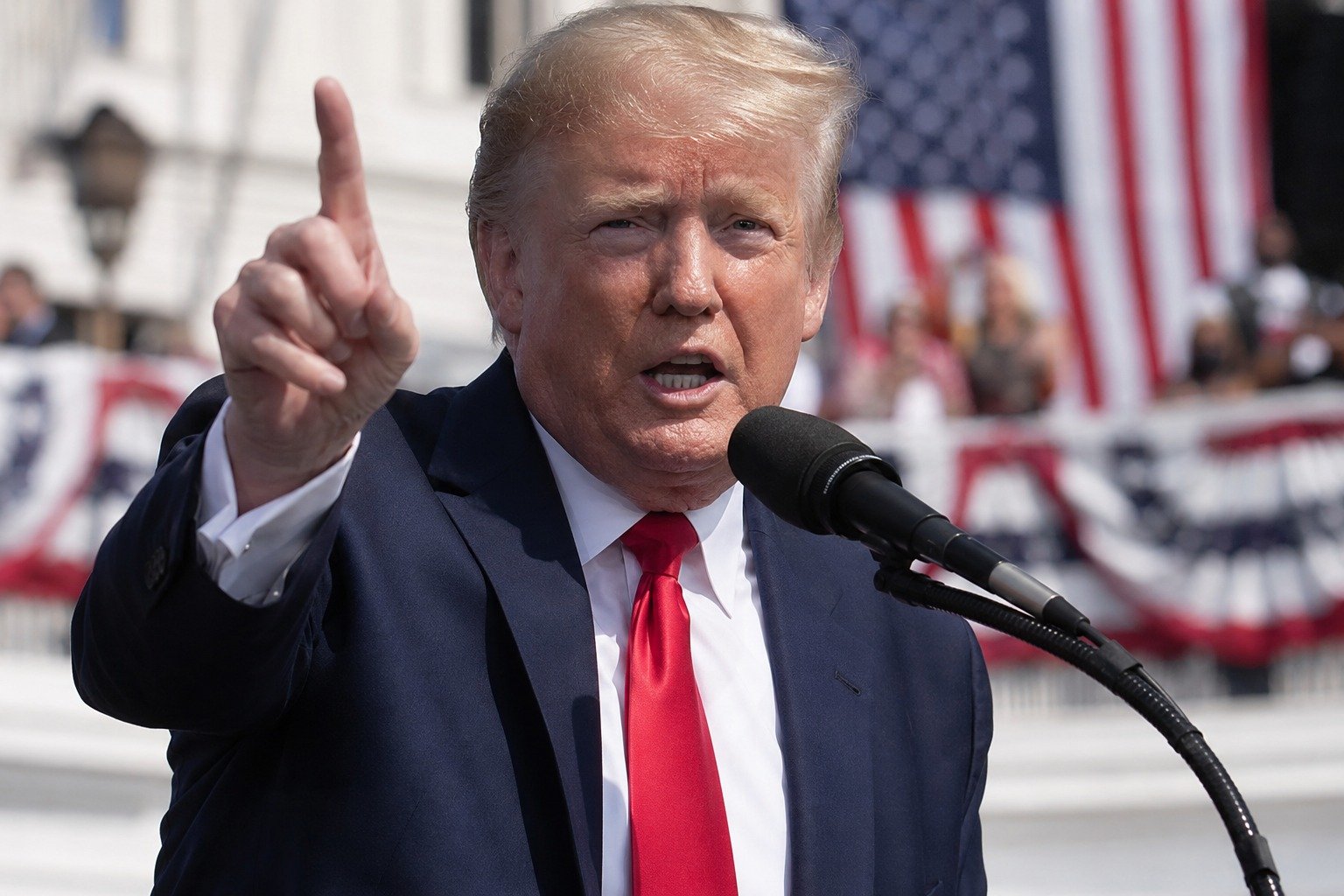
Donald Trump has named a new candidate for the single greatest threat the United States has ever faced, and it is not a foreign army, a rival superpower, or a terrorist network. Speaking around the America 250 celebrations near Mount Rushmore, Trump argued that the socialist and communist politics he associates with New York’s Zohran Mamdani represent a bigger danger to the nation than anything in its history.
In his telling, that movement now ranks above World War I, World War II, the attack on Pearl Harbor, and the September 11 terrorist attacks. It is a striking claim, and one worth examining carefully, because it says as much about the current political moment as it does about any actual threat.
What Trump Actually Said
The remarks came during a stretch of patriotic events tied to the country’s 250th anniversary. Trump invoked a list of the darkest chapters in American history – the two World Wars, the surprise attack that pulled the nation into global conflict in 1941, and the deadliest terrorist attack ever carried out on U.S. soil – and argued that the rise of socialist and communist ideas, which he ties to Mamdani, surpasses all of them as a danger to the country.
It is important to be precise here. The comparison is Trump’s own opinion and rhetoric. It is not a statement of fact, and it should not be reported as one. No credible measure places a domestic political movement that won at the ballot box above the wars and attacks that killed hundreds of thousands of Americans. What Trump offered was a rhetorical ranking designed to cast his political opponents in the most extreme possible terms.
Why the Framing Matters
Language like this does not exist in a vacuum. When a former and sitting president describes a domestic movement as a greater threat than 9/11, he is not simply expressing disagreement with a policy agenda on housing, wages, or health care. He is reclassifying fellow Americans who disagree with him as an existential enemy – something to be defeated rather than answered.
That distinction has real consequences. Political opponents are people you debate, outvote, and negotiate with. Existential threats are things you neutralize. Once ordinary opposition gets labeled a matter of national security, the door opens to treating dissent itself as dangerous. Historians of democratic decline have long warned that this reframing – not a single dramatic act, but the slow redefinition of the other side as the enemy – is often how democratic norms begin to erode.
The Reaction
Critics say the comparison is both inaccurate and corrosive. Equating an elected official and his supporters with the perpetrators of Pearl Harbor and 9/11, they argue, trivializes the real victims of those attacks while dehumanizing millions of Americans who simply hold different political views. They point out that Mamdani’s rise came through elections, not violence, and that treating an electoral outcome as a national security emergency is exactly the kind of rhetoric that healthy democracies avoid.
Supporters counter that Trump is doing nothing more than sounding the alarm about ideas he genuinely opposes. In their view, warning voters about socialism and communism is fair political argument, however heated the phrasing. The debate, then, is not really about whether Trump dislikes Mamdani’s politics – that much is clear – but about whether comparing them to the deadliest moments in American history crosses a line.
What This Means for Americans
For everyday Americans, the stakes go beyond one soundbite. How leaders talk about their opponents shapes how the country handles disagreement. When the language of war and terrorism gets applied to domestic politics, it raises the temperature for everyone, making compromise harder and conflict more likely. The question is not whether people are allowed to oppose socialist policies – of course they are – but whether the nation can debate those policies without casting tens of millions of voters as enemies of the state.
So where is the line? When does heated political rhetoric cross into something more dangerous, and who gets to decide? Those are the questions this moment leaves behind.
Stay informed on the stories that matter most. Follow Your Daily Updates on Facebook and bookmark yourdailyupdates.news for breaking news and analysis.