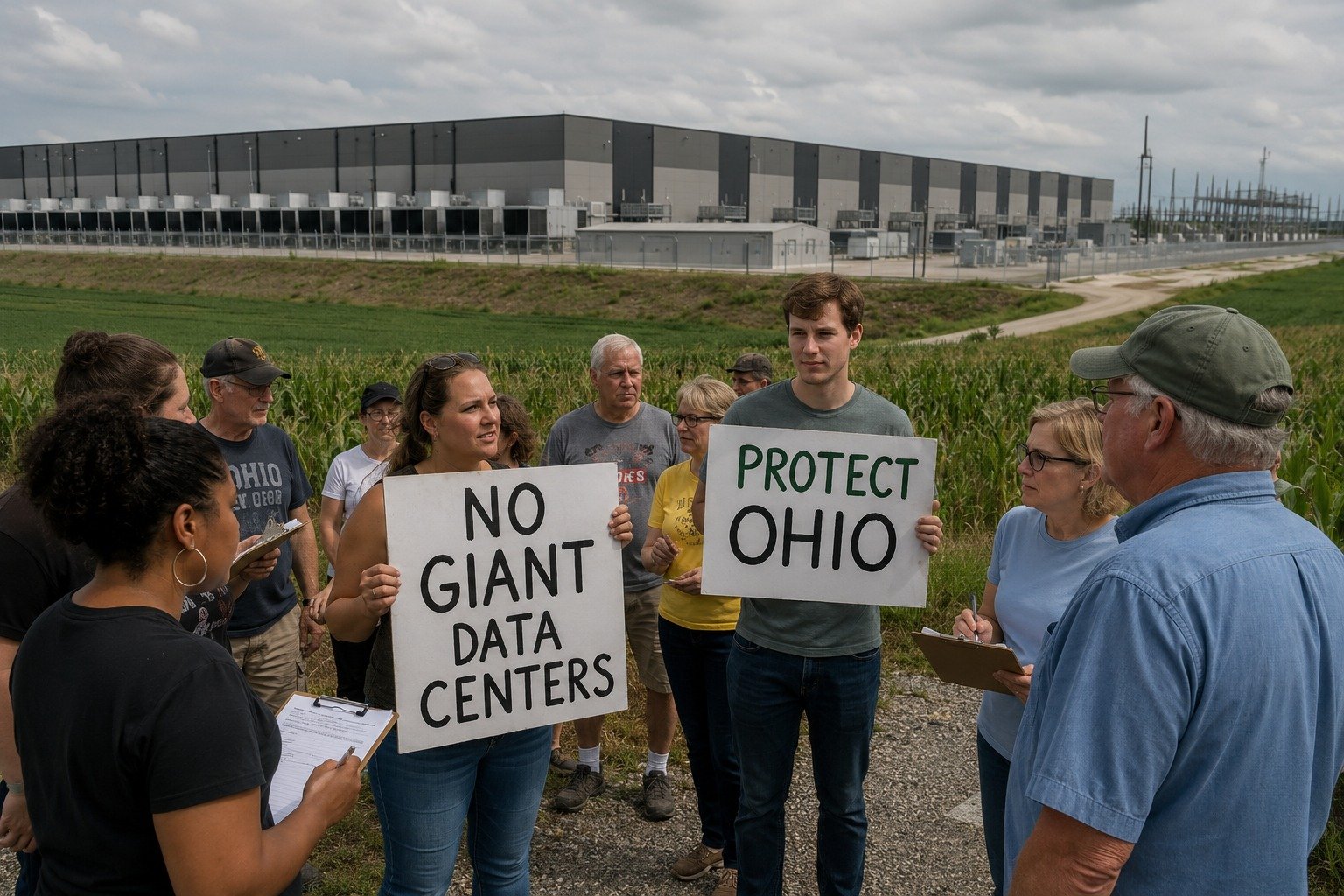
A grassroots coalition of Ohio residents just took direct aim at one of the fastest-growing forces in the American economy – the sprawling artificial-intelligence data centers reshaping communities across the state. And while their bid to put a constitutional ban before voters fell short this year, organizers say the fight is far from over.
The group, Ohio Residents for Responsible Development, launched a citizen-led effort to place a constitutional amendment on the statewide ballot that would prohibit the construction of massive new data centers – specifically those drawing more than 25 megawatts of peak electrical load. That threshold would capture nearly all of the enormous facilities now being built to power AI and cloud computing, effectively halting the expansion of the largest data centers in Ohio.
The proposal cleared its early hurdles. The Ohio Ballot Board certified the amendment’s language, giving the volunteer-driven campaign the green light to begin collecting signatures. From there, the math turned daunting.
The Signature Wall
To qualify for the ballot, the campaign needed roughly 413,000 valid signatures – equal to 10 percent of the total vote cast in the last gubernatorial election – gathered from at least 44 of Ohio’s 88 counties, all by a July 1 deadline. It is one of the steepest ballot-access thresholds in the country, and it is designed to be cleared by well-funded, professionally staffed operations.
Ohio Residents for Responsible Development chose a different path, relying entirely on volunteers rather than paid signature-gatherers. Working county fairs, festivals, and neighborhood events, the group built out a network of local leaders across dozens of counties. By the deadline, they had collected roughly 77,000 signatures – a remarkable showing for an all-volunteer campaign, but well short of the number required to make the 2026 ballot.
Rather than treat the outcome as a defeat, organizers announced they were regrouping and setting their sights on the 2027 ballot. They say the shortfall reflects the difficulty of the signature requirement, not a lack of public support for reining in data-center growth.
Why Ohioans Are Pushing Back
Ohio has become one of the nation’s biggest data-center hubs, home to roughly 200 such facilities – among the highest totals of any state. Most are clustered in central Ohio, and the pace of new construction has accelerated as tech companies race to build out the infrastructure behind the AI boom.
For many residents, that growth has come with mounting frustration. Critics argue that the largest facilities strain the electrical grid, drive up electricity costs for ordinary households, and consume enormous quantities of water for cooling – all while generating relatively few permanent local jobs once construction wraps up. Some communities have found themselves negotiating with billion-dollar tech firms over land, power, and tax incentives with little leverage of their own.
The amendment campaign channeled that discontent into a concrete demand: give voters, not just utilities and developers, a say in whether these projects keep multiplying. Supporters frame it as a question of who Ohio’s energy and land are ultimately for.
The Fight Continues
The failure to reach the 2026 ballot is a setback, but the effort has already accomplished something notable: it forced a statewide conversation about the costs of unchecked data-center expansion and demonstrated that ordinary residents are willing to organize against some of the most powerful companies in the world.
Organizers say they will use the coming months to build a larger volunteer base, refine their outreach, and prepare for another signature drive aimed at 2027. Whether they succeed the next time around, the message from this round is clear: the signatures fell short, but the movement did not.