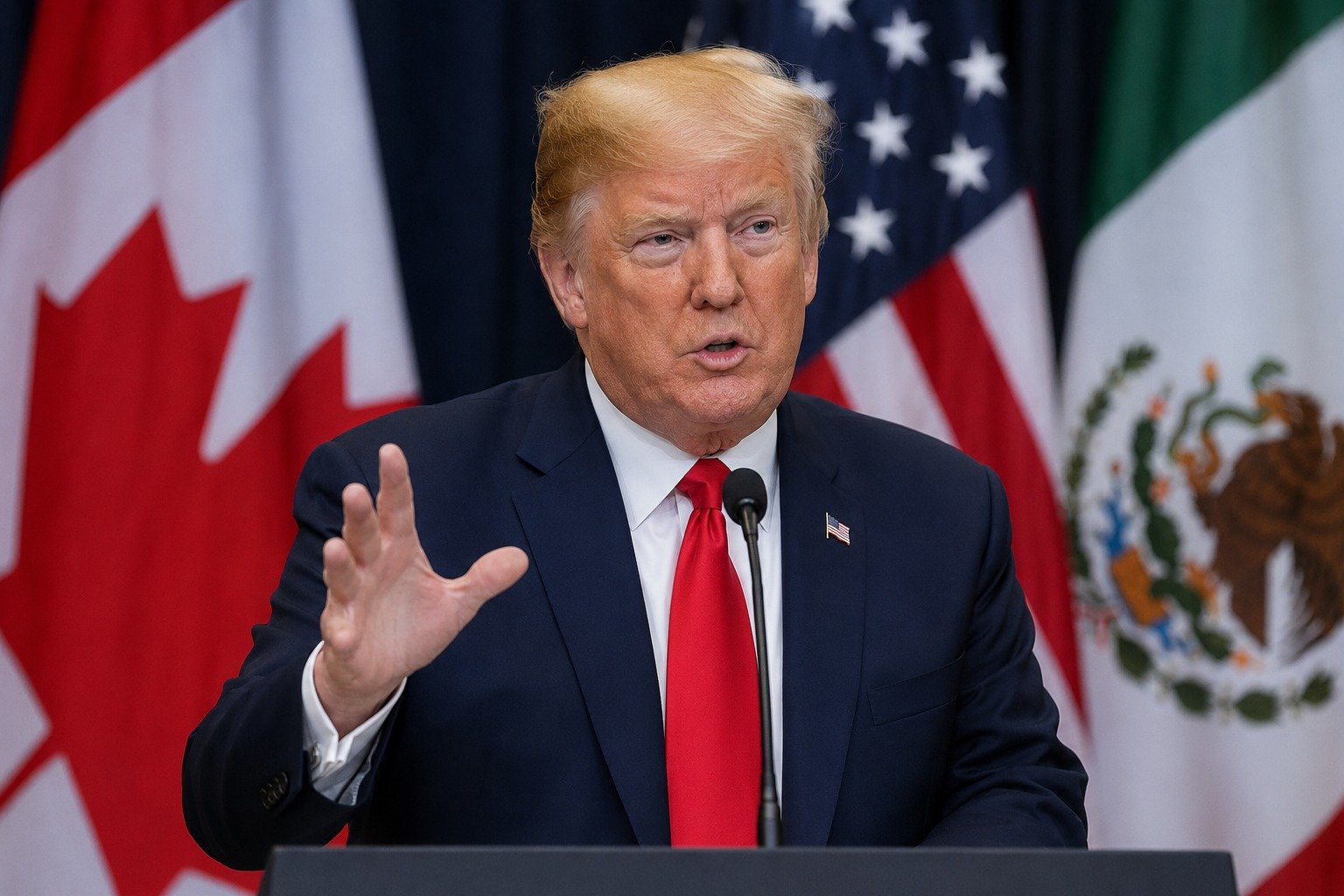
On July 1, 2026 — the deadline to renew the United States-Mexico-Canada Agreement for another full 16-year term — the Trump administration announced it would decline to lock in the pact long term. Instead of a straightforward renewal, Washington is triggering the treaty’s annual review mechanism and signaling a preference for separate, bilateral negotiations with each of its two neighbors.
The decision drew dramatic headlines suggesting the deal was collapsing. The reality is more measured, and the distinction matters for millions of workers and businesses on all three sides of the North American economy.
What “not renewing” actually means
Declining to renew USMCA for a fresh 16-year term does not terminate the agreement. Under the treaty’s own structure, the pact remains in effect and rolls forward, subject to yearly reviews, unless a member country formally moves to withdraw. Nothing expired on July 1, and no tariffs snapped back into place automatically as a result of the announcement.
What the move does change is the rhythm of the relationship. Rather than a decade-plus of stability with a single joint review scheduled far in the future, the three countries now face a recurring, annual checkpoint. Each review is an opportunity to reopen and renegotiate major provisions of the agreement — a standing pressure point that Washington can use to press for concessions.
The trade deficit at the center
President Trump’s stated primary concern with USMCA centers on the United States’ trade deficits with both Canada and Mexico. His enthusiasm for the deal has cooled considerably from the days when it was marketed as a signature win, coinciding with broader strain in Washington’s relationships with its two closest trading partners.
The United States and Mexico had already begun a series of bilateral talks that are scheduled to continue past the July 1 deadline. Canada, by contrast, had not yet launched its own separate negotiations with Washington as of the announcement, leaving the northern portion of the relationship in a more uncertain position.
An irony that is hard to miss
USMCA was Trump’s own creation. It was negotiated and signed during his first term between 2018 and 2020, and sold to the country as the modern replacement for the North American Free Trade Agreement — NAFTA — that he had long criticized. The same administration that once celebrated the deal as proof of tougher, smarter trade policy is now the one declining to guarantee it for the long haul.
That reversal underscores how much the political and economic calculus around trade has shifted. A pact once treated as a finished achievement is now being reframed as a living document to be pried open on an annual basis.
What it means for workers and businesses
For American farmers, manufacturers, and the workers whose jobs depend on cross-border supply chains, the immediate cost is not a sudden tariff or a shuttered border. It is uncertainty. Businesses plan investments, hiring, and contracts around predictable rules. When those rules are subject to renegotiation every 12 months instead of holding steady for more than a decade, planning becomes harder and the risk premium on doing business across borders rises.
Trade analysts note that annual reviews can cut both ways. They give the United States leverage to push for changes it wants, but they also expose American exporters to retaliatory pressure and give Canada and Mexico their own recurring openings to demand adjustments. The stability that made USMCA attractive to businesses in the first place is precisely what the annual-review approach trades away.
The bottom line
USMCA is not dead. It continues to govern the roughly $1.5 trillion in annual trade that flows across North America. But by declining a long-term renewal in favor of yearly reviews and bilateral deal-making, the Trump administration has swapped predictability for leverage — a bet that recurring pressure will deliver a better bargain, even if it means keeping one of the continent’s most important economic agreements in a permanent state of review.