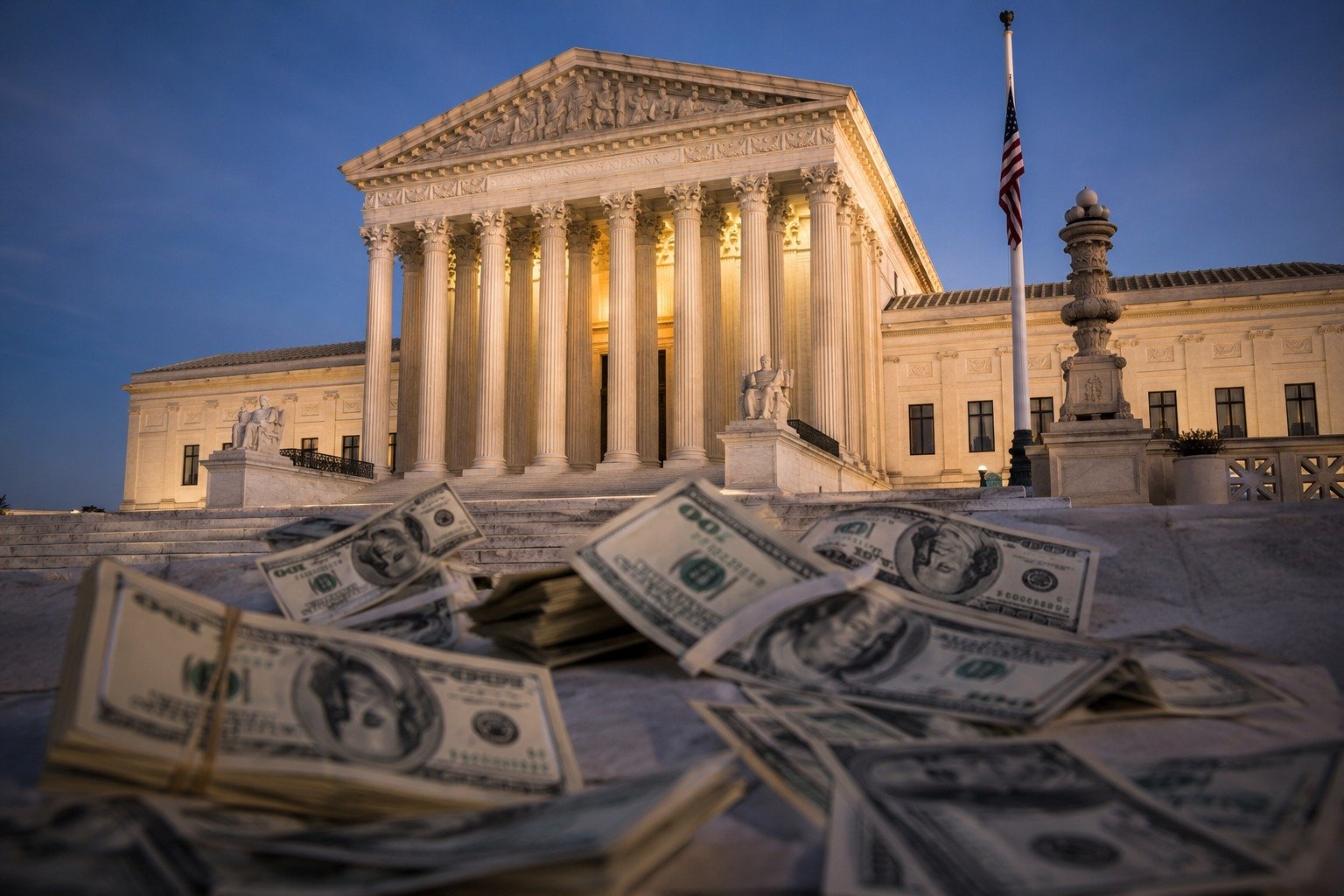
The Supreme Court has torn down one of the last remaining guardrails on money in American politics. In a 6-3 decision handed down on June 30, 2026, the justices struck down a decades-old federal limit on how much political parties can spend in coordination with their own candidates for federal office — a ruling that campaign-finance reformers warn could unleash a new flood of big money into elections.
The case, National Republican Senatorial Committee v. FEC, ends caps that had been part of the Federal Election Campaign Act for generations. Going forward, parties can spend without limit in direct coordination with the candidates running under their banner.
What the Court Actually Decided
It is important to be precise about the mechanism here. The Court did not simply bless “unlimited spending on candidates” in the abstract. What it struck down were the limits on coordinated expenditures — money a party spends in active coordination with a candidate, planning together how the cash is used.
That distinction matters. For years, the law has treated coordinated spending differently from an independent ad buy. An independent expenditure is made without the candidate’s involvement. A coordinated expenditure means the party and the candidate sit at the same table and decide together how to deploy the money. The old caps existed precisely to prevent that kind of tight coordination from becoming a workaround for direct contribution limits. Those caps are now gone.
The Majority and the Dissent
Justice Brett Kavanaugh wrote the majority opinion for the Court’s 6-3 conservative bloc, framing the coordinated-spending caps as a restriction on political speech and association. Supporters of the ruling call it a First Amendment victory, arguing that parties and their candidates should be free to work together without the government dictating how much they can spend doing it.
The Court’s three liberal justices dissented sharply. Justice Elena Kagan, writing for the dissent, warned that the decision hands parties a dangerous new power. Under this ruling, she cautioned, a party can now serve as “the candidate’s checking account” — a conduit through which effectively unlimited sums can flow to a single candidate. The legal line that kept parties from acting as an unlimited money pipeline to one candidate, she argued, has been erased.
Why This Matters
This ruling does not exist in a vacuum. It is the latest in a line of Supreme Court decisions over the past two decades that have steadily loosened the rules governing money in politics. Each one has chipped away at the post-Watergate framework that was built to keep the wealthiest donors from drowning out ordinary voters.
Critics see the decision as one more crack in the dam. When a party can pour unlimited money into a race in direct coordination with its candidate, the practical effect is to amplify the voices of the biggest donors even further. The people who can write the largest checks gain the most influence, and the gap between them and the average voter widens.
What This Means for Americans
The ruling lands at a moment when public trust in the fairness of U.S. elections keeps sliding. For the reformers who have spent years fighting to get big money out of politics, this is a setback delivered by the highest court in the country. For everyday voters, it raises a hard question: as the cost of winning elections climbs and the checks get bigger, whose interests will elected officials answer to first?
The debate now moves to the states, to Congress, and to the court of public opinion. Whether this decision reshapes the 2026 midterms or triggers a fresh push for reform, it has already redrawn the map of what parties and candidates are allowed to do with money.
Stay informed on the stories that matter most. Follow Your Daily Updates on Facebook and bookmark yourdailyupdates.news for breaking news and analysis.