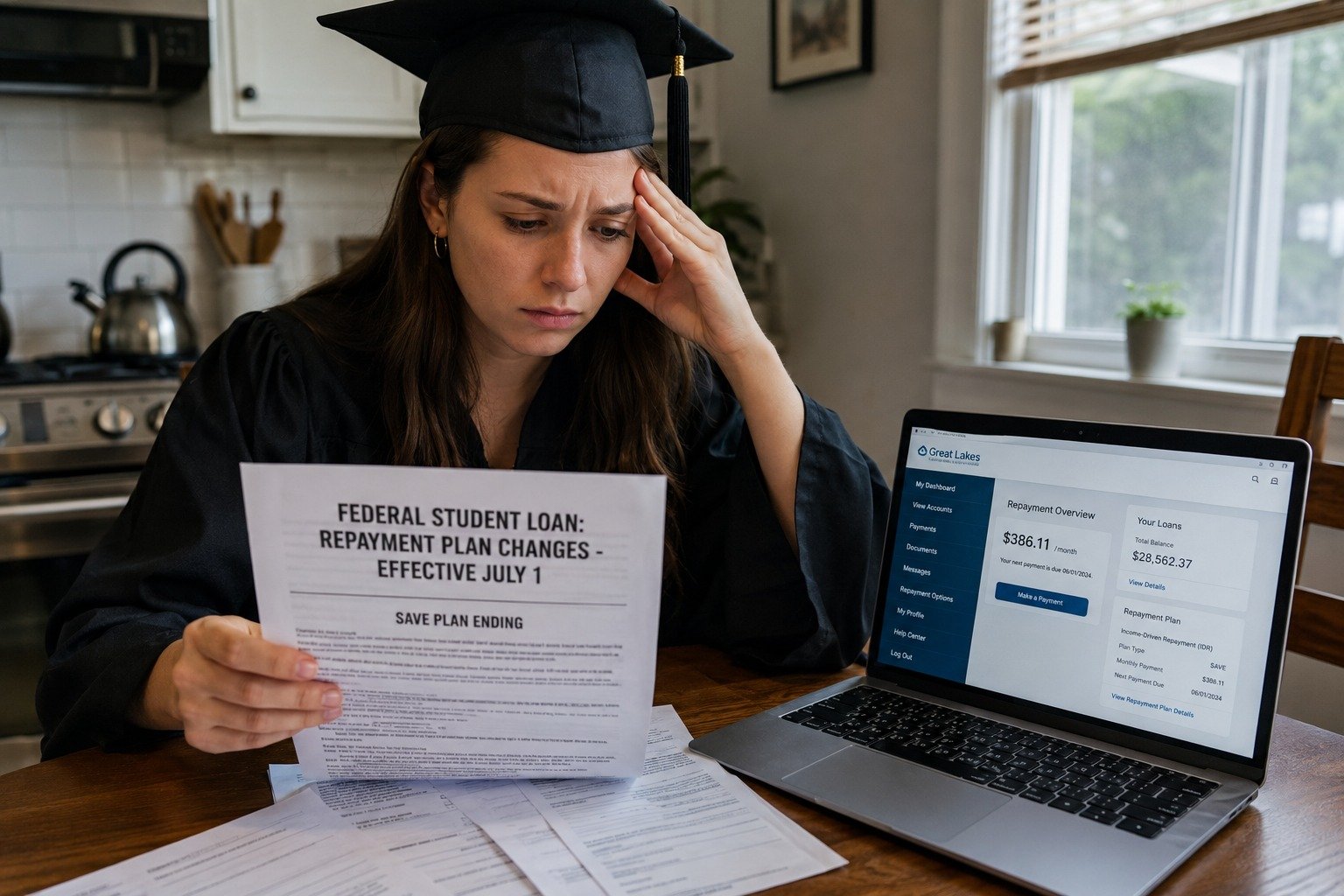
On July 1, the rules of borrowing for college changed for millions of Americans, and most of those changes take options away rather than add them. Under the One Big Beautiful Bill Act passed last year, the federal student loan system is being reshaped: the menu of repayment plans is collapsing to just two choices for new borrowers, several long-standing programs are being phased out, and new limits are being placed on how much families can borrow in the first place.
The most visible casualty is the SAVE plan, the income-driven repayment option introduced under the Biden administration that tied monthly payments to what borrowers actually earned. Starting July 1, borrowers enrolled in SAVE began receiving notices from their loan servicers, along with a roughly 90-day window to choose a different repayment plan. For many, the plan they relied on to keep payments manageable is disappearing.
Two repayment plans, fewer choices
In place of the broader menu, borrowers who take out a federal Direct Loan or Parent PLUS loan on or after July 1 will have only two repayment options. The first is a revised standard plan, with terms running from 10 to 25 years depending on how much was borrowed. The second is the new Repayment Assistance Plan, or RAP, an income-based plan that charges between 1% and 10% of a borrower’s adjusted gross income each year, with loan forgiveness available only after 30 years of payments.
That 30-year forgiveness timeline is significantly longer than what many income-driven borrowers were previously promised under earlier plans. Older repayment options such as PAYE and ICR are being sunset, with the Department of Education moving borrowers off them over the next two years. For loans disbursed after July 1, RAP becomes the only income-driven repayment option available.
Grad PLUS ends, Parent PLUS capped
The changes also reach into how much students and families can borrow. Grad PLUS loans, which graduate students have long used to cover the full cost of expensive programs like law school and medical school, are being terminated for new borrowers as of July 1. Existing Grad PLUS borrowers retain some continuing eligibility as they finish their current programs, but new students will no longer be able to tap the program.
Parent PLUS borrowing is now capped at $20,000 per child per year. And in a detail that worries many families, Parent PLUS loans will not be eligible for the new RAP plan at all, leaving parent borrowers with fewer paths to affordable payments than student borrowers.
One expansion in the mix
Not every change narrows options. Pell Grants, the federal aid that goes to lower-income students and does not need to be repaid, are being expanded to cover short-term workforce training programs. That opens federal aid to students pursuing skills-based credentials and certificate programs that previously fell outside Pell eligibility, a change supporters see as a meaningful boost for workers seeking faster routes into the labor market.
But for the vast majority of borrowers, July 1 means fewer ways to manage what they owe, longer roads to forgiveness, and tighter limits on borrowing. The changes stem from the sweeping budget law, not from a standalone Department of Education action, and they land just as a new generation of graduates enters repayment.
Supporters of the overhaul argue that it simplifies a confusing maze of repayment plans and reins in federal lending that they say grew too large. Critics counter that the law strips away protections that kept monthly payments affordable, particularly for graduate students and parents, and that the longer forgiveness timeline will keep borrowers in debt for decades. For the millions of people now sorting through servicer notices and shrinking options, the debate is no longer theoretical.