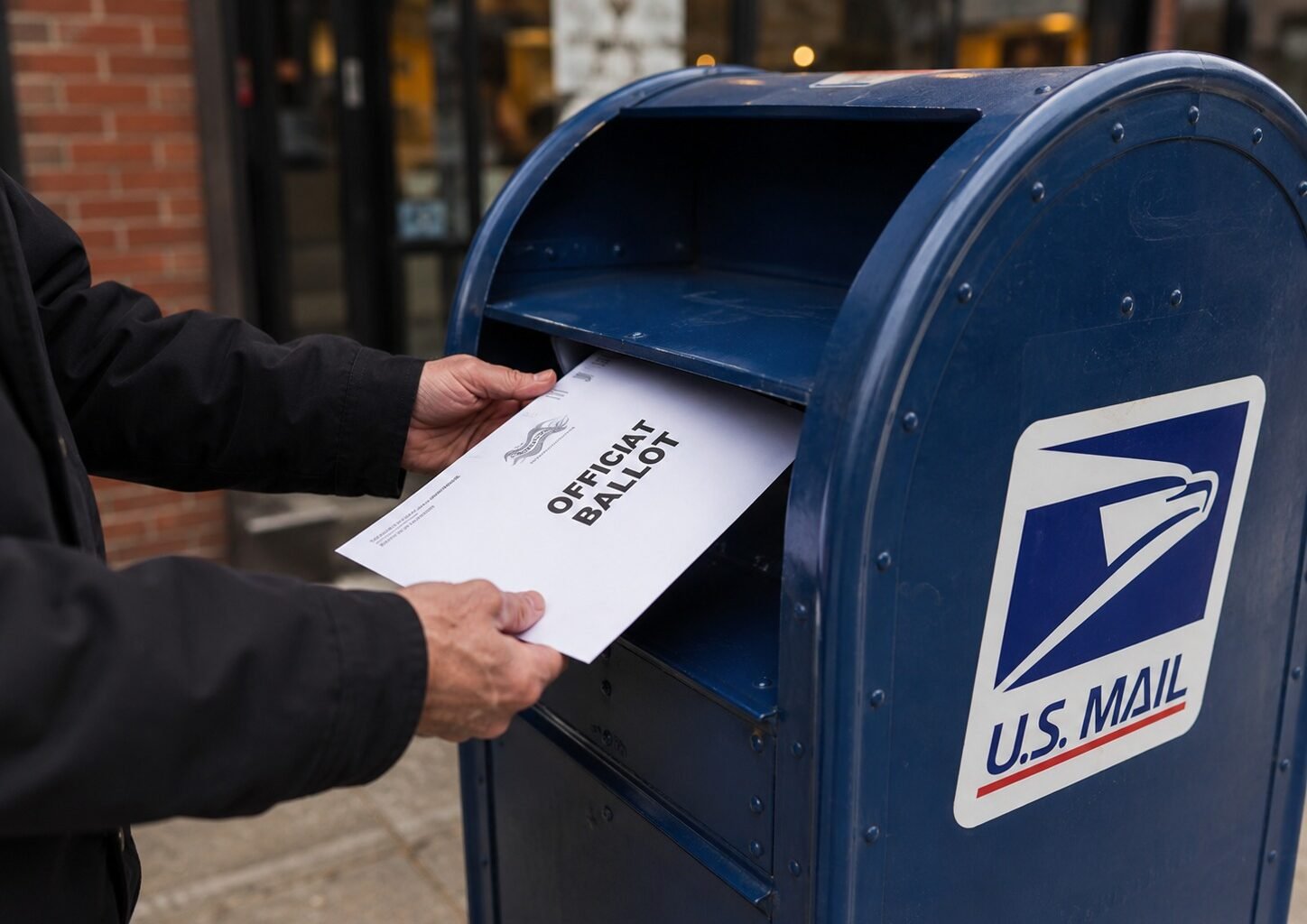
The nation’s top postal official has set off a firestorm among voting-rights advocates after telling senators that the U.S. Postal Service was prepared to stop delivering mail ballots in any state that refused to hand its voter rolls over to the Trump administration. The proposal has since been blocked by a federal judge — but not before it reached sworn testimony on Capitol Hill.
Postmaster General David Steiner made the remarks during testimony before senators, describing a proposed rule that would have tied mail-ballot delivery to a state’s willingness to comply with a federal demand for its voter data. The demand traces back to a March 2026 executive order directing states to turn over their voter rolls to the administration.
How the Proposal Would Have Worked
Under the proposed rule Steiner described, the Postal Service would have withheld delivery of mail-in ballots in states that declined to surrender their voter registration databases. In practice, that would have created a powerful lever: a state that resisted the federal data demand could have seen one of the most widely used methods of voting effectively shut down within its borders.
Mail voting is not a niche channel. Tens of millions of Americans rely on it every election cycle. Older voters, rural residents who live far from polling places, people with disabilities, and military families stationed overseas are among those who depend most heavily on the ability to cast a ballot by mail. Cutting off delivery in a non-compliant state would not have punished state officials so much as the voters themselves.
The Executive Order Behind the Push
The roots of the policy lie in a March 2026 executive order that directed states to provide their voter rolls to the federal government. Voter registration data has long been maintained at the state and local level, and many states have historically guarded that information closely, citing privacy concerns and the constitutional role of states in administering elections.
By linking ballot delivery to compliance with that order, the proposal would have converted the Postal Service — a neutral public institution charged with moving the nation’s mail without regard to politics — into an instrument of pressure. That is precisely the prospect that alarmed advocates the moment Steiner described it.
Voting-Rights Advocates Sound the Alarm
The reaction from voting-rights groups was immediate and forceful. Advocates warned that the rule would have handed Washington a switch capable of turning off mail voting state by state, depending entirely on whether a state bent to the federal data demand. They argued that a federal agency should never be in a position to decide whose ballots get delivered and whose do not.
Critics also pointed to the chilling precedent the policy would have set. If ballot delivery could be conditioned on a state surrendering voter data, future administrations could attach other conditions to the basic machinery of voting. The Postal Service’s reputation for political neutrality, built over generations, was suddenly on the line.
A Federal Judge Steps In
A federal judge has since blocked the proposal, at least for now, halting it before it could take effect. The ruling offered immediate relief to advocates who had feared the policy would disrupt the 2026 voting landscape. Outlets including The Hill and PBS, along with election-law trackers, have reported on the testimony and the court’s intervention.
But the block has not ended the debate. The fact that the idea advanced far enough to be laid out in sworn Senate testimony has left advocates demanding answers about how close the country actually came to letting a federal agency gatekeep the delivery of votes.
What This Means for Americans
For ordinary voters, the stakes are simple and personal. The ability to mail in a ballot — and trust that it will be delivered — is something most people take for granted. A policy that makes that delivery contingent on a political standoff between Washington and the states puts that trust at risk, and the people most likely to be harmed are those with the fewest alternatives for casting a ballot in person.
Stay informed on the stories that matter most. Follow Your Daily Updates on Facebook and bookmark yourdailyupdates.news for breaking news and analysis.