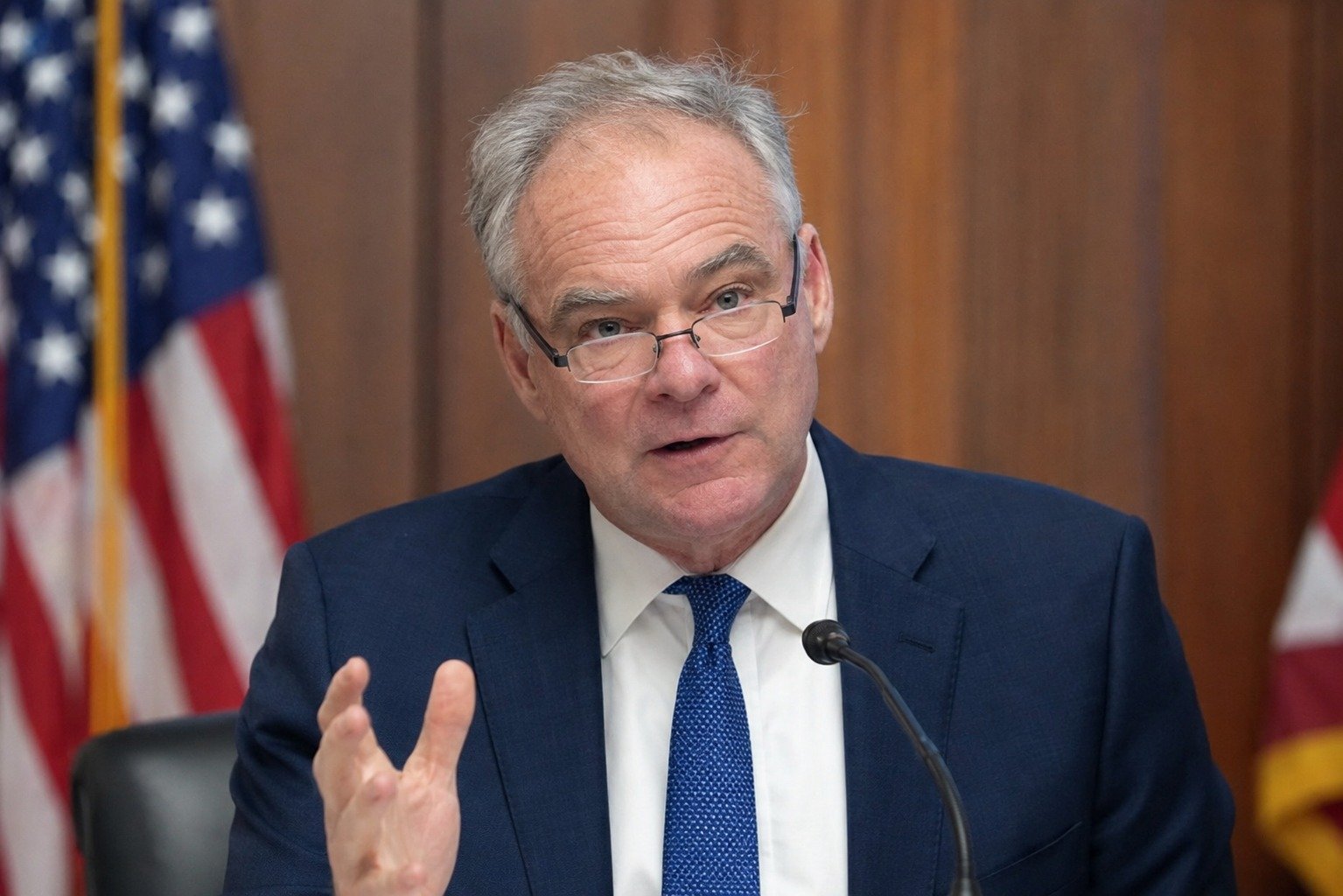
Sen. Tim Kaine (D-VA) signaled this week that Congress may be prepared to put firmer limits on how the nation’s top military officers can be removed from their posts, telling a national television audience that new “guardrails” protecting the chain of command could attract support from both parties.
Speaking on CBS’s “Face the Nation” on Sunday, June 28, Kaine addressed a recent string of high-profile departures at the Pentagon, including the exit of Gen. Chris Donahue. Asked whether lawmakers should act to insulate senior officers from abrupt political dismissals, Kaine said that “if we need to go farther to put some guardrails in place, you’ll probably find bipartisan support to do that.”
The comments reflect a growing unease in Washington about the stability of the country’s military leadership and the principle of civilian control of the armed forces — a cornerstone of the American system that depends on a professional officer corps able to give candid advice without fear of being pushed out for political reasons.
A check already moving through Congress
Kaine’s remarks were not made in a vacuum. The House Armed Services Committee has already adopted a provision that would require five days’ notice before a top officer is removed. The measure is designed to slow down sudden firings, create a window for oversight, and ensure that decisions affecting the senior ranks of the military are not made impulsively or in secret.
While a five-day notification requirement may sound modest, its supporters argue that even a brief pause can matter. It forces a paper trail, gives Congress a chance to ask questions, and signals to the officer corps that their positions are governed by rules rather than by political whim. For lawmakers worried about the erosion of long-standing norms, it represents a concrete, bipartisan-friendly first step.
Why the issue is gaining traction
The departures of senior commanders have drawn attention precisely because the military is supposed to be insulated from the kind of turnover that defines purely political offices. When experienced officers leave in quick succession, it raises questions about whether the normal, merit-based process for managing military careers is being respected — or whether other pressures are at play.
That concern is what Kaine, a member of the Senate Armed Services Committee, was speaking to. His framing was deliberately measured: rather than alleging wrongdoing, he pointed to the possibility that Congress may simply need to strengthen the rules so that the chain of command is protected regardless of who occupies the White House. By describing the effort as one likely to find “bipartisan support,” he framed the question as an institutional one, not a partisan one.
The stakes for civilian control
At the heart of the debate is the relationship between elected leaders and the professional military. Civilian control of the armed forces means that elected officials — not generals — set policy. But that control works best when senior officers can serve, advise, and, when necessary, dissent without fearing that an unpopular opinion will cost them their careers. Guardrails on firings are meant to preserve that balance, ensuring accountability flows through transparent rules rather than fear.
Supporters of stronger protections say the goal is not to make officers untouchable. Commanders can and should be removed for cause, poor performance, or misconduct. The aim, instead, is to guarantee that such decisions are made openly and on legitimate grounds — and that the public and Congress can see how and why they happen.
What comes next
For now, the five-day notification provision adopted by the House Armed Services Committee is the most tangible step on the table, and it will have to move through the broader legislative process before it can become law. Kaine’s suggestion that lawmakers may “go farther” hints that additional safeguards could follow if the appetite exists in both chambers.
Whether that appetite materializes will depend on how the issue is framed in the months ahead. If members of both parties come to see protecting the chain of command as a matter of institutional integrity rather than scoring political points, the kind of bipartisan support Kaine described could prove durable. The senator’s comments suggest that, at least for now, the door to such a coalition is open.