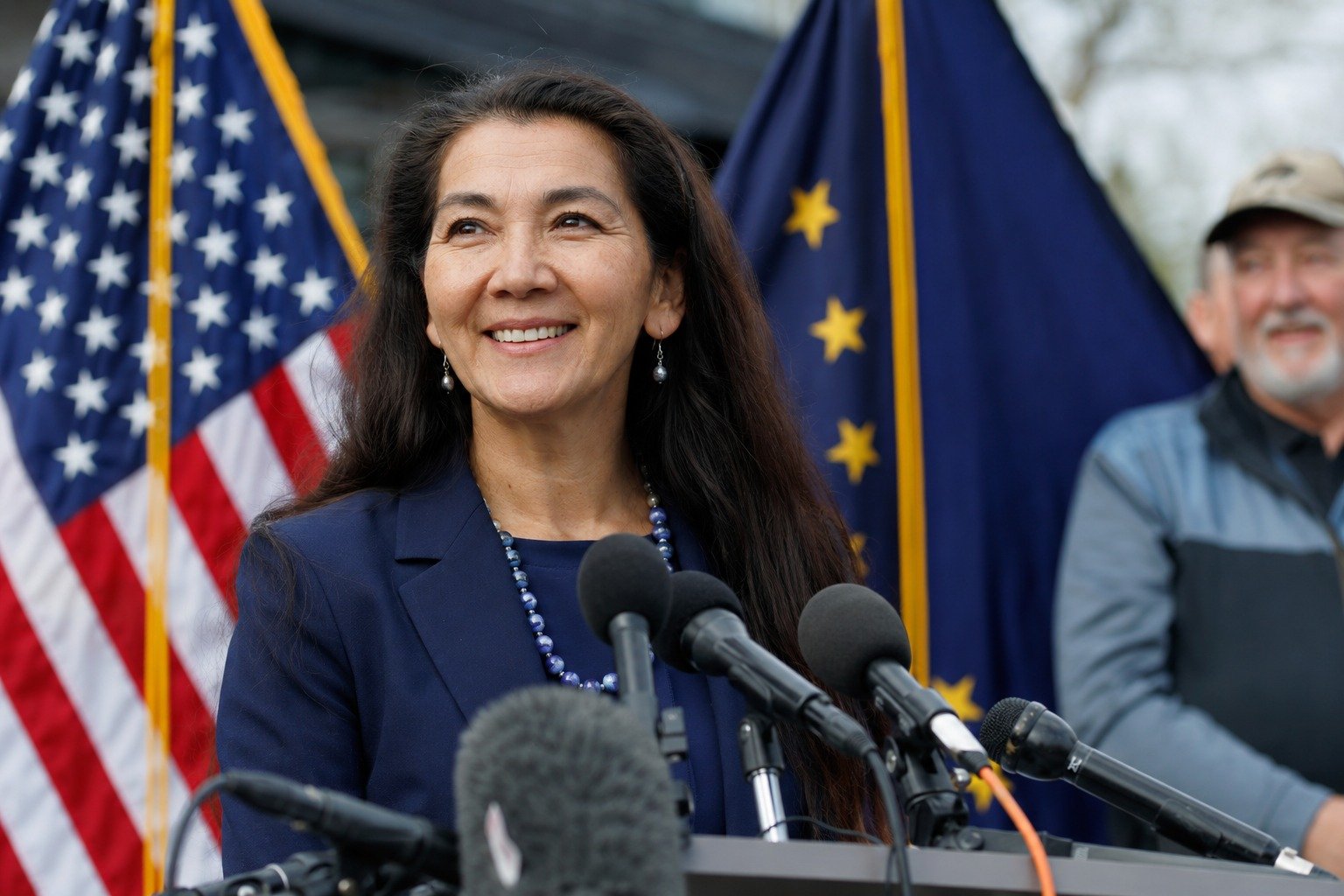
Alaska has quietly become one of the most consequential Senate battlegrounds of 2026. New polling released this spring shows Democrat Mary Peltola edging ahead of Republican incumbent Sen. Dan Sullivan, roughly 48% to 44% — a modest but meaningful lead in a state national Republicans have long treated as safely red.
A Once-Safe Seat Suddenly in Play
Sullivan, first elected in 2014 and reelected in 2020, has spent most of his Senate career as a reliable Republican vote rarely forced to sweat a general election. That assumption is now under serious strain. Peltola, who made history as the first Alaska Native elected to Congress when she flipped the state’s lone U.S. House seat in 2022, has proven she can win statewide in Alaska — and that she can do it by assembling a coalition that crosses party lines.
She narrowly lost that House seat in a later cycle, but her statewide brand remained strong. Now she is aiming higher: unseating a sitting Republican senator in a state Donald Trump carried. If she pulls it off, it would rank among the biggest upsets of the cycle.
Poll Margin vs. Prediction Markets — Two Different Numbers
It is worth being precise about what the numbers actually say, because two very different figures are circulating. The polling shows Peltola ahead on the margin — her share of the vote (around 48%) compared with Sullivan’s (around 44%). That is a snapshot of where the horse race stands today.
Separately, prediction markets such as Polymarket have at times put Peltola’s probability of actually winning in November as high as roughly 68%. That is a fundamentally different measurement — a betting-market estimate of the final outcome, not a vote share. The two are easy to conflate but should not be treated as the same number. A four-point polling lead and a 68% win probability describe the race from different angles; neither guarantees the other.
The Ranked-Choice Wild Card
Alaska’s election system adds another layer that most states don’t have: ranked-choice voting. Under the state’s top-four format, all candidates appear together on a single ballot, and voters rank their choices. If no candidate clears 50% outright, the lowest finishers are eliminated and their votes redistributed according to voters’ next preferences.
That mechanism helped Peltola win her House race, when second-choice votes broke in her favor after the initial count. Democrats are betting the same dynamic could help again — though the system can be unpredictable, and a head-to-head polling lead does not always survive the redistribution rounds intact.
What It Means for the Senate — and for Voters
The general election is set for Nov. 3, 2026. A Peltola win would not just be a stunning individual upset; it would strike at the Republican path to holding the Senate, potentially flipping a seat the GOP had penciled in as secure. Every competitive race matters in a narrowly divided chamber, and Alaska was not supposed to be one of them.
For Alaskans, the stakes are concrete. The state’s senators shape policy on energy, fisheries, federal land, health care, and the flow of federal dollars that Alaska depends on more than almost any other state. A genuinely competitive race means voters there will have real leverage — and real attention from both parties — heading into November.
For now, the race is genuinely up for grabs. Sullivan is no longer the lock he once looked like, and Peltola has put a seat in play that few national handicappers expected to be close.
Stay informed on the stories that matter most. Follow Your Daily Updates on Facebook and bookmark yourdailyupdates.news for breaking news and analysis.