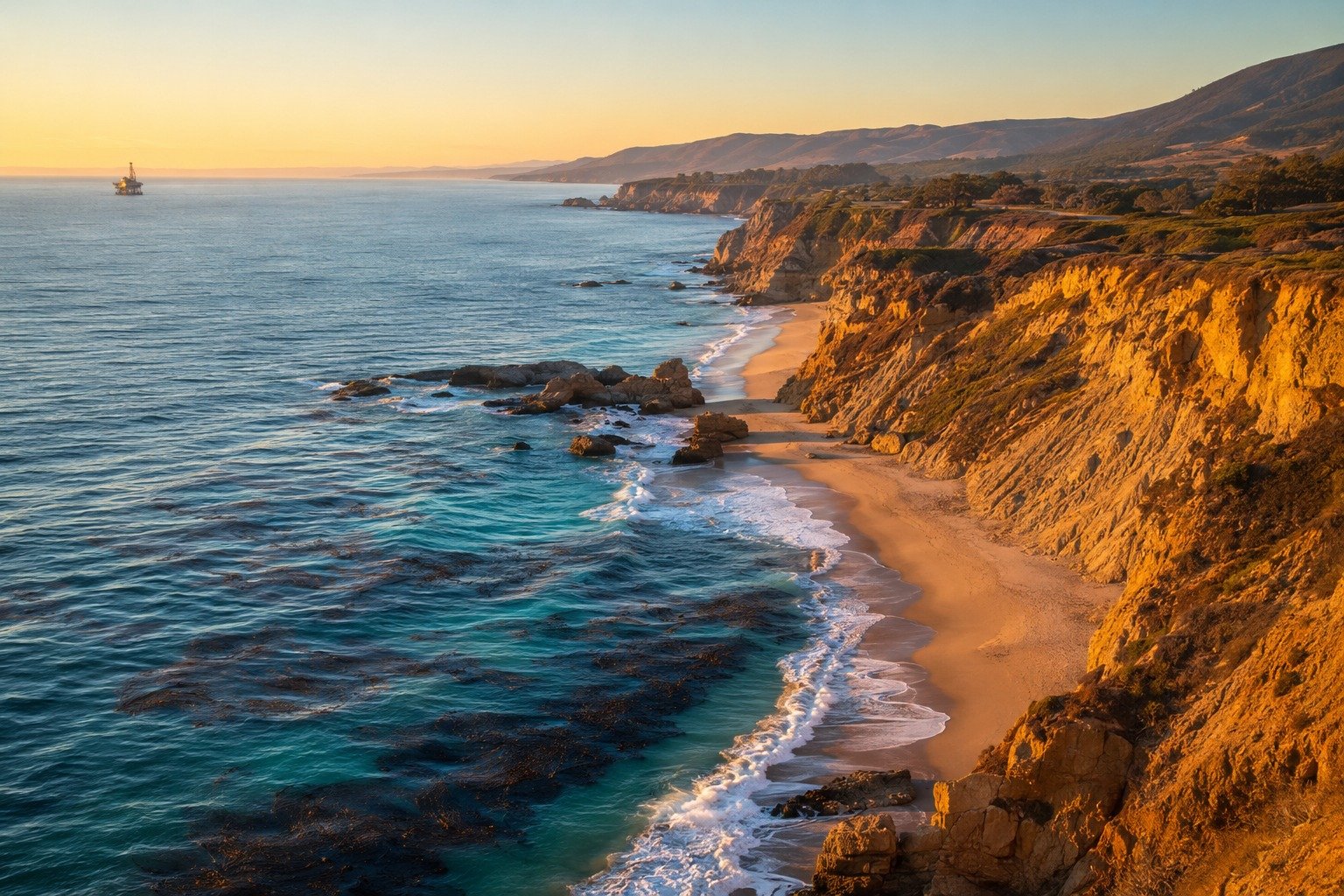
The Trump administration has opened a federal review of the agency that has protected California’s coastline for more than half a century, setting up a high-stakes clash over who controls what gets built along the Pacific shore.
Commerce Secretary Howard Lutnick directed the National Oceanic and Atmospheric Administration (NOAA) to review the California Coastal Commission’s coastal management practices, accusing the state of “environmental extremism” in the way it regulates development along its 840 miles of coast. The Commission is the body that decides what can be built on the California coast, and for decades it has used that authority to push back against offshore oil drilling and other projects that critics say threaten the state’s beaches, wetlands, and marine life.
What the review targets
According to NOAA’s official notice, the review takes aim squarely at the Commission’s handling of projects the federal government considers priorities. Those include offshore oil drilling, spaceport infrastructure, desalination plants, and undersea cables — areas where the Commission has slowed or blocked development in the name of protecting the coast.
In directing the review, Lutnick argued that California has “a long record of obstructing technological innovation, economic development and related federal efforts in the name of environmental extremism.” He pointed specifically to the state’s resistance to spaceport expansion and to its scrutiny of offshore oil production, pipeline maintenance, and desalination. The stated goal of the review is to ensure California gives sufficient weight to economic development and federal priorities in its coastal decisions.
A regulatory review, not a criminal probe
It is important to be precise about what this is. This is a formal regulatory review led by the Commerce Department and NOAA — not a criminal investigation. No one has been accused of a crime. But the stakes are still significant.
California’s coastal management program operates under the federal Coastal Zone Management Act, a federal-state partnership that gives the state real leverage over projects in its coastal zone, including the ability to weigh in on federally backed efforts. Weakening that program could strip California of authority it has relied on for decades to keep oil rigs and heavy industry away from its beaches. That is why coastal advocates are watching the review so closely.
How the public can weigh in
The review is not happening behind closed doors. NOAA opened a formal public comment period running through August 22, giving residents, advocacy groups, industry, and local governments a window to submit their views on how California manages its coast.
The agency also scheduled three public meetings. One was held in person in Santa Monica on August 10, with two additional virtual sessions on August 10 and August 12. The meetings were designed to let the public hear about the scope of the review and offer testimony directly.
The bigger fight
The review lands at the center of a long-running tension between Washington and Sacramento over the future of the coast. Supporters of the Coastal Commission see the federal action as an effort to clear the way for drilling and development that Californians have rejected for generations, and they argue the agency’s job is precisely to act as a check on industrial pressure. Critics of the Commission counter that it has blocked too many projects for too long, slowing housing, infrastructure, and economic growth in the process.
What the review ultimately recommends could shape how much power California retains over its own shoreline — and whether the federal government gains more say over what happens where the land meets the sea. For now, the coastline that has been guarded for more than 50 years is under the federal microscope, and the public still has a voice in what comes next.