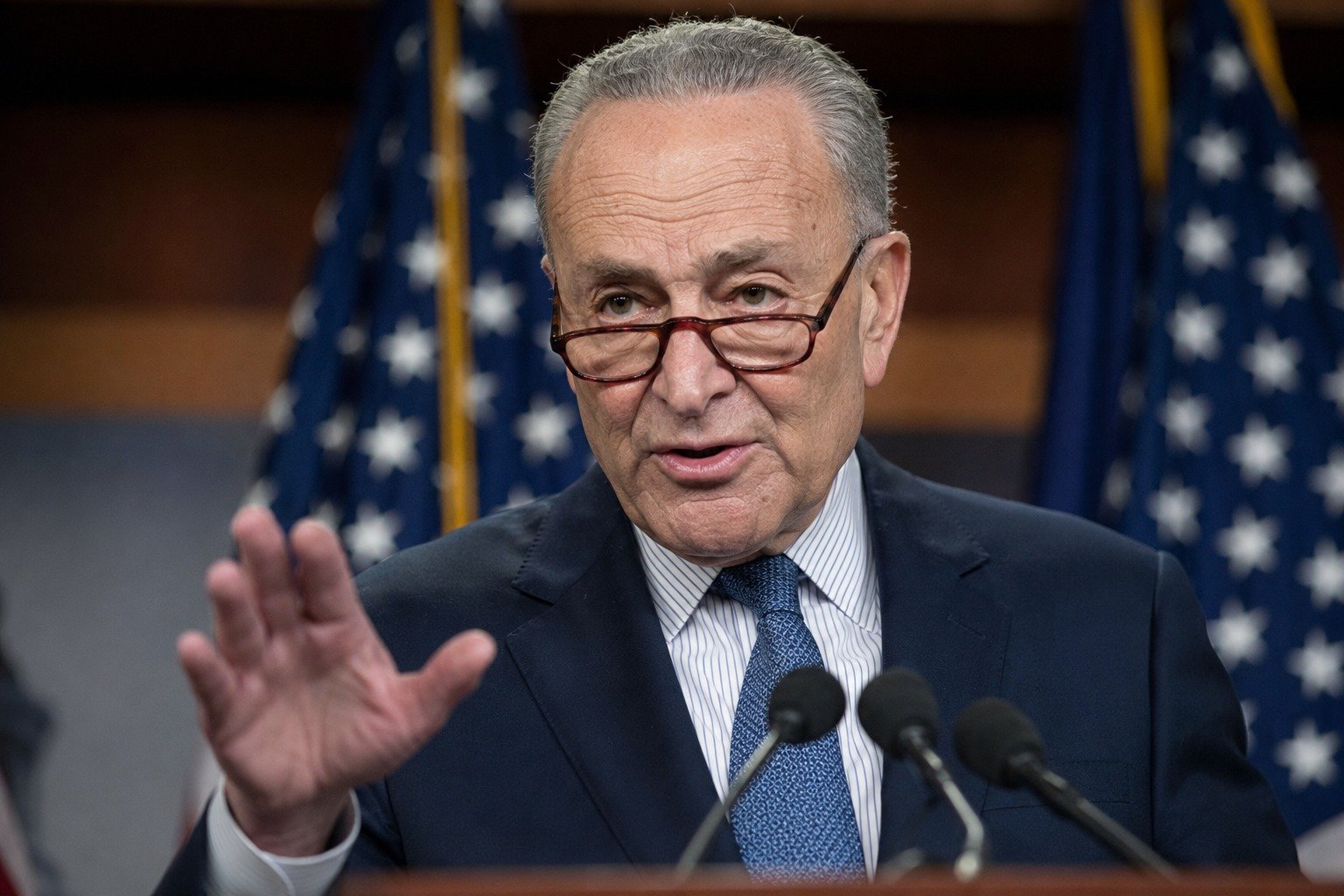
Senate Democratic Leader Chuck Schumer is sounding the alarm over the SAVE Act, a Republican-backed bill that would require Americans to show documentary proof of U.S. citizenship in order to register to vote. Schumer warns the measure could push millions of eligible voters off the rolls – and he has framed it as one of the most consequential voting-rights fights heading into the next election cycle.
In his public remarks, Schumer has put the figure as high as “25 million people.” It is important to be precise here: that number is Schumer’s own claim, and even his own framing has been inconsistent. Across different statements, the senator’s estimate has swung between 20 million, 25 million, and 30 million, and he has not laid out a clear, step-by-step mechanism for how any of those totals would be reached. Independent fact-checkers have taken note. PolitiFact and PBS have rated a related Schumer claim about the SAVE Act as “Half True,” cautioning that the precise totals are contested and that the real-world impact would depend heavily on how the law is implemented.
What the SAVE Act Would Actually Do
The Safeguard American Voter Eligibility Act, known as the SAVE Act, would require people to present documentary proof of citizenship – such as a U.S. passport or a birth certificate – when registering to vote in federal elections. Supporters describe it as a common-sense safeguard to ensure that only U.S. citizens cast ballots. They argue that the required documents are easy to obtain and that verifying citizenship is a reasonable step.
Critics, including a wide range of voting-rights organizations, see it very differently. Their core concern – the part that is not seriously in dispute – is that tens of millions of Americans do not have ready access to a passport or birth certificate. According to multiple voting-rights analyses, a significant share of eligible voters cannot quickly put their hands on these documents, and obtaining them can cost money and time that many working people do not have.
The Married-Name Problem
One of the most frequently raised objections involves married women. A person whose current legal name differs from the name on their birth certificate – a situation common among women who changed their names after marriage – could face additional hurdles at the registration desk. Without a matching document chain, those voters might be forced to track down marriage certificates or other paperwork simply to prove they are who they say they are. That practical friction is at the heart of why advocates worry the law would suppress eligible voters rather than fraudulent ones.
The Fraud Debate
Supporters of the SAVE Act frame it around election integrity. Critics counter that the problem the bill claims to solve is exceedingly rare. Study after study has found that in-person voter fraud by noncitizens is vanishingly uncommon in the United States. From that vantage point, opponents argue, the measure’s real-world effect would be to make registration harder for legitimate, eligible voters who simply lack the right paperwork on hand – not to stop a wave of illegal voting that the data does not show exists.
Why the Number Is Contested
It is worth restating clearly: Schumer’s “25 million” figure should be understood as his warning, not an established fact. The underlying concern – that documentary proof-of-citizenship requirements can create real barriers for eligible voters – is well documented. But the specific headline number is the senator’s own estimate, it has shifted in his telling, and fact-checkers have flagged it as only partly supported. Presenting the figure honestly means presenting it as a claim that critics question, even as the broader voting-access concern remains legitimate.
What is clear is that the SAVE Act has reopened one of the most charged debates in American politics: who gets to cast a ballot, and what they should have to prove to do it. With an election year approaching, the fight over the bill – and over Schumer’s warnings about it – is only going to intensify.