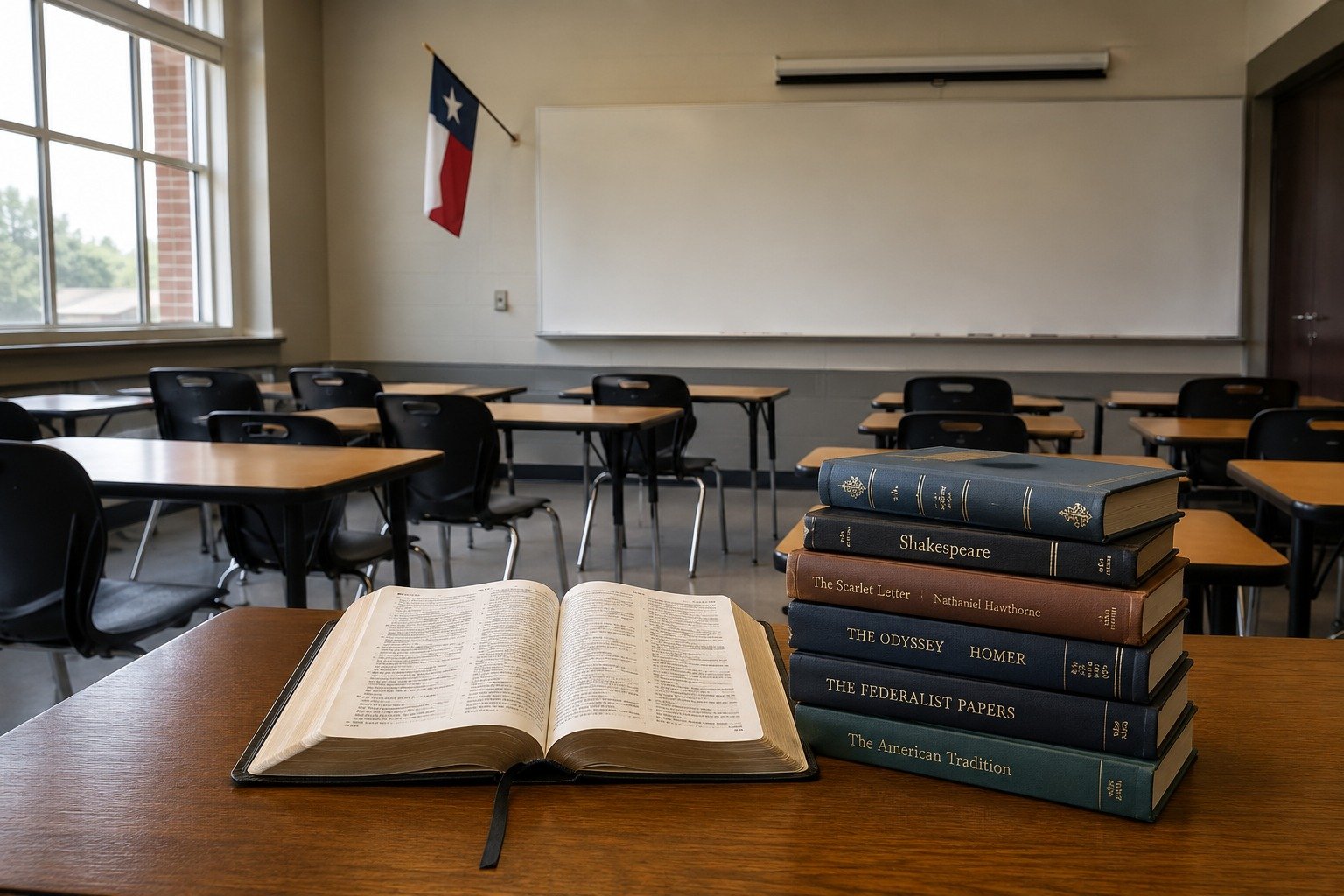
The Texas State Board of Education has voted to require Bible passages as part of a mandatory reading list for public school students, a decision that will reach more than 5 million children across the state. On Friday, June 26, 2026, the board approved the K-12 list in a 9-5 vote that fell straight along party lines.
The new list places scripture stories such as Adam and Eve, the Beatitudes, and the Prodigal Son alongside works of classic literature. Under the policy, these passages are not an optional unit that a district can choose to teach or skip. They are part of a required reading list, meaning students would be expected to engage with the material as a standard component of their coursework.
A Shift From Optional to Required
The vote marks a significant escalation from where Texas stood two years ago. In 2024, the state introduced its Bluebonnet Learning curriculum, which encouraged and incentivized Bible-based lessons but ultimately left them optional for districts. Schools could opt in, and the state offered funding incentives to those that did, but no district was compelled to adopt the material.
This new reading list is different in a fundamental way. It is a mandated statewide requirement rather than a suggestion or an incentive. That distinction is at the heart of why the decision has drawn sharp reactions from across the political and religious spectrum. The earlier approach gave local communities a choice; the new policy removes that choice and applies a single standard to every public school student in Texas.
Years Before It Takes Effect
One detail that has been easy to lose in the headlines is timing. The requirement does not take effect immediately. It is scheduled to begin in 2030, which gives districts, parents, educators, and the courts several years to respond, prepare, or challenge it. That window is likely to become a battleground in itself, as legal organizations and advocacy groups weigh whether to contest the policy before it ever reaches a classroom.
The delay also means the political landscape could shift before the rule is enforced. Board membership, the makeup of the state legislature, and the outcome of any court cases could all influence whether the requirement survives in its current form, gets modified, or is struck down.
The Church-and-State Debate
Critics argue that a government-required Bible reading list blurs the constitutional line between church and state. Their central concern is whose religious texts belong in a public classroom, and whether the state should be in the position of deciding that one faith’s scripture is required reading for every child. For families of other faiths, and for families with no religious affiliation, the question becomes pointed: should the state effectively require students to read scripture as part of a public education?
Supporters frame the decision differently. They describe the Bible passages as foundational literature and argue that cultural literacy depends on familiarity with texts that have shaped Western storytelling, art, and law. From that perspective, the stories are being taught for their literary and historical influence rather than as religious instruction.
The tension between those two framings is what makes this more than a routine curriculum update. A required reading list carries the weight of state authority, and the inclusion of religious texts in that list raises questions that courts have grappled with for decades. With the policy not taking effect until 2030, the coming years will likely determine whether Texas has set a new national precedent or sparked a legal fight that reshapes the rule entirely.
For now, the vote stands as a clear statement of direction from the Texas State Board of Education, and one that puts the futures of more than 5 million students at the center of a renewed national debate over religion in public schools.