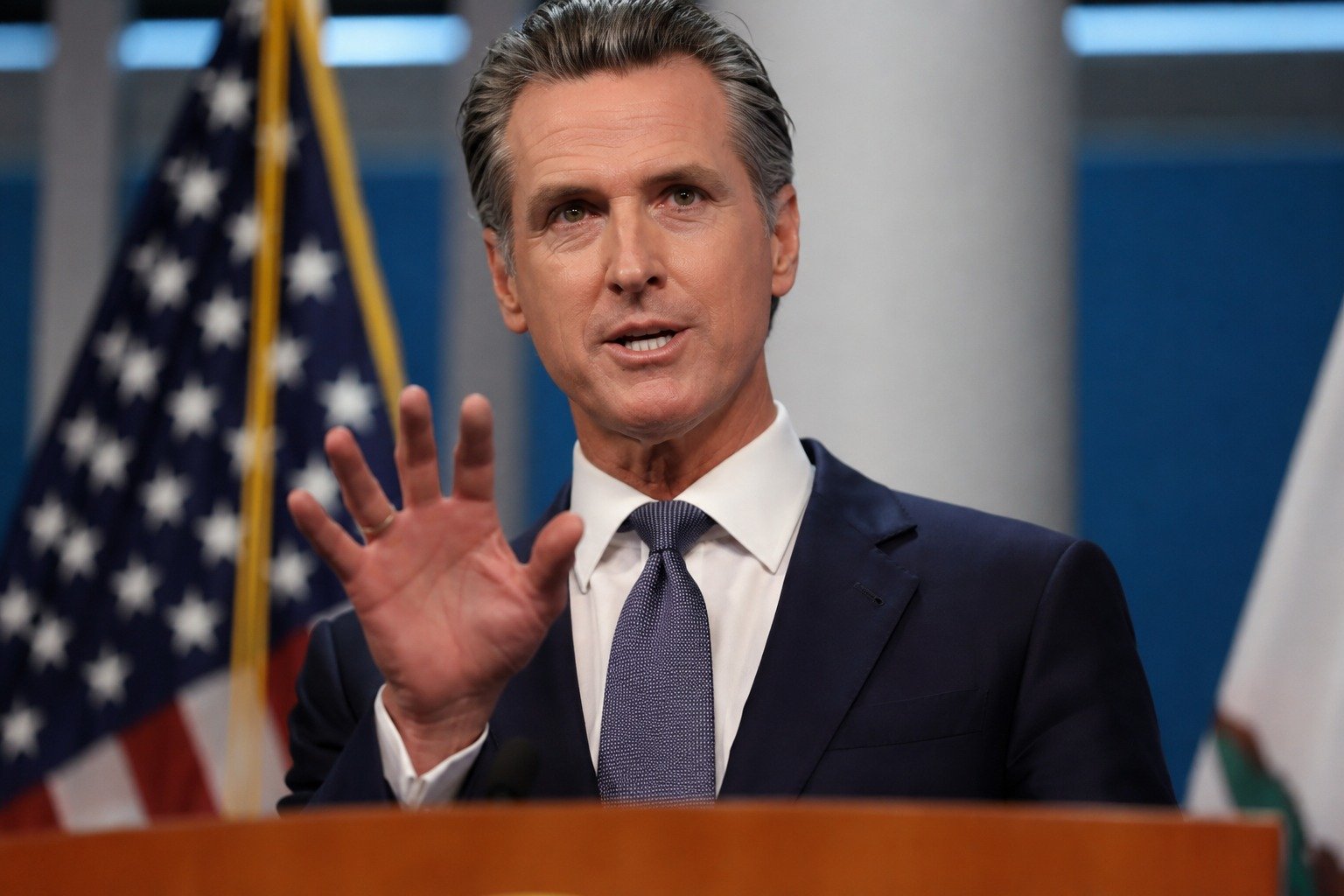
California Governor Gavin Newsom has put a number on economic fairness: if you are worth more than $100 million, you should pay at least the same tax rate as the people who work for you. In a sweeping national economic plan unveiled on June 26, 2026, the governor called for what he describes as an “economic reset” — a package built around a minimum tax on billionaires and a first-of-its-kind national fund designed to give everyday Americans a financial stake in the wealth that artificial intelligence is about to create.
The centerpiece is a national minimum tax on billionaires, which Newsom calls a “modern Buffett rule.” The idea targets individuals with a net worth of at least $100 million and is meant to stop the ultra-wealthy from paying a lower effective tax rate than nurses, teachers, and truck drivers. The proposal has been confirmed in reporting by CBS News, CNBC, CNN, PBS, and NBC News.
Closing the loopholes the wealthy rely on
Newsom’s plan goes beyond a single tax rate. He wants to make it illegal for the wealthy to borrow against their stock portfolios to fund their lifestyles tax-free — a widely used strategy that lets the richest Americans access enormous sums of money without ever triggering a taxable event. He also called for closing longstanding loopholes and rolling corporate tax rates back to where they stood before the tax cuts enacted during President Donald Trump’s first term.
A public stake in the AI economy
The boldest piece of the proposal is a national “public equity fund.” The concept would give everyday Americans an ownership stake in the wealth artificial intelligence is expected to generate over the coming decade. As AI reshapes entire industries and threatens millions of jobs, Newsom argues that the workers whose labor built the modern economy should not be left behind as a handful of companies capture the gains.
According to the plan, the fund would reportedly bankroll worker transition benefits for those displaced by automation, universal childcare, free higher education and career training, and healthcare. In effect, it would convert a portion of the AI boom’s private returns into a public dividend — a direct answer to the question of who should benefit from a technological revolution that is being built, in large part, on data and labor contributed by ordinary people.
A proposal, not a law
It is important to be clear about what this is and what it is not. This is a proposal — a policy pitch — not enacted legislation. Newsom is a state governor, and he has no authority to write or pass federal tax law. That power belongs to Congress. His announcement, laid out in a Substack post, is best understood as a national agenda-setting move, and it is being widely read as an early marker for a possible 2028 presidential run.
Critics have also been quick to point out an apparent tension in Newsom’s position. While he champions this expansive national plan, he opposes a one-time wealth tax proposed in his own state of California. Newsom has argued that a piecemeal, state-by-state approach risks driving wealth and businesses elsewhere, and that a fair fix has to be national in scope.
Whatever the politics behind it, the framing is striking. Newsom is betting that “make billionaires pay their fair share” — and the larger question of who actually owns the future the AI revolution is building — is a fight American voters are ready to have. Whether any of it becomes law will depend entirely on a Congress that has so far shown little appetite for sweeping tax reform.