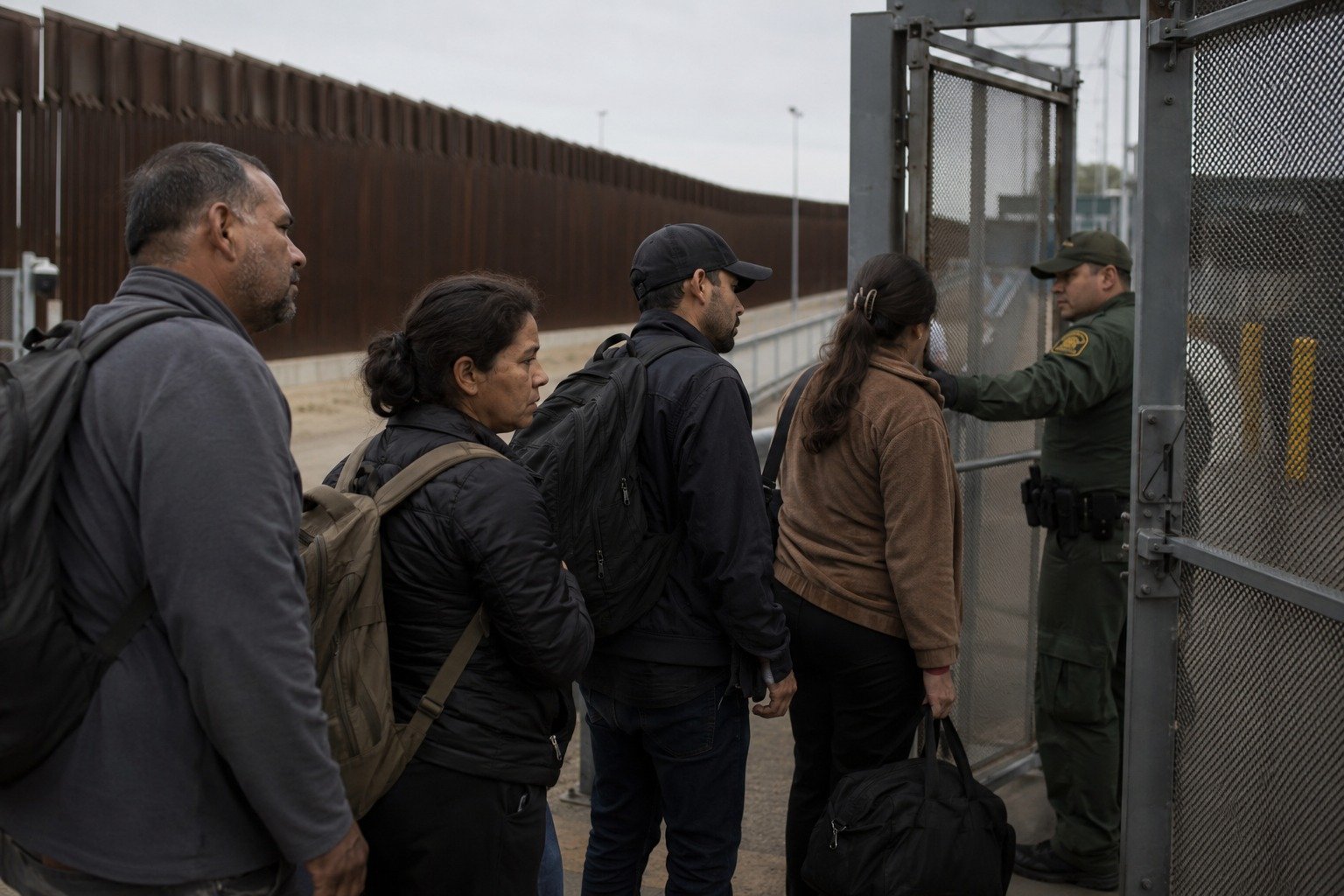
For years, the simple act of walking up to a U.S. port of entry and asking for protection has been a legal right written into American immigration law. On Wednesday, the Supreme Court made it far easier for the federal government to turn those people away before they ever get the chance.
In a 6-3 decision in Mullin v. Al Otro Lado, written by Justice Samuel Alito, the Court ruled that immigration law does not require the government to process every asylum seeker who shows up at a port of entry. The majority concluded that migrants who present themselves on the Mexican side of the border have not legally “arrived” in the United States and therefore are not automatically entitled to be inspected and to apply for asylum.
The practical effect of the ruling is that it clears the legal path for the Trump administration to revive a controversial practice known as “metering.” Under metering, Customs and Border Protection officers cap the number of people who can apply for asylum at a given port of entry each day, turning the rest back to wait on the Mexican side – sometimes for weeks or months at a time.
What the ruling does – and doesn’t – do
It is important to be precise about what changed on Wednesday. The Court did not order metering back into existence. What it did was remove a legal obstacle that had stood in the way. Whether the policy actually returns is now a choice that sits squarely with the executive branch. The administration would still have to decide to reinstate it and direct border officials to begin capping daily applications again.
That distinction matters because metering is not a new or partisan invention. A version of the practice was first used under the Obama administration in 2016 and was later expanded under the first Trump administration. During Wednesday’s unusual courtroom exchange, Alito pointed to that history, noting that the approach had been used across two presidencies.
A pointed dissent from the bench
Justice Sonia Sotomayor read her dissent aloud from the bench – a step justices reserve for cases they feel most strongly about. She warned that the majority’s opinion “regrettably and tragically extinguishes the light of the torch of the Statue of Liberty,” casting the decision as a retreat from a long tradition of offering refuge to people fleeing danger.
In a rare moment, Alito offered a direct response from the bench after Sotomayor finished, defending his reasoning and noting his surprise that she had chosen to read the dissent out loud. The back-and-forth underscored just how divided the Court was on a question with enormous human stakes.
The human stakes
For the families and individuals waiting at the border, the consequences are not abstract. Many of the people who line up at ports of entry are fleeing violence, persecution, or threats to their lives, and asylum is meant to be a lawful, orderly way to seek safety rather than crossing between official checkpoints. Critics of metering argue that capping daily applications pushes vulnerable people into dangerous limbo on the Mexican side, where they can become targets for cartels and traffickers, and that it effectively narrows a right Congress wrote into law.
Supporters of the policy counter that border facilities have finite capacity and that managing the flow of arrivals is a legitimate function of the government. The Supreme Court’s ruling does not resolve that broader debate. What it does is hand the administration a powerful new tool – and the decision about whether and how to use it now rests with the people running the agencies, not the courts.
What happens next to thousands of people seeking safety may come down to a single policy choice. Wednesday’s ruling made that choice easier to make.