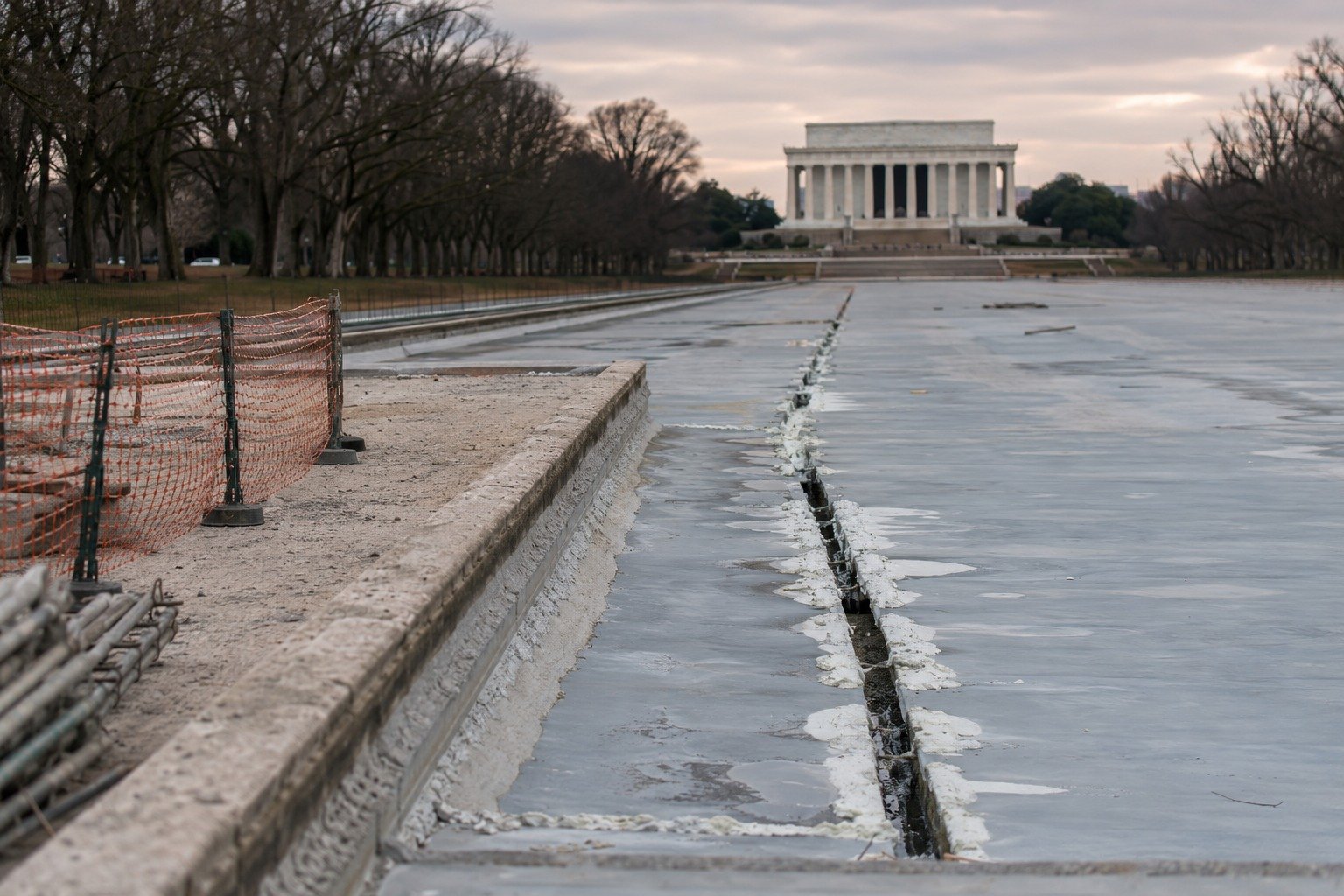
The National Park Service says someone deliberately cut a liner along the bottom of the Lincoln Memorial Reflecting Pool with a sharp knife or razor — and the damage happened while the iconic site was in the middle of a roughly $16 million federal rehabilitation project. The disclosure, buried in a court filing rather than announced publicly, has added a strange new wrinkle to an already contentious fight over how the Trump administration is handling one of the most visited landmarks in Washington.
What the court filing actually says
In a document filed late in the week, Frank Lands, the deputy director of operations for the National Park Service, stated that a liner at the bottom of the Reflecting Pool was sliced with a sharp knife or razor. The cut went through caulk that had been applied over foam sealant — material crews had installed as part of the ongoing rehabilitation of the long, rectangular pool that stretches between the Lincoln Memorial and the World War II Memorial.
According to the filing, U.S. Park Police responded on June 9 after the Park Service reported the damage. The associated police report described not only the cut to the caulk and sealant but also the destruction of delaminating surface material. On top of that, roughly 70 fence post tops were said to have been thrown into the pool.
Notably, the statement does not pin down exactly when the damage occurred, does not explicitly label it as vandalism, and does not identify anyone who might have been responsible. In other words, the Park Service is describing what was found — targeted cuts and debris — without drawing firm conclusions about who did it or why.
Why the public is only hearing about it now
What makes the episode unusual is how it surfaced. The detail about the cut liner did not come from a press conference or an official Park Service announcement. Instead, it appeared inside a lawsuit filed by a nonprofit organization seeking to halt the administration’s work on the Reflecting Pool project.
That means the public is learning about damage at a national landmark through litigation — a court fight over the future of the restoration — rather than through any straightforward public-safety disclosure. For a site that draws millions of visitors a year, the indirect path of that information raises fair questions about transparency around the project.
The President’s “350-foot gash” claim doesn’t match the filing
Running alongside the Park Service’s measured account is a far more dramatic characterization from President Trump, who has separately claimed there was a “350-foot gash” in the monument area. But the court filing does not back up that description. Reporting on the matter indicates the President offered that figure without supporting evidence, and the Park Service’s own account points to targeted cuts in the liner — not a massive, hundreds-of-feet-long tear.
The gap between those two versions matters. One is a sworn description from a Park Service official, grounded in a police response and a specific date. The other is a sweeping public claim that, by available reporting, lacks documentation. Treating the two as interchangeable would blur a real distinction between what officials have verified and what has simply been asserted.
What’s confirmed — and what isn’t
Stripped down to the established facts, the picture is narrow but striking. At one of the nation’s most recognizable memorials, in the middle of a multimillion-dollar restoration, newly installed sealant was cut with a knife or razor, surface material was destroyed, and dozens of fence post tops ended up in the water. Park Police responded on June 9, and the Park Service documented the damage in a sworn court filing.
What remains unconfirmed is just as important: the exact timing, the motive, the identity of anyone involved, and whether the “350-foot gash” framing holds up at all. Until those questions are answered, the responsible read is to stick with the Park Service’s account — a specific, limited description of damage — and to be skeptical of any version that stretches well beyond what the evidence currently supports.