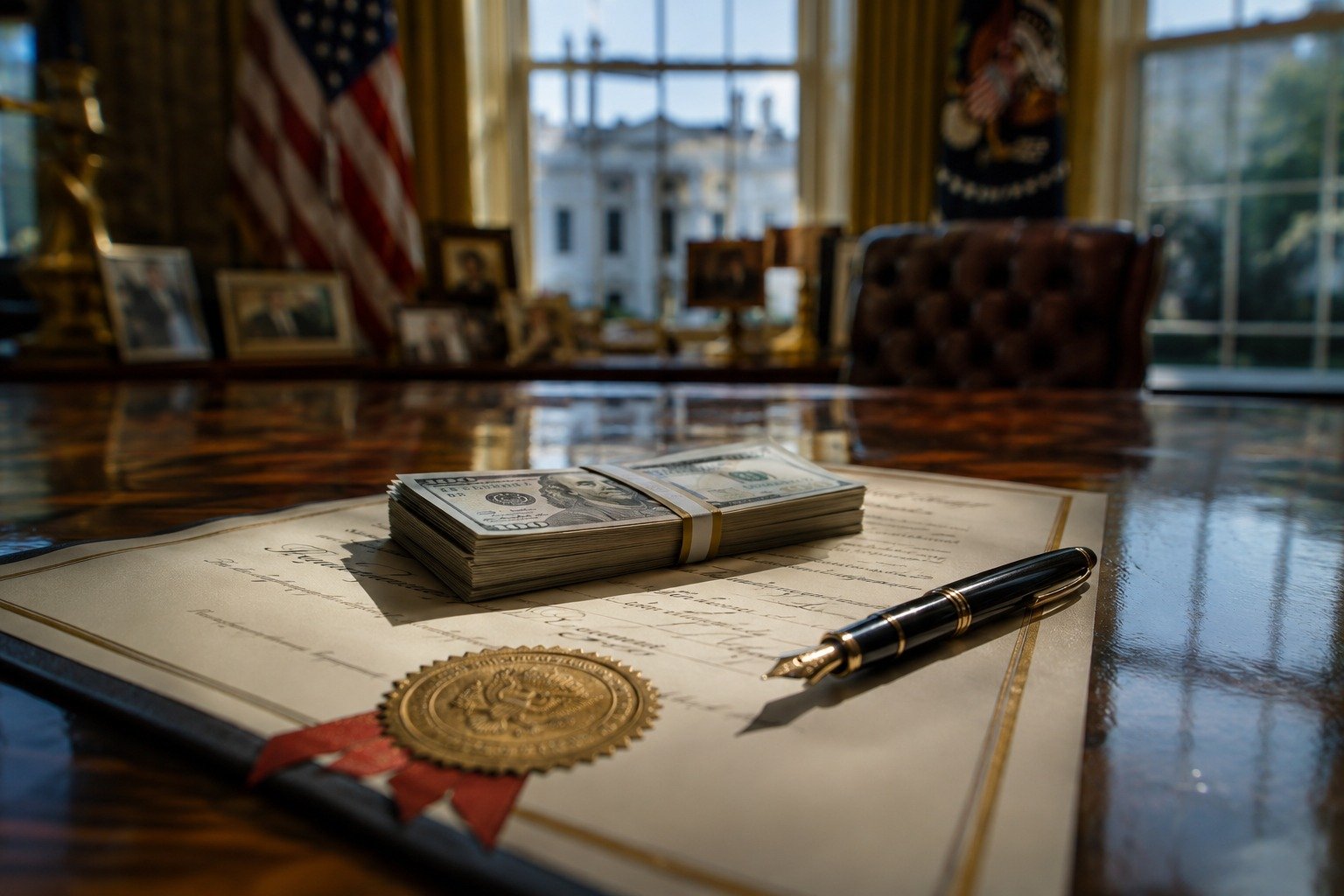
A lobbying firm founded by former Trump campaign and administration officials has expanded into one of the most ethically charged lines of work in Washington: lobbying the White House for presidential pardons. And according to a federal disclosure, its very first client in that business already paid half a million dollars.
The firm, Mo Strategies, was launched by Marty Obst and Robert Goad, two operatives with deep ties to President Donald Trump’s political world. Obst is a longtime adviser closely associated with Vice President-era and campaign operations, and Goad served in the administration. Together they built a consulting and lobbying shop that, like many in the capital, trades on relationships and access. What sets this latest move apart is the specific product now on offer: help securing clemency from the president of the United States.
What the disclosure shows
According to a Senate lobbying disclosure first reported by CBS News, Mo Strategies registered to lobby the White House and the Department of Justice on matters including presidential pardons and immigration. The filing records a $500,000 payment from the firm’s first such client, identified as Blessinger Legal. The disclosure is a routine, legally required document, which is part of what makes it so striking: the pursuit of a pardon, once treated as a matter of mercy or justice, is here itemized as a paid lobbying engagement.
Lobbying the executive branch is legal and common. Firms are paid every day to press federal agencies on regulations, contracts, and policy. But the pardon power occupies a different constitutional space. It is one of the few powers a president wields almost without check, requiring no approval from Congress, no sign-off from a court, and no formal justification. When that power becomes the object of a retainer agreement, the ordinary machinery of paid influence collides with one of the most personal and unaccountable authorities in American government.
Why a price tag on clemency raises alarms
The concern is straightforward. A pardon erases or reduces the legal consequences of a federal crime. If access to that outcome can be bought through well-connected intermediaries, the question of who receives clemency risks shifting away from the merits of a case and toward the depth of a client’s pockets. Half a million dollars buys a lot of doors opened in Washington. It should not be able to buy a shortcut around the justice system.
The Constitution’s framers gave the president broad clemency power as a safety valve, a way to correct injustices, show mercy, or heal national wounds. It was never imagined as a service that ordinary citizens could retain a lobbyist to pursue on their behalf for a fee. Routing pardon requests through paid insiders who once worked for the president invites exactly the appearance of self-dealing that public-integrity rules are meant to prevent.
An accountability question, not a settled scandal
It is important to be precise. The disclosure documents a registered lobbying relationship and a payment. It does not, by itself, prove that any pardon was granted, promised, or improperly influenced. Firms register to lobby on issues all the time without securing the outcome a client wants. What the filing establishes is that a Trump-connected firm has opened a pardon-lobbying practice and has already been paid a six-figure sum to work it.
That alone is enough to warrant scrutiny. Watchdog groups have long warned that the pardon process is vulnerable to influence-peddling precisely because it is so opaque and discretionary. A formal, paid lobbying operation built around clemency turns that abstract worry into a concrete, documented arrangement.
Half a million dollars, one client, one favor on the table. When the power to forgive federal crimes starts carrying a price tag, the question is no longer who deserves a second chance. It becomes who can afford one, and whether the most sweeping mercy power in American government is being treated as just another product for sale in Washington’s influence economy.