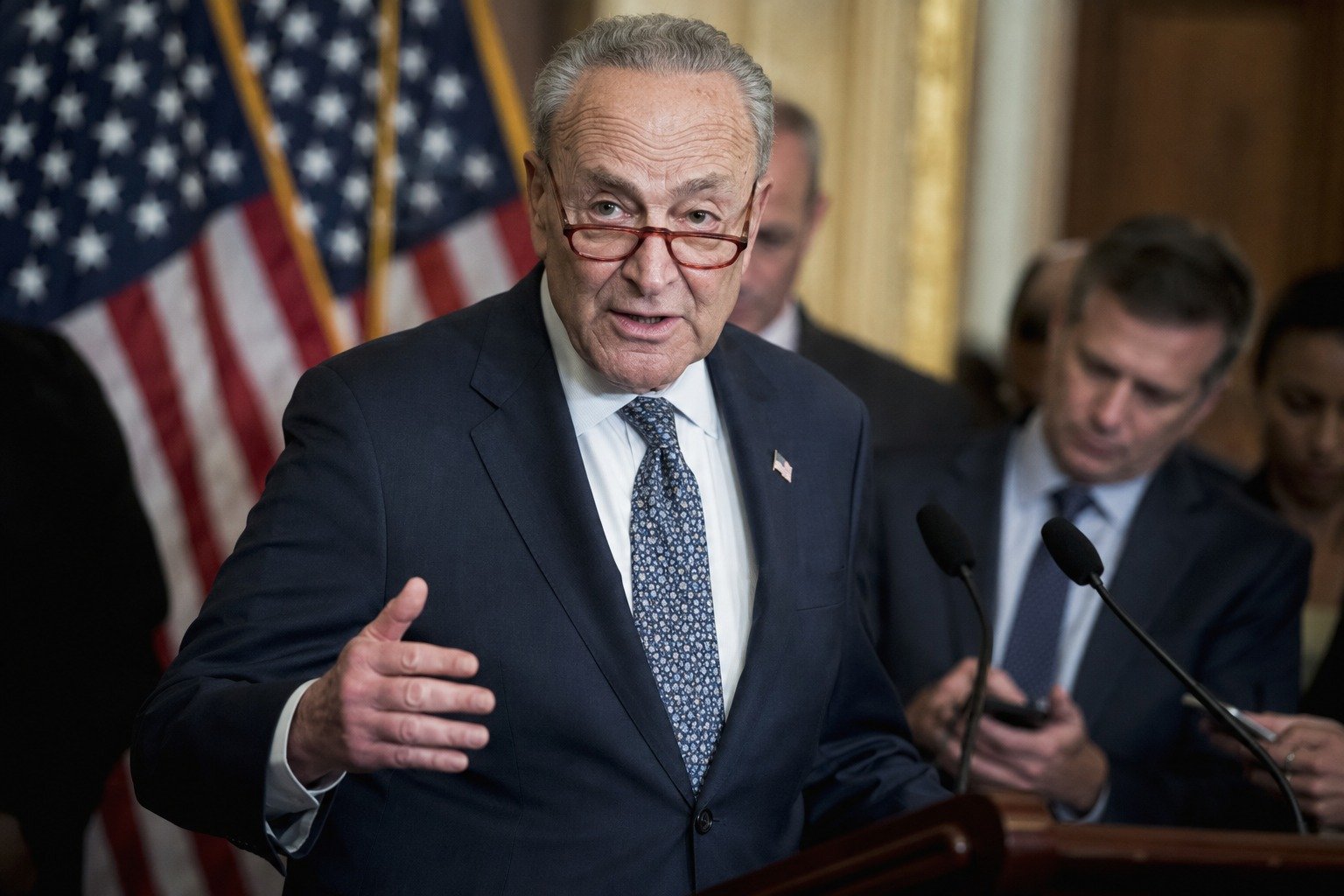
Senate Democratic Leader Chuck Schumer is sounding the alarm over the Republican-backed SAVE America Act, warning that the proposed voting law could “remove 25 million people” from the nation’s voter rolls. The claim, delivered in pointed remarks about one of the most contentious election bills now moving through Congress, has reignited a fierce national debate over voting access, citizenship verification, and how the federal government screens who is eligible to cast a ballot.
Speaking about the legislation, Schumer described it as “one of the worst, most anti-democracy things that’s ever been proposed.” According to his account, the bill would require every state to send its voter rolls not to the Justice Department or a dedicated elections division, but to the Department of Homeland Security, where, he said, an algorithm would determine whether each registered American is “legitimately right to vote or not.” It is that mechanism, Schumer argued, that could sweep tens of millions of lawful voters off the rolls.
What the SAVE America Act Actually Does
The SAVE America Act, formally titled the Safeguard American Voter Eligibility Act, would require documentary proof of citizenship in order to register to vote in federal elections. Supporters say the measure is a common-sense safeguard against noncitizen voting and would strengthen public confidence in the integrity of federal elections. They argue that requiring a passport, birth certificate, or similar document is a reasonable bar to clear.
Critics, including a broad coalition of voting-rights organizations, see it very differently. They warn the requirement could trip up tens of millions of eligible Americans who do not have quick access to the necessary documents. Among those most likely to be affected, advocates say, are married women whose current legal names no longer match their birth certificates, older Americans, rural and low-income voters, and citizens who have never needed a passport. For these groups, the documentation hurdle could become an obstacle to exercising a right they already hold.
A Number That Demands Scrutiny
It is worth being precise about Schumer’s headline figure. The “25 million” estimate is his warning, not a settled or independently verified projection. In the course of the same remarks, his count shifted between 25 million, 20 million, and 30 million, and he did not point to a specific study, Congressional Budget Office analysis, or even a partisan think-tank estimate to back up any of those numbers. Nor did he detail the exact mechanism by which a citizenship-verification requirement would strip that many lawful voters from the rolls.
That fluctuation matters, and honest coverage of this fight requires acknowledging it. Attaching a hard number to a hypothetical outcome, then revising it three times in a single breath, gives opponents of the bill an opening to dismiss the warning entirely. The strongest case against overly aggressive voter-roll screening does not rest on a single dramatic statistic — it rests on the well-documented risk that eligible citizens get caught in the net.
The Core Fight Is Real
Strip away the disputed figure, and the underlying conflict remains very real. The central question is who gets added to a federal eligibility-screening system, who decides the criteria, and who could be knocked off the rolls because of it. When the entity doing the vetting is the Department of Homeland Security, and when that vetting is described as algorithmic, the stakes for transparency and accountability rise sharply. Automated systems can make errors at scale, and a wrongly flagged voter may not learn of the problem until they are turned away at the polls.
Voting-rights advocates are pressing for answers before the bill advances any further: What safeguards would prevent eligible citizens from being purged? What recourse would a wrongly flagged voter have? And who would be held responsible if the system gets it wrong? Those questions deserve clear answers, regardless of whether the ultimate number affected is closer to Schumer’s warning or far below it.
For now, the SAVE America Act remains a flashpoint in the broader battle over voting access in America — a battle in which the right to cast a ballot, and the burden placed on citizens to prove they deserve it, sits squarely at the center.