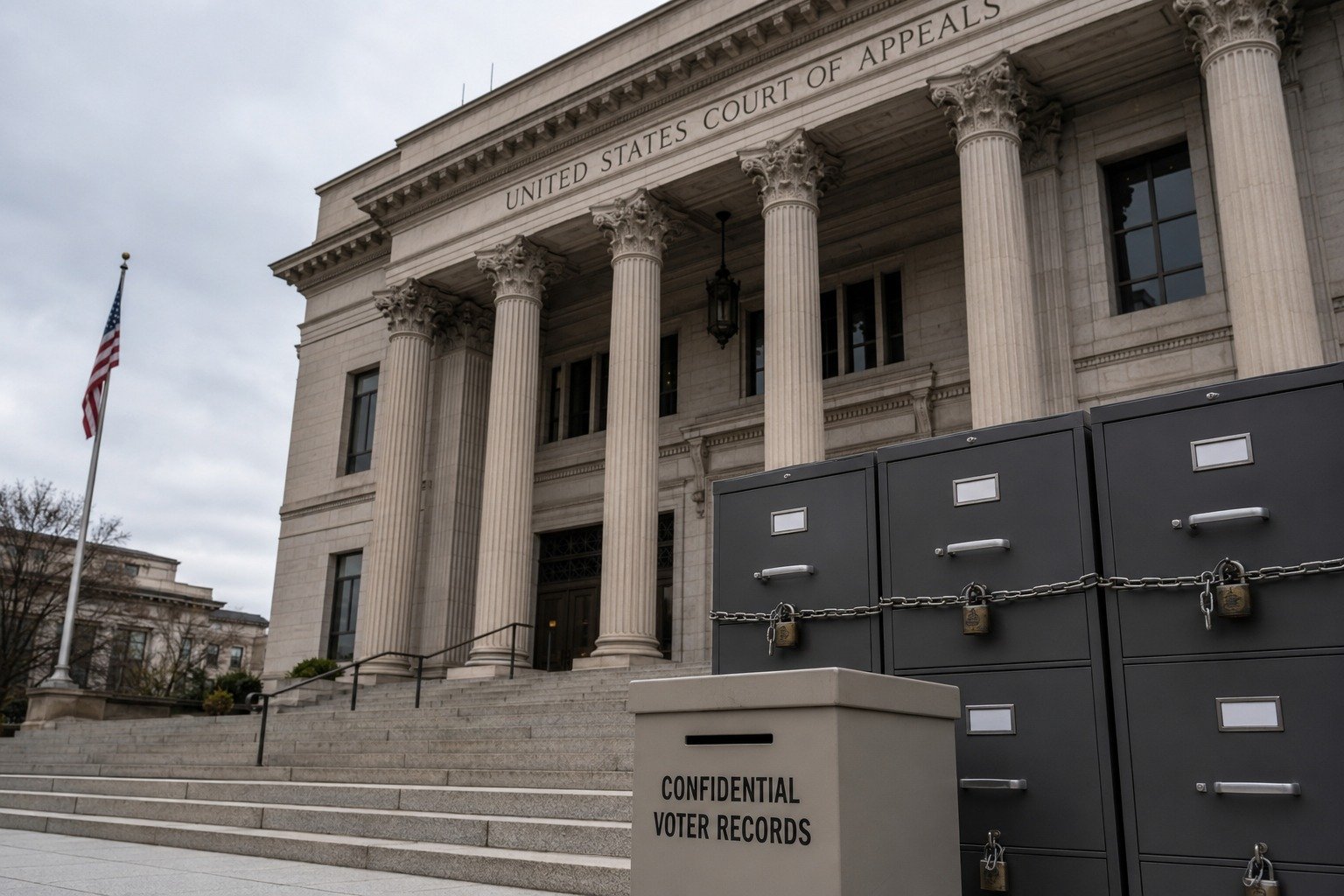
A federal appeals court has handed the Trump administration its most significant defeat yet in a sprawling campaign to collect Americans’ private voting records, ruling that the Justice Department cannot force Michigan to surrender confidential voter data.
On June 24, 2026, the 6th U.S. Circuit Court of Appeals rejected the DOJ’s demand that Michigan turn over its confidential, non-public voter registration records. It was the first time a federal appeals court has ruled on the administration’s nationwide push to gather such data — and the panel sided firmly against the federal government, affirming that the state was within its rights to keep the records sealed.
The Biggest Setback Yet
The ruling marks the most consequential blow to date in a DOJ effort that has unsettled voting-rights advocates and state election officials from coast to coast. Over the past several months, the department has pressed more than 30 states to hand over sensitive voter files. So far, the courts have ruled against the administration in every one of those cases.
Michigan’s case is the first to reach the appellate level, which is why this decision carries outsized weight. A district court loss can be brushed aside as a single judge’s view; an appeals court ruling sets binding precedent across the circuit and signals to other courts how the legal questions are likely to be resolved.
Why Confidential Voter Data Is Protected
The data the DOJ sought is not the kind of information that is open to the public. Michigan, like many states, maintains a category of confidential voter registration details that are shielded by law — precisely to protect voters’ personal information and to guard the integrity of the rolls against misuse.
Election administrators and privacy advocates have warned that a federal demand for these files raises serious concerns. Centralizing sensitive voter information at the national level, they argue, creates risks of exposure, error, and political pressure on a system that has traditionally been run by the states. The appeals court’s decision affirms that the federal government cannot simply override those state-level protections on demand.
A Supreme Court Showdown May Be Next
The Michigan decision is unlikely to be the final word. With dozens of similar disputes working their way through courts in other states, and with the administration showing no sign of abandoning its effort, legal observers expect the question to land before the U.S. Supreme Court. An appellate ruling against the DOJ sets the stage for exactly that kind of high-stakes confrontation.
For now, the practical effect is clear. Michigan does not have to hand over its confidential voter data, and a federal appeals court has drawn a firm line around how far the Justice Department can reach into state election records.
The Stakes for Voters
At its core, this fight is about who controls voters’ private information and how easily the federal government can demand it. The 6th Circuit’s ruling is a reminder that the courts remain a meaningful check — and that, at least for now, the right to keep your voter registration details private still stands. As the broader battle continues across more than 30 states, this Michigan ruling offers the strongest signal yet about which way the law is leaning.